Fabaceae
Lentil: Edible Plant
Lens culinaris
A hardy and low-maintenance plant: it requires full sun, loose, poor, and well-drained soil, and tolerates drought well. Sowing takes place in spring (March-April) or in autumn in mild climates. Nitrogen fertilizers are not necessary, and waterlogging must be avoided. Harvesting occurs about 4-5 months after sowing when the pods are dry.
Every 7 days
Bright indirect
5° - 30°C
30% - 60%
Categories
What is Lentil?
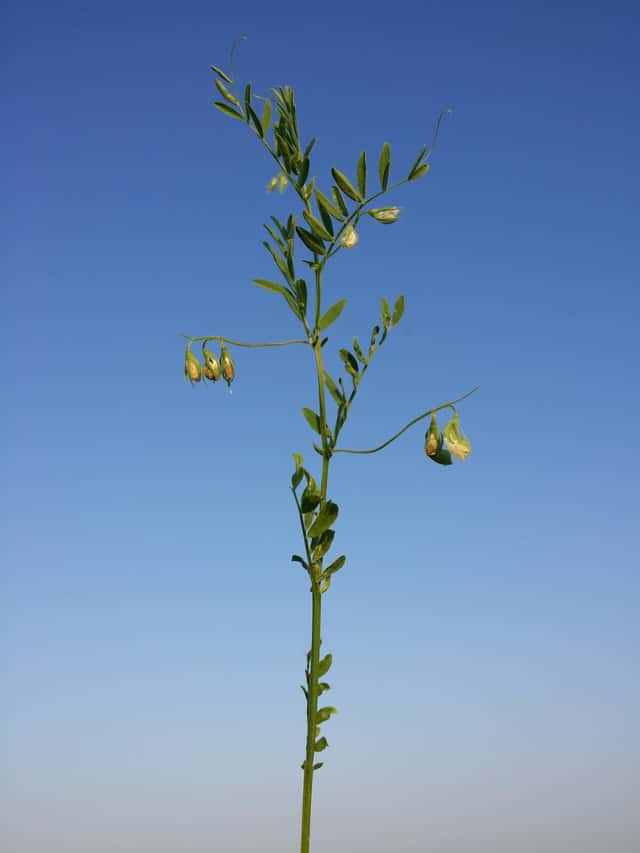
Lentil (Lens culinaris) is a easy-care plant from the Fabaceae family. The lentil (Lens culinaris) is an annual herbaceous legume of the Fabaceae family, growing up to approximately 45 cm tall, with a thin and branched stem. It produces small white, pinkish, or light blue flowers in clusters, followed by short pods containing one or two lens-shaped seeds. Cultivated si...
Lentil grows up to 45cm, spread of 30cm, watering every 7 days, 5°C – 30°C, 30–60% humidity. It is not suitable for indoor environments and safe for pets.
Unlike many tropical plants, Lentil tolerates watering mistakes. Best for beginners. Unlike many popular species, Lentil is safe to keep around pets.
How to Care for Lentil?
TLDR: Lentil needs Bright indirect, watering every 7 days, and temperatures between 5-30°C with 30-60% humidity.
How Often Should You Water Lentil?
Approximately one watering per week, alternating between wetting and drying. It tolerates drought well; avoid waterlogging.
How Much Light Does Lentil Need?
Sunny position, with at least six hours of direct light per day.
What Is the Best Soil for Lentil?
Loose, draining soil of medium fertility, with a pH between 6 and 8. Avoid very clayey, calcareous, or overly rich soils.
What Pot Should You Use for Lentil?
Mainly grown in open ground or garden beds. In pots, a deep container with drainage holes and light, sandy potting soil is required.
Care Schedule
Fertilize
Every 30 days
What Is Lentil and Where Does It Come From?
The lentil (Lens culinaris) is an annual herbaceous legume of the Fabaceae family, growing up to approximately 45 cm tall, with a thin and branched stem. It produces small white, pinkish, or light blue flowers in clusters, followed by short pods containing one or two lens-shaped seeds. Cultivated since ancient times for its edible seeds rich in protein, iron, and fiber, it fixes atmospheric nitrogen like all legumes thanks to symbiotic bacteria present in root nodules.
How to Propagate Lentil?
Direct sowing
Germinates best with soil temperatures around 10-20 degrees Celsius. Avoid waterlogging.
- 1 Sow in spring (March-April) or in autumn in mild climates
- 2 Plant seeds 1-2 cm deep, spaced 6-8 cm apart in the row
- 3 Maintain rows at a distance of 30-35 cm
- 4 Thin out seedlings if they are too dense
Materials needed:
How Big Does Lentil Grow?
TLDR: Lentil can reach up to 45cm tall with Medium growth rate.
Max height
45cm
Spread
30cm
Growth rate
Medium
Foliage
Deciduous
Plant Uses
Edible
Can be consumed
Culinary Uses
- Soups and broths
- Stews and side dishes
- Dal and curries (split lentils)
- Sprouts
Is your plant showing symptoms?
Click on the symptom to discover possible causes:
What Diseases Commonly Affect Lentil?
TLDR: Lentil is susceptible to 8 known diseases. Monitor regularly for early detection.
Fusarium Wilt
Fusarium wilt is a serious fungal disease caused by the soil-borne fungus Fusarium oxysporum. The fungus invades roots and blocks the water-conducting vessels (xylem) of the plant, causing progressive wilting and eventual death. Host-specific forms of the pathogen exist that attack different plant species.
Rust
Rust is a common fungal disease caused by fungi in the order Pucciniales that affects a wide variety of plants. The disease gets its name from the characteristic orange, yellow, or reddish-brown pustules that appear on leaves, resembling metal rust. This obligate fungal parasite requires living plants to survive and can cause significant economic losses in agricultural crops.
Anthracnose
Anthracnose is a fungal disease caused by fungi in the genus Colletotrichum that affects many plants, including vegetables, fruits, and trees. The disease thrives in cool, wet conditions, causing dark, sunken lesions on leaves, stems, flowers, and fruits.
Gray Mold (Botrytis Blight)
Gray mold, caused by the fungus Botrytis cinerea, is a widespread necrotrophic pathogen affecting over 1,400 plant species. It thrives in cool, humid conditions and attacks weakened or aging plant tissues, causing soft rot and characteristic gray fuzzy growth.
Meaning & Symbolism
A symbol of prosperity and good luck: in Italy, they are eaten on New Year's Eve to wish for abundance.
Compare with similar plants
| Attribute | Difficulty | Light | Watering | Pet Safe |
|---|---|---|---|---|
| Field Maple | Easy | Bright indirect | 14d | ✓ |
| Iberian Houseleek | Easy | Direct sun | 14d | ✓ |
| Silver Birch | Easy | Direct sun | 14d | ✓ |
| Common Blanketflower | Easy | Direct sun | 10d | ✓ |





