Orchidaceae
Leopard Orchid: Medicinal Uses & Care Tips
Ansellia africana
A robust epiphyte that rewards bright light, a distinct dry winter rest, and a coarse, fast-draining bark mix. Keep temperatures between 15-30°C and humidity above 50% for best growth and flowering.
Every 10 days
Bright indirect
15° - 30°C
50% - 70%
Categories
What is Leopard Orchid?
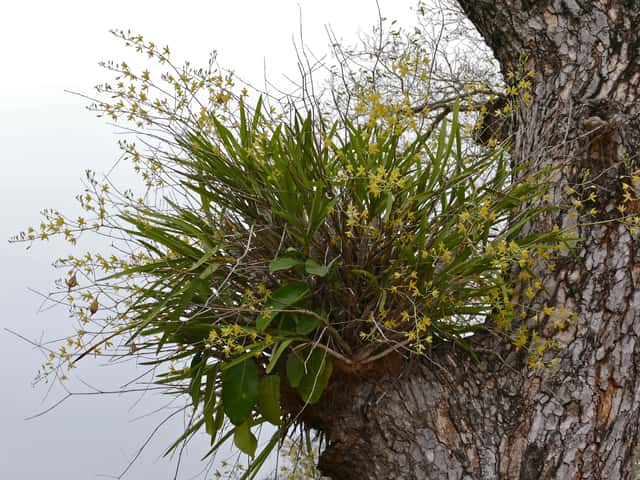
Leopard Orchid (Ansellia africana) is a medium-care plant from the Orchidaceae family. Ansellia africana, the leopard orchid, is a large epiphytic orchid native to tropical and southern Africa, where it grows in the forks of tall trees along rivers and coastlines. It forms dense clumps of cane-like pseudobulbs topped with leathery, lance-shaped leaves, and produces branching sprays of...
Leopard Orchid grows up to 1.5m, spread of 100cm, watering every 10 days, 15°C – 30°C, 50–70% humidity. It is suitable for indoor environments and safe for pets.
Unlike many popular species, Leopard Orchid is safe to keep around pets. Without adequate drainage, root rot can develop within 20 days.
How to Care for Leopard Orchid?
TLDR: Leopard Orchid needs Bright indirect, watering every 10 days, and temperatures between 15-30°C with 50-70% humidity.
How Often Should You Water Leopard Orchid?
Water thoroughly during the active growing season, letting the top 2-3 inches of the mix dry between waterings; reduce sharply in winter to trigger blooming.
How Much Light Does Leopard Orchid Need?
Provide bright, indirect to filtered light (around 40% shade); protect from intense midday sun, which can scorch the leathery leaves.
What Is the Best Soil for Leopard Orchid?
Pot in a coarse, open orchid mix of bark, perlite and coconut chips, or mount on a slab to mimic its epiphytic habitat, always ensuring excellent drainage.
What Pot Should You Use for Leopard Orchid?
Clay or slotted orchid pots with abundant drainage, or wooden baskets/bark mounts that replicate its natural tree-dwelling habit.
Care Schedule
Fertilize
Every 14 days
Misting
Every 3 days
Repot
Every 730 days
What Is Leopard Orchid and Where Does It Come From?
Ansellia africana, the leopard orchid, is a large epiphytic orchid native to tropical and southern Africa, where it grows in the forks of tall trees along rivers and coastlines. It forms dense clumps of cane-like pseudobulbs topped with leathery, lance-shaped leaves, and produces branching sprays of yellow flowers boldly marked with brown spots reminiscent of a leopard's coat.
How to Propagate Leopard Orchid?
Pseudobulb division
Use sterilized tools and let cuts callus briefly before potting to avoid rot.
- 1 Wait until flowering has finished and new growth is beginning
- 2 Remove the plant from its pot and locate natural divisions in the rhizome
- 3 Cut apart sections that each keep at least 3 healthy pseudobulbs and roots
- 4 Remove old potting medium from the roots
- 5 Pot each division in fresh, coarse bark mix, level with the pseudobulb base
Materials needed:
How Big Does Leopard Orchid Grow?
TLDR: Leopard Orchid can reach up to 1.5m tall with Slow growth rate.
Max height
1.5m
Spread
1.0m
Growth rate
Slow
Foliage
Evergreen
Plant Uses
Ornamental
Great for decoration
Medicinal
Medicinal properties
Medicinal Uses
- Traditional respiratory tract infection remedy
- Traditional skin and soft tissue infection remedy
- Studied for central nervous system and anti-Alzheimer potential
Is your plant showing symptoms?
Click on the symptom to discover possible causes:
What Diseases Commonly Affect Leopard Orchid?
TLDR: Leopard Orchid is susceptible to 6 known diseases. Monitor regularly for early detection.
Root Rot
Root rot is a serious fungal disease that affects the root system of plants, causing them to decay and die. It is primarily caused by overwatering, poor drainage, or soil-borne fungi such as Pythium, Phytophthora, Rhizoctonia, and Fusarium. The disease thrives in waterlogged conditions where roots are deprived of oxygen, making them susceptible to fungal infection.
Scale Insects
Scale insects are small sap-sucking pests that appear as brown, shell-like bumps on plant stems and leaves. There are over 25 species, divided into armored (hard) and unarmored (soft) scales. They feed by piercing plant tissue and extracting sap, which weakens the plant and can lead to yellowing, stunted growth, and even death if left untreated. They also excrete honeydew, which attracts ants and promotes sooty mold growth.
Mealybugs
Mealybugs are small, soft-bodied insects covered with a white, waxy, cottony material. They are common pests of houseplants and outdoor plants in mild climates. These sap-sucking insects feed on plant tissue, causing damage, stunted growth, and can lead to plant death if left untreated. They produce sticky honeydew which attracts sooty mold.
Slugs and Snails
Slugs and snails are mollusks that feed on plant tissue, causing irregular holes in leaves and damage to young seedlings. They are most active at night and in moist conditions, leaving characteristic silvery slime trails. These pests can quickly devastate gardens, especially during wet seasons.
Meaning & Symbolism
Its leopard-spotted blooms are seen as a symbol of resilience and rarity, echoing the wild beauty of the African savanna and forest canopy it calls home.
Compare with similar plants
| Attribute | Difficulty | Light | Watering | Pet Safe |
|---|---|---|---|---|
| Dark Fieldcap | Medium | Low light | 2d | ⚠️ |
| Azalea | Medium | Partial shade | 3d | ⚠️ |
| Muriel's Bamboo | Medium | Partial shade | 3d | ✓ |
| Bougainvillea | Medium | Direct sun | 7d | ⚠️ |




