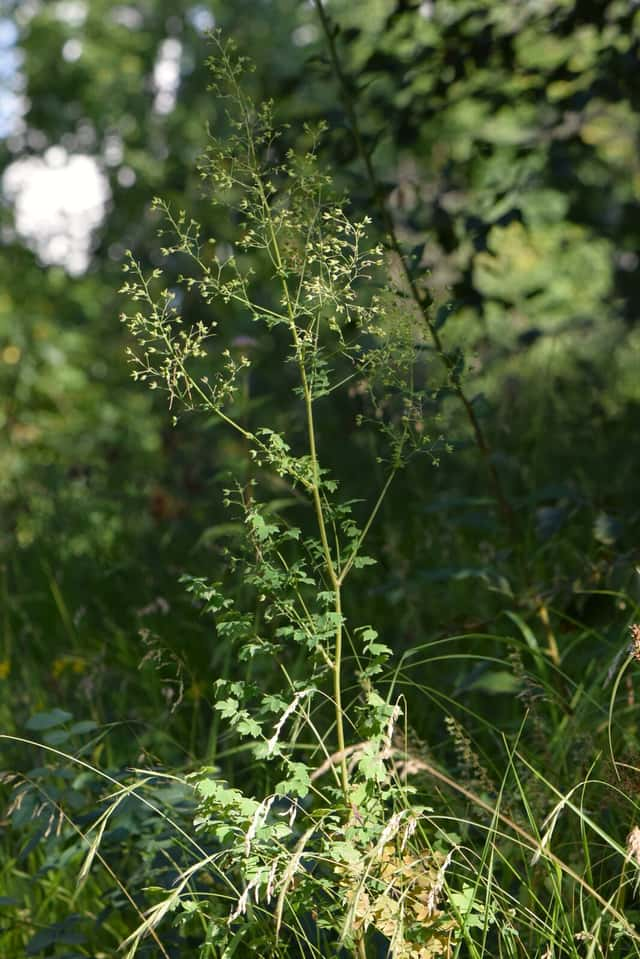
Ranunculaceae
Lesser Meadow-rue (Thalictrum minus)
Thalictrum minus
A tough, low-maintenance perennial: sun or part shade, humus-rich well-drained soil and moderate watering. Very cold hardy; it dies back in winter and regrows in spring. It can spread vigorously in light soils.
Every 7 days
Bright indirect
-20° - °C
% - %
Categories
What is Lesser meadow-rue?
Lesser meadow-rue (Thalictrum minus) is a easy-care plant from the Ranunculaceae family. Thalictrum minus, the lesser meadow-rue, is a herbaceous perennial in the buttercup family (Ranunculaceae) native to Europe, northwest Africa, southwest Asia and Siberia, growing in dry grassland, dunes, cliffs and rocky slopes, often on limestone. It forms clumps 30 cm to 1 m tall with finely divid...
Lesser meadow-rue grows up to 1.0m, spread of 50cm, watering every 7 days. It is not suitable for indoor environments and safe for pets.
Unlike many tropical plants, Lesser meadow-rue tolerates watering mistakes. Best for beginners. Unlike many popular species, Lesser meadow-rue is safe to keep around pets.
How to Care for Lesser meadow-rue?
TLDR: Lesser meadow-rue needs Bright indirect, watering every 7 days, and temperatures between -20-30°C with 40-70% humidity.
How Often Should You Water Lesser meadow-rue?
Water about once a week in dry spells while it is growing; once established it tolerates some drought. Avoid waterlogged soil in winter.
How Much Light Does Lesser meadow-rue Need?
Full sun or partial shade, ideally sheltered from wind, which can flatten the tall stems.
What Is the Best Soil for Lesser meadow-rue?
Humus-rich, well-drained loam, clay or chalk; acid to alkaline pH.
What Pot Should You Use for Lesser meadow-rue?
A deep, wide pot with drainage, though it is a border plant and does best in the ground.
What Is Lesser meadow-rue and Where Does It Come From?
Thalictrum minus, the lesser meadow-rue, is a herbaceous perennial in the buttercup family (Ranunculaceae) native to Europe, northwest Africa, southwest Asia and Siberia, growing in dry grassland, dunes, cliffs and rocky slopes, often on limestone. It forms clumps 30 cm to 1 m tall with finely divided, maidenhair-like leaves (3 to 4 times pinnate). From June to August it bears open panicles of small nodding, petal-less flowers with greenish-yellow to purplish sepals and long yellow stamens.
How to Propagate Lesser meadow-rue?
Division
Autumn division also works. Wear gloves if you have sensitive skin.
- 1 Lift the clump as new growth starts
- 2 Split it with a spade or knife into pieces with roots and buds
- 3 Replant at the same depth
- 4 Water well until established
Materials needed:
Seed
Fresh seed germinates best; spring sowing in an outdoor seedbed also works.
- 1 Sow seed as soon as it ripens in autumn
- 2 Keep the pots outdoors or in a cold frame over winter
- 3 Prick out seedlings once large enough to handle
- 4 Plant out in summer
Materials needed:
How Big Does Lesser meadow-rue Grow?
TLDR: Lesser meadow-rue can reach up to 1.0m tall with Medium growth rate.
Max height
1.0m
Spread
50cm
Growth rate
Medium
Foliage
Deciduous
Warning: Toxic Plant
This plant can be toxic if ingested. Keep out of reach of:
Plant Uses
Ornamental
Great for decoration
Medicinal
Medicinal properties
Medicinal Uses
- In folk medicine, a leaf infusion or root decoction was used for fevers (traditional use; not advised without guidance, as the family includes toxic species).
Is your plant showing symptoms?
Click on the symptom to discover possible causes:
What Diseases Commonly Affect Lesser meadow-rue?
TLDR: Lesser meadow-rue is susceptible to 4 known diseases. Monitor regularly for early detection.
Powdery Mildew
Powdery mildew is a common fungal disease caused by various fungi species including Erysiphe, Podosphaera, Oïdium, and Leveillula. It affects over 10,000 plant species worldwide. The disease thrives in warm, dry climates with high humidity and appears as a distinctive white powdery coating on plant surfaces.
Aphids
Aphids are small, soft-bodied, pear-shaped insects (1/16 to 1/8 inch long) that feed by sucking nutrient-rich sap from plants. They reproduce rapidly and can quickly weaken plants, causing distorted growth and transmitting plant viruses. Aphids come in various colors including green, black, red, yellow, brown, and gray. They secrete honeydew, a sticky substance that attracts ants and encourages sooty mold growth.
Slugs and Snails
Slugs and snails are mollusks that feed on plant tissue, causing irregular holes in leaves and damage to young seedlings. They are most active at night and in moist conditions, leaving characteristic silvery slime trails. These pests can quickly devastate gardens, especially during wet seasons.
Rust
Rust is a common fungal disease caused by fungi in the order Pucciniales that affects a wide variety of plants. The disease gets its name from the characteristic orange, yellow, or reddish-brown pustules that appear on leaves, resembling metal rust. This obligate fungal parasite requires living plants to survive and can cause significant economic losses in agricultural crops.
Fun Facts
Its flowers have no petals: the show comes from dangling yellow stamens.
The foliage looks like maidenhair fern, hence the garden form 'Adiantifolium'.
It contains the alkaloid thalidasine, studied in several Thalictrum species.
Frequently asked questions
Is lesser meadow-rue poisonous?
Does it spread?
When does it flower?
Does it need pruning?
Compare with similar plants
| Attribute | Difficulty | Light | Watering | Pet Safe |
|---|---|---|---|---|
| Field Maple | Easy | Bright indirect | 14d | ✓ |
| Iberian Houseleek | Easy | Direct sun | 14d | ✓ |
| Silver Birch | Easy | Direct sun | 14d | ✓ |
| Common Blanketflower | Easy | Direct sun | 10d | ✓ |





