Crassulaceae
Letizia Sedeveria: Low Water Needs
Sedeveria 'Letizia'
Give Sedeveria 'Letizia' as much bright light as possible - full sun to light shade - and plant it in a fast-draining cactus or succulent mix. Water thoroughly only when the soil has dried out completely, cutting back further in winter, and never let the pot sit in standing water. It tolerates heat and drought well but is only marginally frost-hardy, so bring it indoors or under cover before temperatures drop near freezing.
Every 14 days
Bright indirect
10° - 32°C
20% - 50%
Categories
What is Letizia Sedeveria?
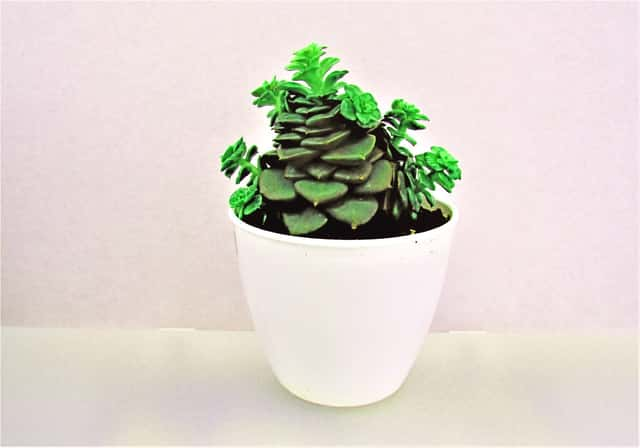
Letizia Sedeveria (Sedeveria 'Letizia') is a easy-care plant from the Crassulaceae family. Sedeveria 'Letizia' is a compact hybrid succulent in the Crassulaceae family, created by crossing Echeveria setosa with Sedum cuspidatum and named in 2006 after Letizia Alleruzzo. Fleshy, spoon-shaped leaves form small rosettes atop trailing stems that reach about 8 in (20 cm) tall, turning from sof...
Letizia Sedeveria grows up to 20cm, spread of 15cm, watering every 14 days, 10°C – 32°C, 20–50% humidity. It is suitable for indoor environments and safe for pets.
Unlike many tropical plants, Letizia Sedeveria tolerates watering mistakes. Best for beginners. Unlike many popular species, Letizia Sedeveria is safe to keep around pets. Without adequate drainage, root rot can develop within 28 days.
How to Care for Letizia Sedeveria?
TLDR: Letizia Sedeveria needs Bright indirect, watering every 14 days, and temperatures between 10-32°C with 20-50% humidity.
How Often Should You Water Letizia Sedeveria?
Use the "soak and dry" method: water deeply until it drains from the pot, then wait until the soil is bone dry before watering again - usually every 2 weeks in the growing season and much less in winter.
How Much Light Does Letizia Sedeveria Need?
Give it bright, direct-to-partial sun for several hours a day; more light brings out the red blush on the leaf margins, while low light causes the rosette to stretch and fade to plain green.
What Is the Best Soil for Letizia Sedeveria?
Plant in a gritty, fast-draining cactus/succulent mix (or potting soil cut with perlite, pumice, or coarse sand) and choose a neutral-to-slightly-acidic pH; never use a dense, moisture-retentive soil.
What Pot Should You Use for Letizia Sedeveria?
A small unglazed terracotta or ceramic pot with a drainage hole is ideal - the porous walls help excess moisture evaporate and reduce the risk of root rot.
Care Schedule
Fertilize
Every 60 days
Rotate
Every 14 days
Repot
Every 730 days
What Is Letizia Sedeveria and Where Does It Come From?
Sedeveria 'Letizia' is a compact hybrid succulent in the Crassulaceae family, created by crossing Echeveria setosa with Sedum cuspidatum and named in 2006 after Letizia Alleruzzo. Fleshy, spoon-shaped leaves form small rosettes atop trailing stems that reach about 8 in (20 cm) tall, turning from soft green to a vivid red-pink blush along the margins when grown in bright light or cool temperatures. In spring, slender stalks rise above the foliage bearing small white flowers tipped in pink. It is easy to grow indoors on a sunny windowsill or outdoors in USDA zones 9a-11b, provided it is protected from hard frost.
How to Propagate Letizia Sedeveria?
Stem cutting
Avoid direct sun while the cutting is callousing to prevent scorching before roots establish.
- 1 Cut a healthy stem at a 45-degree angle using clean, sharp scissors or shears
- 2 Let the cutting callous over for 2-3 days in a dry, shaded spot
- 3 Dip the callused end in rooting hormone (optional)
- 4 Lay or plant the cutting on top of well-draining succulent soil
- 5 Mist lightly every few days until roots form, then water normally
Materials needed:
Leaf cutting
Discard any leaf that snapped instead of pulling away cleanly, since it usually will not root.
- 1 Gently twist off a plump, healthy leaf close to the stem so the base stays intact
- 2 Let the leaf callous for 2-3 days in a dry, shaded spot
- 3 Lay the leaf flat on top of well-draining soil without burying it
- 4 Mist lightly every few days to encourage root and pup formation
- 5 Once a small rosette forms, separate it from the spent leaf and pot it individually
Materials needed:
How Big Does Letizia Sedeveria Grow?
TLDR: Letizia Sedeveria can reach up to 20cm tall with Medium growth rate.
Max height
20cm
Spread
15cm
Growth rate
Medium
Foliage
Evergreen
Plant Uses
Ornamental
Great for decoration
Is your plant showing symptoms?
Click on the symptom to discover possible causes:
What Diseases Commonly Affect Letizia Sedeveria?
TLDR: Letizia Sedeveria is susceptible to 7 known diseases. Monitor regularly for early detection.
Mealybugs
Mealybugs are small, soft-bodied insects covered with a white, waxy, cottony material. They are common pests of houseplants and outdoor plants in mild climates. These sap-sucking insects feed on plant tissue, causing damage, stunted growth, and can lead to plant death if left untreated. They produce sticky honeydew which attracts sooty mold.
Scale Insects
Scale insects are small sap-sucking pests that appear as brown, shell-like bumps on plant stems and leaves. There are over 25 species, divided into armored (hard) and unarmored (soft) scales. They feed by piercing plant tissue and extracting sap, which weakens the plant and can lead to yellowing, stunted growth, and even death if left untreated. They also excrete honeydew, which attracts ants and promotes sooty mold growth.
Aphids
Aphids are small, soft-bodied, pear-shaped insects (1/16 to 1/8 inch long) that feed by sucking nutrient-rich sap from plants. They reproduce rapidly and can quickly weaken plants, causing distorted growth and transmitting plant viruses. Aphids come in various colors including green, black, red, yellow, brown, and gray. They secrete honeydew, a sticky substance that attracts ants and encourages sooty mold growth.
Spider Mites
Spider mites are tiny arachnids (less than 1/20 inch long) related to spiders and ticks that feed on plant sap. They thrive in hot, dry conditions and can cause significant damage to ornamental and vegetable plants. During severe infestations, crop losses can reach 14% or higher as these pests disrupt vital plant processes including photosynthesis, carbon dioxide absorption, and transpiration.
Meaning & Symbolism
Like other rosette-forming succulents, Sedeveria 'Letizia' is often associated with enduring love, resilience, and everlasting beauty, since its thick, water-storing leaves let it survive long stretches of neglect and thrive on very little care.
Compare with similar plants
| Attribute | Difficulty | Light | Watering | Pet Safe |
|---|---|---|---|---|
| Field Maple | Easy | Bright indirect | 14d | ✓ |
| Iberian Houseleek | Easy | Direct sun | 14d | ✓ |
| Silver Birch | Easy | Direct sun | 14d | ✓ |
| Common Blanketflower | Easy | Direct sun | 10d | ✓ |
Choose & Compare
Sources & References
- Letizia Information – How To Care For Sedeveria Letizia Succulents (Gardening Know How)
- X Sedeveria Letizia Care Guide (Succulents Network)
- Lety's Sedeveria Care - How To Grow The Succulent Sedeveria Letizia (DIYS.com)
- Sedeveria Plant Care: How To Grow Hybrid Sedeveria Plants (PlantCareToday)
- Is Echeveria toxic to cats and dogs? (Botanicaly)





