9 Hard Succulents | 2026 Guide
Find 9 hard succulents. Complete guide for your garden.
9 Succulents with hard level
9 plants found
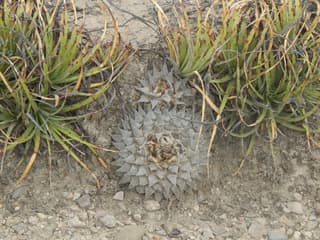
Living Rock Cactus
Ariocarpus
Ariocarpus is a genus of slow-growing, spineless cacti native to the limestone deserts of northern and central Mexico and southern Texas. Its thick, star-shaped tubercles are covered in a grey-brown, warty skin that mimics the surrounding rock and gravel almost perfectly, a camouflage strategy that protects it from grazing animals in the wild. Most of the plant body sits at or below soil level, anchored by a large taproot, with only the crown visible above ground. Woolly tufts of hair nestle between the tubercles, and in late summer or autumn mature plants produce showy white, pink, magenta, or purple daisy-like flowers from the center of the rosette.

Candelabra cactus
Browningia candelaris
Browningia candelaris is a large columnar cactus endemic to the arid slopes of the Andes in southern Peru and northern Chile, where it grows between 1,600 and 3,000 meters above sea level in the heart of the Atacama Desert, one of the driest places on Earth. Young specimens form a single, heavily spined columnar trunk with straight brown spines up to 15 cm long; with age, the upper part of the trunk develops a crown of slender, cylindrical, and nearly spineless branches, giving the plant the characteristic candelabra-like appearance for which it is named. It can reach between 5 and 7 meters in height, with a trunk up to 50 cm in diameter. Its white, tubular flowers, measuring 8 to 12 cm, bloom at night on the upper branches and last barely 24 hours, followed by fleshy, yellow, edible fruits up to 7 cm long.
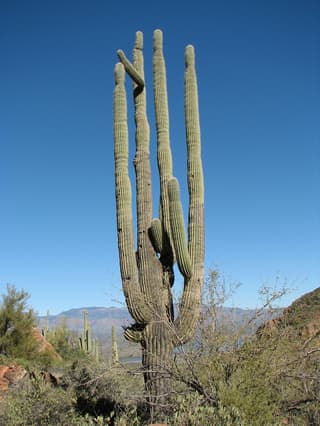
Saguaro
Carnegiea gigantea
The Saguaro (Carnegiea gigantea) is the largest cactus in North America, native to the Sonoran Desert of the United States and Mexico. Recognizable by its towering height of up to 60 feet (18 m) and iconic branching arms, it is the symbol of the American Southwest and the state of Arizona. Saguaro grows extremely slowly — only about 1–1.5 inches per year — and can live for over 200 years.
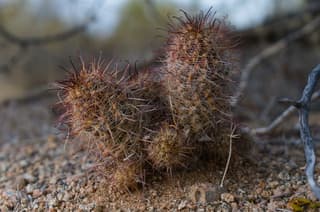
Thornber's Nipple Cactus
Cochemiea thornberi
Cochemiea thornberi, commonly known as Thornber's Nipple Cactus or Thornber's Fishhook Cactus, is a small clustering cactus native to the Sonoran Desert of Arizona and Sonora, Mexico. It forms dense clumps of cylindrical stems adorned with hooked central spines and produces delicate white to pink flowers with lavender midstripes, making it a prized gem among cactus collectors.
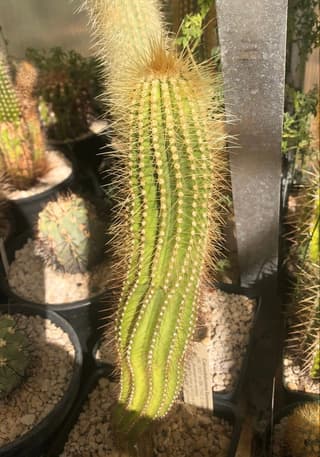
Fluminense Column Cactus
Coleocephalocereus fluminensis
Coleocephalocereus fluminensis is a columnar cactus endemic to the rocky inselbergs (isolated rocky hills) of southeastern Brazil, particularly in Rio de Janeiro and Espírito Santo states. It grows on exposed crystalline rock outcrops, forming dense clusters of erect ribbed stems covered in sharp spines. Adult plants develop a distinctive white woolly cephalium at the apex from which white to yellowish nocturnal flowers emerge.
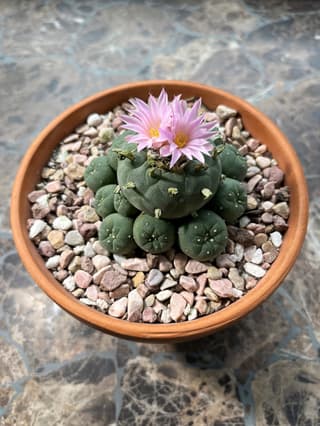
Peyote
Lophophora williamsii
Peyote (Lophophora williamsii) is a small, spineless, globose cactus native to the limestone deserts of northern Mexico and southern Texas within the Chihuahuan Desert region. It reaches only 2–7 cm in height and 4–12 cm in diameter, featuring a surface divided into rounded ribs and tufts of woolly hair (areoles) instead of spines. It grows extremely slowly, taking years to reach maturity and bloom with small pink, white, or yellowish flowers between spring and summer. It is primarily known for containing mescaline and other psychoactive alkaloids in its tissues, which is why its possession and cultivation are subject to legal restrictions in many countries.
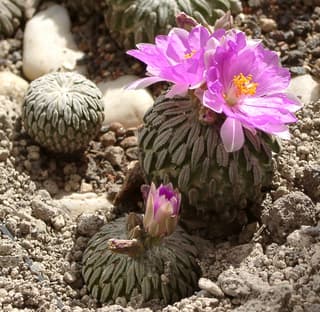
Hatchet Cactus
Pelecyphora
Pelecyphora is a genus of small, slow-growing Mexican cacti in the family Cactaceae, prized by collectors worldwide. Characterized by distinctive flattened tubercles resembling axe heads or woodlice, the most well-known species P. aselliformis (peyotillo) is native to San Luis Potosí, Mexico, and produces violet-red flowers in spring and summer. Both P. aselliformis and P. strobiliformis are listed on CITES Appendix I, making international trade strictly regulated.
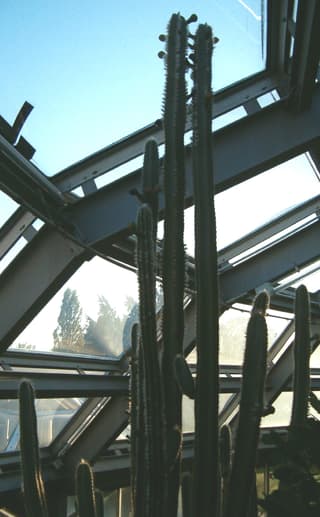
Caatinga Blue Pilosocereus
Pilosocereus catingicola
Pilosocereus catingicola is a columnar cactus endemic to the semi-arid Caatinga biome of northeastern Brazil. Known for its striking blue-green stems and nocturnal white to pink flowers, it can reach up to 10 meters tall in the wild. It is one of the most iconic cacti of the Brazilian Caatinga, highly adapted to drought and intense sun.
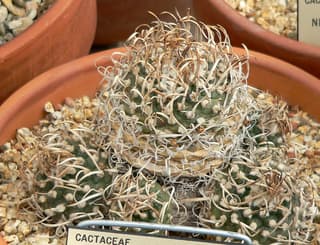
Schmiedicke's Turbinicarpus
Turbinicarpus schmiedickeanus
Turbinicarpus schmiedickeanus is a small, slow-growing cactus endemic to the arid deserts of Nuevo Leon, San Luis Potosi and Tamaulipas in northeastern Mexico. Its solitary, spherical to slightly depressed green stem barely reaches 5 cm tall and 4 cm wide, covered in pyramidal tubercles tipped with woolly areoles and a handful of slender spines. In summer it produces delicate white flowers from the woolly crown. The species is listed as Near Threatened by the IUCN and protected under CITES Appendix I due to habitat loss and over-collection.
Hard Care Succulents
Our selection of 9 hard succulents combines the characteristics of this category with specific care needs. For enthusiasts seeking a challenge.
Why Choose Hard Succulents?
Combining the beauty of succulents with hard difficulty level lets you enjoy this category while developing your gardening skills. Each plant was selected to offer the best characteristics of the category at the care level you are looking for.