153 Hard Pet Safe | 2026 Guide
Find 153 hard pet safe. Complete guide for your garden.
153 Pet Safe with hard level
Showing 1-36 of 153
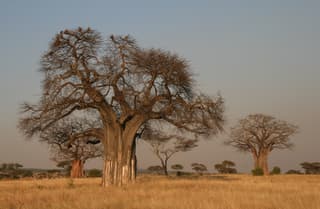
Baobab
Adansonia
Baobab (Adansonia) is a genus of iconic trees in the family Malvaceae, native to African savannas, Madagascar, and Australia. Known as the "Tree of Life," it stores thousands of liters of water in its massive swollen trunk, sustaining entire ecosystems during prolonged droughts. There are 8 species, all characterized by a colossal bottle-shaped trunk, wide spreading crown, and palmate leaves. Some specimens live over 1,000 years and are considered living natural monuments.
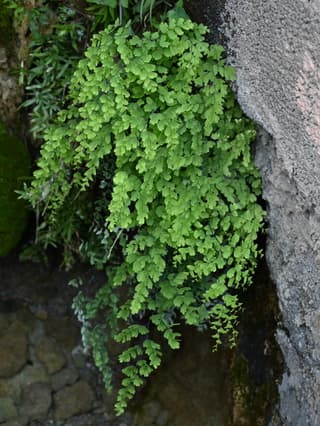
Maidenhair Fern (genus)
Adiantum
The Maidenhair Fern (genus Adiantum) is one of the most elegant and delicate ferns in cultivation, prized for its fine, fan-shaped leaflets borne on dark, wiry stems. With roughly 250 species distributed worldwide, the most popular indoors are A. capillus-veneris (Southern Maidenhair) and A. raddianum (Delta Maidenhair). It is notoriously demanding — high humidity and consistent moisture are non-negotiable.

Common Maidenhair Fern
Adiantum aethiopicum
Adiantum aethiopicum, commonly known as the common or bush maidenhair fern, is a small evergreen fern native to tropical and southern Africa, Madagascar, Australia, New Zealand and New Caledonia. Its delicate, fan-shaped leaflets are carried on thin, glossy, near-black stems that contrast beautifully with the bright green foliage. It spreads through creeping rhizomes, forming dense colonies in shaded, moist environments, whether in protected outdoor gardens or in pots indoors.
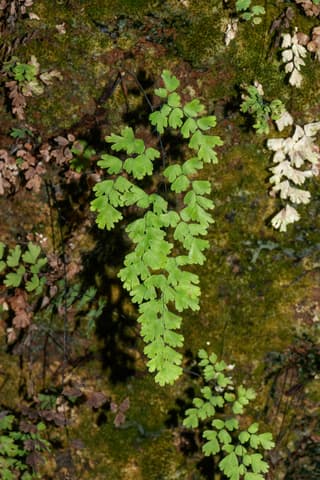
Maidenhair Fern
Adiantum capillus-veneris
Adiantum capillus-veneris, commonly known as the Maidenhair Fern, is one of the most elegant and delicate ferns in cultivation. Native to temperate and tropical regions worldwide, it features graceful, fan-shaped pinnae on black, wiry stems. Despite its ethereal beauty, it is notoriously demanding, requiring consistent moisture and high humidity to thrive. Its name derives from Latin, meaning "hair of Venus," reflecting its longstanding association with beauty and mythology.
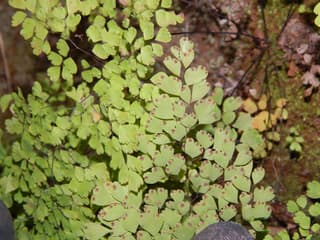
Delta Maidenhair Fern
Adiantum raddianum
Adiantum raddianum is a delicate and elegant fern native to South America, known for its fan-shaped fronds with triangular pinnules and shiny black stems. It is one of the most popular houseplants due to its ethereal and graceful appearance that brings freshness to any space.
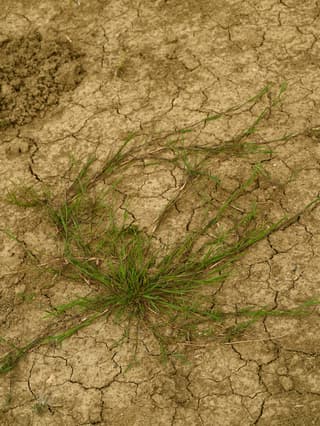
Creeping bentgrass
Agrostis stolonifera
Agrostis stolonifera, commonly known as creeping bentgrass, is a perennial cool-season grass native to temperate Europe and Asia. It is prized worldwide for producing extremely fine, dense turf through its creeping stolons that root at every node. Widely used on golf course putting greens, bowling greens, and elite sports fields, it demands intensive management but rewards with an unmatched carpet-like appearance.

Green-winged orchid
Anacamptis morio
Anacamptis morio, the green-winged orchid, is a tuberous terrestrial orchid native to Europe, North Africa and the Middle East. It grows in unimproved, nutrient-poor grassland and meadows, producing a short spike of purple-to-pink (occasionally white) helmet-shaped flowers marked with green veins in spring. The plant is dormant through summer, re-sprouting a basal leaf rosette in autumn, and depends entirely on symbiotic soil fungi to germinate and thrive.
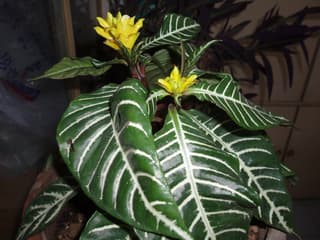
Zebra Plant
Aphelandra squarrosa
The Zebra Plant (Aphelandra squarrosa) is a tropical evergreen native to the Atlantic Forest of Brazil, belonging to the Acanthaceae family. It is prized for its dark green leaves with striking white veins resembling zebra stripes. It produces golden-yellow flower bracts shaped like spikes that last about six weeks, typically blooming in late summer to early fall.
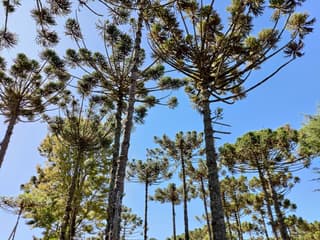
Parana Pine
Araucaria angustifolia
The Parana Pine (Araucaria angustifolia) is a majestic conifer native to the Atlantic Forest of southern Brazil, recognized for its distinctive candelabra-shaped crown and whorled branches. Listed as Critically Endangered by the IUCN due to extensive logging and deforestation, it can live for hundreds of years and grow up to 50 meters tall in the wild. Its seeds, known as pinhão, are a vital food source for wildlife and indigenous communities in southern Brazil.

Monkey Puzzle Tree
Araucaria araucana
Araucaria araucana, widely known as the monkey puzzle tree, is a large, slow-growing conifer native to the Andean forests of Chile and Argentina. It is a sacred tree for the Mapuche-Pehuenche people, whose traditional diet includes its edible seeds (piñones). With its striking spiral of sharp, triangular leaves, this ancient conifer can live for centuries and reach great heights in the wild.
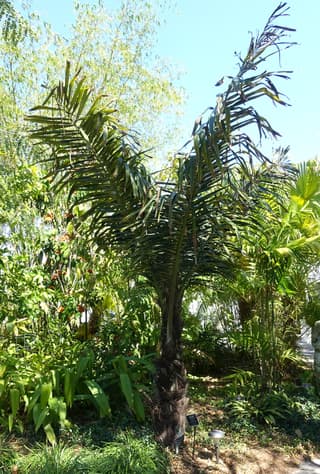
Sugar Palm
Arenga pinnata
The Sugar Palm (Arenga pinnata) is a majestic tropical palm native to Southeast Asia, particularly Malaysia and Indonesia. Its pinnate fronds can reach up to 8.5 meters long, making it one of the most dramatic palms in tropical horticulture. A hapaxanthic species, it flowers once over several years then dies. Beyond its ornamental value, it is one of the most economically important palms in the world, yielding sugar, wine, fiber, starch, and edible fruits.
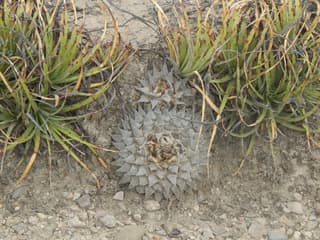
Living Rock Cactus
Ariocarpus
Ariocarpus is a genus of slow-growing, spineless cacti native to the limestone deserts of northern and central Mexico and southern Texas. Its thick, star-shaped tubercles are covered in a grey-brown, warty skin that mimics the surrounding rock and gravel almost perfectly, a camouflage strategy that protects it from grazing animals in the wild. Most of the plant body sits at or below soil level, anchored by a large taproot, with only the crown visible above ground. Woolly tufts of hair nestle between the tubercles, and in late summer or autumn mature plants produce showy white, pink, magenta, or purple daisy-like flowers from the center of the rosette.
Powdery Piggyback Mushroom
Asterophora lycoperdoides
Asterophora lycoperdoides is a fascinating mycoparasitic fungus that grows specifically on the decaying fruiting bodies of mushrooms from the Russula and Lactarius genera. It is characterized by a small cap, initially hemispherical and whitish, which soon becomes covered by a brown powdery mass of chlamydospores (asexual spores). It is a species with a very specific ecological niche, essential for the study of mycology and forest biodiversity.
Scaly Stalked Puffball
Battarrea phalloides
Battarrea phalloides, commonly known as the Scaly Stalked Puffball, is a rare and distinctive gasteroid fungus. It is characterized by a tall, woody, and shaggy stalk that can reach up to 40cm, topped by a spore-bearing cap. Initially, the spore mass is covered by a volva, which ruptures to reveal a brownish gleba. It is typically found in dry, sandy soils, often in association with hedgerows or ancient trees. This species is a saprobic fungus, meaning it derives nutrients from decaying organic matter, and it is highly specialized to arid or semi-arid microhabitats.
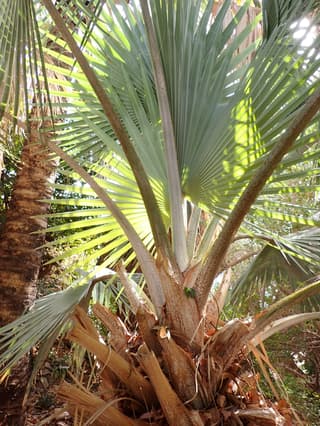
Bismarck Palm
Bismarckia nobilis
Bismarckia nobilis, commonly known as the Bismarck Palm, is one of the most majestic and sculptural palms in the world. Native to Madagascar, it stands out for its massive fan-shaped leaves with a unique silvery-blue hue. It is a slow-to-moderate growing plant that becomes the focal point of any garden due to its imposing stature and dense foliage.
Porcini and Allies
Boletus
Boletus is a genus of mushroom-producing fungi, including the famous King Bolete (Boletus edulis). These fungi are mycorrhizal, meaning they form a symbiotic relationship with the roots of specific trees, primarily in temperate forests. They are characterized by a fleshy cap and a pore surface instead of gills on the underside.
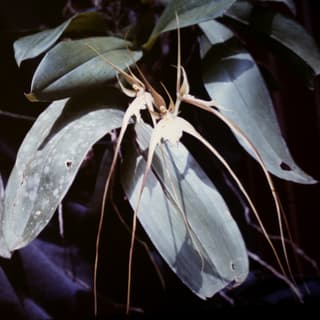
Spider Orchid
Brassia caudata
Brassia caudata, commonly known as the Spider Orchid, is a neotropical epiphytic orchid native to southern Mexico, Central America, the Caribbean, and northern South America. Its striking flowers feature long, spider-leg-like sepals and petals in yellow with brown markings, reaching up to 15 cm in length. It is a slow-growing evergreen perennial that blooms primarily in spring and summer.

Candelabra cactus
Browningia candelaris
Browningia candelaris is a large columnar cactus endemic to the arid slopes of the Andes in southern Peru and northern Chile, where it grows between 1,600 and 3,000 meters above sea level in the heart of the Atacama Desert, one of the driest places on Earth. Young specimens form a single, heavily spined columnar trunk with straight brown spines up to 15 cm long; with age, the upper part of the trunk develops a crown of slender, cylindrical, and nearly spineless branches, giving the plant the characteristic candelabra-like appearance for which it is named. It can reach between 5 and 7 meters in height, with a trunk up to 50 cm in diameter. Its white, tubular flowers, measuring 8 to 12 cm, bloom at night on the upper branches and last barely 24 hours, followed by fleshy, yellow, edible fruits up to 7 cm long.
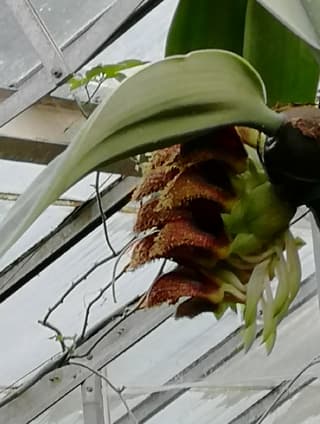
Stinking Orchid
Bulbophyllum phalaenopsis
Bulbophyllum phalaenopsis is one of the largest orchids in the Bulbophyllum genus, native to the tropical rainforests of New Guinea. It is notorious for its massive leaves, which can exceed 60 cm in length, and for its flowers that emit a powerful putrid odor — an evolutionary strategy to attract fly pollinators. Despite its unusual smell, it is a prized specimen among serious orchid collectors.
Black Bulgur
Bulgaria inquinans
Bulgaria inquinans, commonly known as the 'black rubber fungus,' is an ascomycete fungus that grows in clusters on recently felled oak logs and other hardwoods. It features a cup-shaped or disc-like fruiting body, shiny black in color with a gelatinous texture when moist, becoming leathery when dry. Its upper surface is smooth and produces black spores that can stain the hands upon contact.
Oak Bolete
Butyriboletus appendiculatus
Butyriboletus appendiculatus, known as the Oak Bolete or Butter Bolete, is a highly sought-after edible mushroom found in deciduous forests, particularly under oak and beech trees. It is characterized by its leathery brown cap, bright yellow pores on the underside that bruise slightly blue when touched, and a stem that is often rooting or tapered toward the base. It is a mycorrhizal fungus, meaning it lives in a complex symbiotic relationship with tree roots, making it nearly impossible to cultivate artificially.
Small Spider-orchid
Caladenia parva
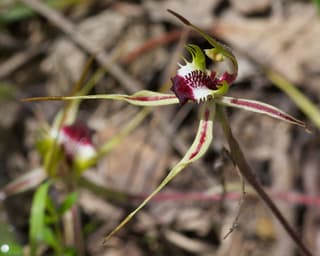
Caladenia parva is a small terrestrial orchid endemic to southeastern Australia, found in scattered areas of southern Victoria and the far southeast of South Australia. It is a deciduous perennial herb with a single underground tuber and a single narrow leaf 3 to 10 cm long, usually with small red spots at the base. Between September and November (southern spring), it produces one or two greenish flowers with red stripes on a 5 to 15 cm stem, featuring a greenish-white labellum with a curled dark red tip. It grows in open forests, woodlands, and coastal vegetation in well-drained sandy-clay soils.
Calathea / Prayer Plant (genus)
Calathea
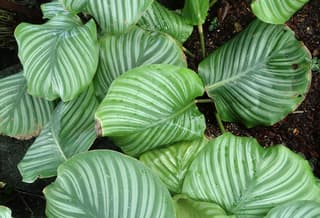
Calathea is a genus of tropical foliage plants in the family Marantaceae, native to the tropical forests of South America. They are prized for their strikingly patterned leaves in shades of green, purple, and silver. Many species were reclassified into the genus Goeppertia in 2012, but Calathea remains the widely used common name.
Peacock Plant
Calathea makoyana
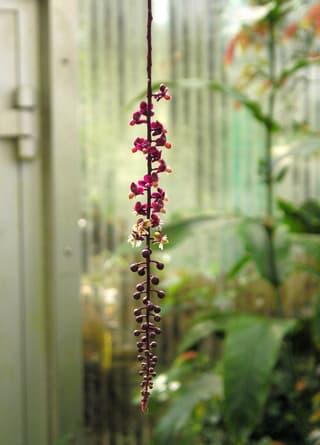
Calathea makoyana is a tropical plant native to Brazil, famous for its striking leaf pattern that resembles peacock feathers. It belongs to the Marantaceae family and is known as a "prayer plant" because it moves its leaves throughout the day, opening them to capture light and closing them at night.
Round-leaf Calathea
Calathea orbifolia
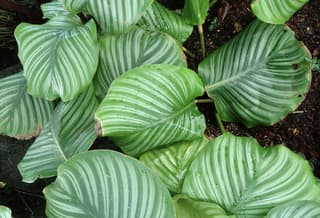
Calathea orbifolia is a tropical plant native to Bolivia, known for its stunning large, rounded leaves with silver and green stripes. It is one of the most popular calatheas but also one of the most demanding in terms of care, especially regarding ambient humidity.
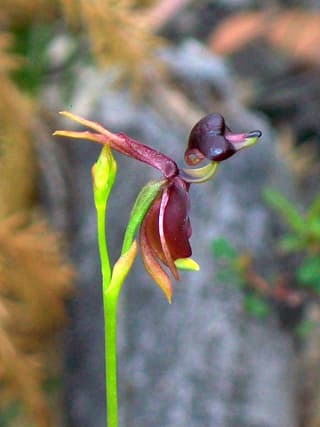
Flying Duck Orchid
Caleana major
The Flying Duck Orchid (Caleana major) is one of the most extraordinary flowering plants in the world. Native to eastern and southern Australia, this small terrestrial orchid produces remarkable reddish-brown flowers whose labellum bears a striking resemblance to a duck in flight. It grows 20–40 cm tall and flowers from spring through summer. Pollination occurs via male sawflies that are deceived into pseudocopulation with the duck-shaped labellum.
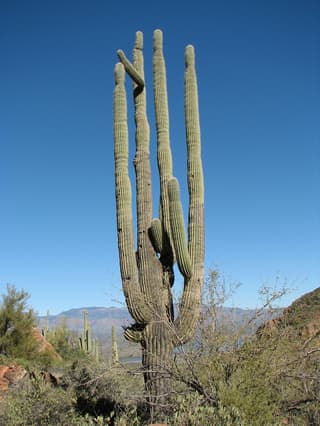
Saguaro
Carnegiea gigantea
The Saguaro (Carnegiea gigantea) is the largest cactus in North America, native to the Sonoran Desert of the United States and Mexico. Recognizable by its towering height of up to 60 feet (18 m) and iconic branching arms, it is the symbol of the American Southwest and the state of Arizona. Saguaro grows extremely slowly — only about 1–1.5 inches per year — and can live for over 200 years.
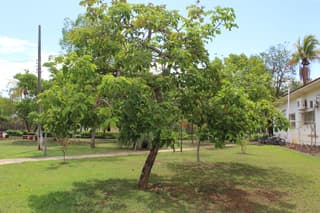
Pequi Tree
Caryocar brasiliense
The Pequi Tree (Caryocar brasiliense) is a native tree of the Brazilian Cerrado savanna, iconic to the culture of Central Brazil. With deciduous leaves and fragrant white flowers pollinated by bats, it produces the famous pequi fruit, rich in carotenoids, vitamin C and fatty acids. It can reach 6 to 11 meters in height, with slow growth, taking 4 to 8 years to produce fruit. It is a keystone species for Cerrado biodiversity, serving as food for birds, mammals and bats.
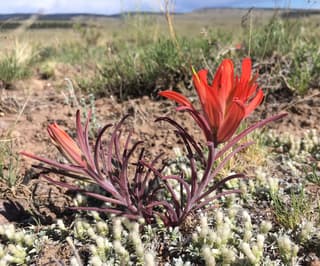
Wholeleaf Indian Paintbrush
Castilleja integra
Castilleja integra (Wholeleaf Indian Paintbrush) is a perennial wildflower native to the southwestern United States and northern Mexico. Its vivid scarlet-to-orange bracts resemble a paintbrush dipped in red paint, while the true flowers hide within. A facultative root hemiparasite, it taps into neighboring plant roots to extract water and nutrients.
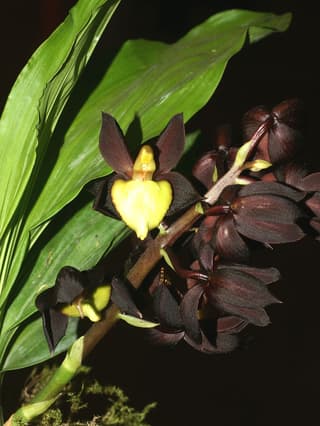
Catasetum
Catasetum
Catasetum is a genus of roughly 166 species of deciduous, epiphytic orchids native to the tropical forests of Mexico, Central America, the Caribbean, and South America as far south as Argentina. Plants form clusters of ribbed, fleshy pseudobulbs topped with pleated leaves that are shed completely once each year. Catasetum is famous among orchid growers for producing separate male and female flowers, sometimes even on the same inflorescence, and for its explosive pollination mechanism: brushing the antennae-like appendages on a male flower triggers the column to catapult a sticky pollen packet onto a visiting insect.
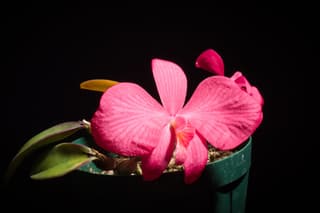
Wittig's Cattleya
Cattleya wittigiana
Cattleya wittigiana is a mini-miniature epiphytic orchid native to the misty cloud forests of the Mata Atlantica in Espirito Santo and Minas Gerais, Brazil, where it clings to mossy, rough-barked trees at elevations of 700-2000 m. Formerly classified as Sophronitis wittigiana (and closely related to Cattleya coccinea), it produces tiny globular pseudobulbs, each topped with a single stiff leathery leaf, yet surprises growers with rose-pink to magenta flowers 4-6.5 cm across during the winter months. In habitat it is pollinated by hummingbirds and thrives in cool, bright, windy, humid conditions typical of exposed mountain ridges.
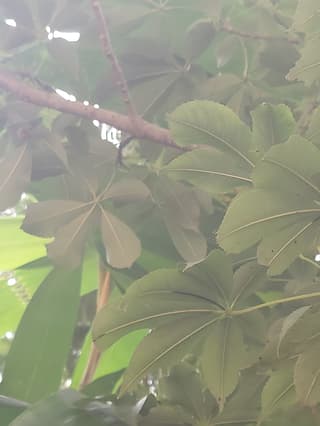
Kapok Tree
Ceiba pentandra
The Kapok Tree (Ceiba pentandra) is one of the tallest trees in the Amazon rainforest, capable of exceeding 60 meters in height and living for more than 300 years. Known for its thorny trunk in youth and the massive buttress roots that anchor its umbrella-shaped crown above the forest canopy, it is revered as the "Queen of the Forest" and holds a central place in the cosmology of many Amazonian peoples, as well as in Maya mythology, where it was regarded as the sacred World Tree (Yax Che) connecting the underworld, earth, and sky. Its cream-to-pink flowers open at night when the tree is leafless, attracting bat pollinators, and its seed pods release the soft, buoyant fiber known as kapok, historically used to stuff mattresses, pillows, and life jackets.
Green Elfcup
Chlorociboria aeruginascens
Chlorociboria aeruginascens, known as the Green Elfcup, is a saprobic fungus famous for its ability to stain the wood it decomposes a deep, blue-green shade. The fruiting bodies are small, often only 2-5 mm wide, and have a characteristic cup or funnel shape. They typically grow on moist, barkless hardwood, especially oak and beech. The green color in the wood is caused by the pigment xylindein, and this stained wood has been sought after for centuries for use in decorative woodwork such as marquetry.
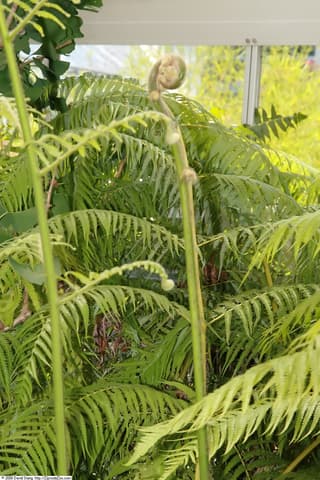
Mexican Tree Fern
Cibotium schiedei
Cibotium schiedei, commonly known as the Mexican Tree Fern, is an extremely slow-growing tree fern native to the cloud forests of Mexico. Its fibrous trunk, covered in soft reddish-gold hairs, supports silky light-green fronds that can reach 8–11 feet in length, forming an arched and sculptural canopy. Evergreen and without a dormancy period, it is a highly valued species in tropical gardens and as an indoor architectural plant, though it requires patience: it takes several years just to form a visible trunk.
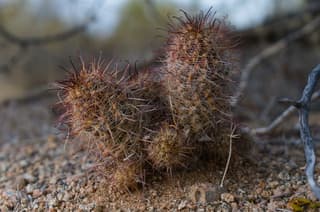
Thornber's Nipple Cactus
Cochemiea thornberi
Cochemiea thornberi, commonly known as Thornber's Nipple Cactus or Thornber's Fishhook Cactus, is a small clustering cactus native to the Sonoran Desert of Arizona and Sonora, Mexico. It forms dense clumps of cylindrical stems adorned with hooked central spines and produces delicate white to pink flowers with lavender midstripes, making it a prized gem among cactus collectors.
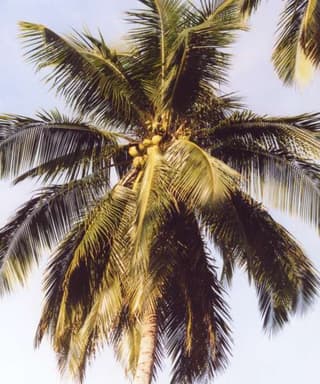
Coconut Palm
Cocos nucifera
The coconut palm (Cocos nucifera) is a majestic tropical palm, iconic along coastlines worldwide. It can reach up to 30 meters in height and produces fruit year-round in ideal climates. One of the most versatile plants in the world, with uses ranging from food to construction materials.
Hard Care Pet Safe
Our selection of 153 hard pet safe combines the characteristics of this category with specific care needs. For enthusiasts seeking a challenge.
Why Choose Hard Pet Safe?
Combining the beauty of pet safe with hard difficulty level lets you enjoy this category while developing your gardening skills. Each plant was selected to offer the best characteristics of the category at the care level you are looking for.