Vitaceae
Lizard Vine: Best for Low Light
Tetrastigma obtectum
Tetrastigma obtectum is a fast-growing, vigorous climbing vine that thrives in low to indirect light, requiring regular watering and high humidity. It prefers well-draining soil kept slightly moist between waterings, temperatures between 7–28 °C (45–82 °F), and does not require direct sunlight. Regular fertilization every two weeks during the spring and summer promotes lush growth. Prune stray shoots to maintain its shape and provide a climbing support or trellis for optimal development.
Every 5 days
Low light
7° - 28°C
50% - 80%
Categories
What is Lizard Vine?
Lizard Vine (Tetrastigma obtectum) is a medium-care plant from the Vitaceae family. Tetrastigma obtectum, known as the lizard vine or Chinese tetrastigma, is a lush evergreen climbing vine from the Vitaceae family. It is native to southern China and parts of Southeast Asia, where it grows on forest edges, along riverbanks, and on cool, moist mountain slopes at altitudes up to 2,000...
Lizard Vine grows up to 4.0m, spread of 250cm, watering every 5 days, 7°C – 28°C, 50–80% humidity. It is suitable for indoor environments and safe for pets.
Unlike many popular species, Lizard Vine is safe to keep around pets. Without adequate drainage, root rot can develop within 10 days.
How to Care for Lizard Vine?
TLDR: Lizard Vine needs Low light, watering every 5 days, and temperatures between 7-28°C with 50-80% humidity.
How Often Should You Water Lizard Vine?
Water thoroughly every 5–7 days during the summer, allowing the top layer of soil to dry out between waterings. Reduce watering to approximately every two weeks in the winter. Avoid standing water in the pot—root rot is the most common cause of issues. Use room-temperature water and always ensure the pot has adequate drainage holes.
How Much Light Does Lizard Vine Need?
Tetrastigma obtectum thrives best in low to partial indirect light, ideally placed near an east- or north-facing window, or one to two meters away from a larger window. It has a low tolerance for direct sunlight, which can scorch the leaves. Low-to-medium light conditions are optimal—the plant is well-suited for darker rooms and terrarium setups.
What Is the Best Soil for Lizard Vine?
Use a nutrient-rich, well-draining soil mix—ideally one part potting mix, one part perlite, and one part vermiculite. A pH between 6.0 and 7.5 is optimal. Ensure there are sufficient drainage holes in the pot. Repot and refresh the soil every two years in the spring, as the plant grows quickly and can become root-bound.
What Pot Should You Use for Lizard Vine?
Terracotta or clay pots with drainage holes are recommended, as they help prevent overwatering-related root rot by allowing excess moisture to evaporate. Avoid glass pots without drainage. Choose a pot that is 2–3 cm (about 1 inch) larger than the root ball. Hanging baskets or pots with a trellis are ideal for highlighting the plant's climbing growth habit.
Care Schedule
Fertilize
Every 14 days
Misting
Every 7 days
Rotate
Every 14 days
Repot
Every 730 days
What Is Lizard Vine and Where Does It Come From?
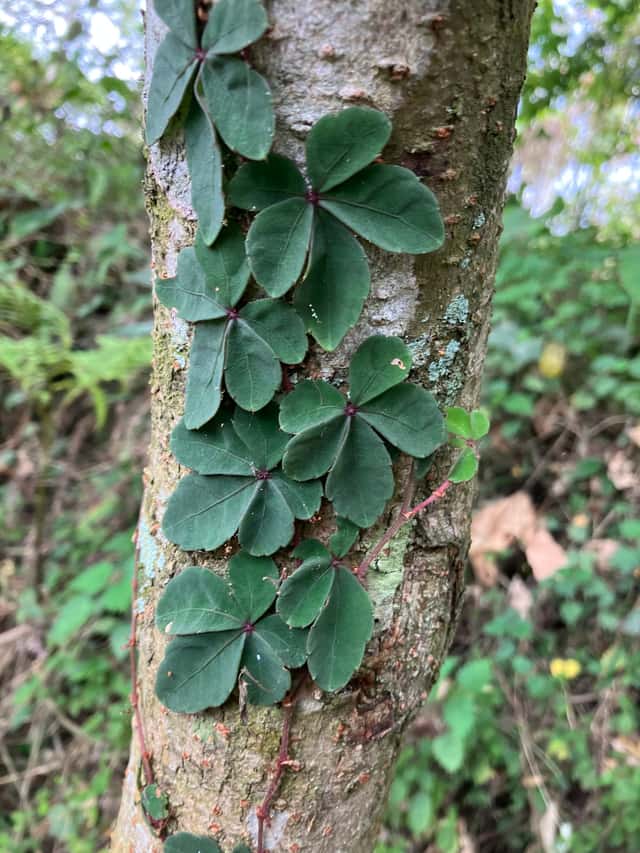
Tetrastigma obtectum, known as the lizard vine or Chinese tetrastigma, is a lush evergreen climbing vine from the Vitaceae family. It is native to southern China and parts of Southeast Asia, where it grows on forest edges, along riverbanks, and on cool, moist mountain slopes at altitudes up to 2,000 meters. The plant features characteristic palmate leaves with five lanceolate leaflets and produces small greenish-white flowers in the summer, followed by spherical, grape-like black berries. It is particularly popular as a terrarium plant and indoor ornamental due to its ability to thrive in low light and high humidity.
How to Propagate Lizard Vine?
Cuttings
- 1 Cut a stem cutting of 8–12 cm (3–5 inches) with at least two nodes in the spring or early summer.
- 2 Remove the lower leaves and dip the end in rooting hormone.
- 3 Plant in a mixture of perlite and potting mix (1:1) and keep moist.
- 4 Cover with a plastic bag or place in a humid environment to maintain high humidity.
- 5 Roots usually form after 3–6 weeks at temperatures around 20–25 °C (68–77 °F).
- 6 Transfer to regular soil once the root system is well-established.
Layering
- 1 Bend a flexible stem down to the soil surface and secure it with a U-shaped clip.
- 2 Ensure at least one node is in contact with moist soil.
- 3 Keep slightly moist until roots form (4–8 weeks).
- 4 Separate from the mother plant and pot up individually.
How Big Does Lizard Vine Grow?
TLDR: Lizard Vine can reach up to 4.0m tall with Fast growth rate.
Max height
4.0m
Spread
2.5m
Growth rate
Fast
Foliage
Evergreen
Plant Uses
Ornamental
Great for decoration
Medicinal
Medicinal properties
Medicinal Uses
- Traditionally used in Chinese ethnomedicine for rheumatic pain and joint inflammation
- Applied for trauma and osteomyelitis in southern China
- Used for menstrual disorders in folk medicine
- The Tetrastigma genus contains flavonoids (kaempferol, apigenin, quercetin) with documented anti-inflammatory and antioxidant properties
Is your plant showing symptoms?
Click on the symptom to discover possible causes:
What Diseases Commonly Affect Lizard Vine?
TLDR: Lizard Vine is susceptible to 8 known diseases. Monitor regularly for early detection.
Root Rot
Root rot is a serious fungal disease that affects the root system of plants, causing them to decay and die. It is primarily caused by overwatering, poor drainage, or soil-borne fungi such as Pythium, Phytophthora, Rhizoctonia, and Fusarium. The disease thrives in waterlogged conditions where roots are deprived of oxygen, making them susceptible to fungal infection.
Spider Mites
Spider mites are tiny arachnids (less than 1/20 inch long) related to spiders and ticks that feed on plant sap. They thrive in hot, dry conditions and can cause significant damage to ornamental and vegetable plants. During severe infestations, crop losses can reach 14% or higher as these pests disrupt vital plant processes including photosynthesis, carbon dioxide absorption, and transpiration.
Aphids
Aphids are small, soft-bodied, pear-shaped insects (1/16 to 1/8 inch long) that feed by sucking nutrient-rich sap from plants. They reproduce rapidly and can quickly weaken plants, causing distorted growth and transmitting plant viruses. Aphids come in various colors including green, black, red, yellow, brown, and gray. They secrete honeydew, a sticky substance that attracts ants and encourages sooty mold growth.
Scale Insects
Scale insects are small sap-sucking pests that appear as brown, shell-like bumps on plant stems and leaves. There are over 25 species, divided into armored (hard) and unarmored (soft) scales. They feed by piercing plant tissue and extracting sap, which weakens the plant and can lead to yellowing, stunted growth, and even death if left untreated. They also excrete honeydew, which attracts ants and promotes sooty mold growth.
Meaning & Symbolism
In traditional Chinese folk culture, the Tetrastigma genus symbolizes vitality, resilience, and healing. The plant is linked to ancient medical traditions in southern China, where it has been used as a remedy for rheumatic ailments and trauma, serving as a symbol of nature's healing power.
Compare with similar plants
| Attribute | Difficulty | Light | Watering | Pet Safe |
|---|---|---|---|---|
| Dark Fieldcap | Medium | Low light | 2d | ⚠️ |
| Azalea | Medium | Partial shade | 3d | ⚠️ |
| Muriel's Bamboo | Medium | Partial shade | 3d | ✓ |
| Bougainvillea | Medium | Direct sun | 7d | ⚠️ |



