Fabaceae
Locust (Robinia): genus guide
Robinia
Locusts need little: full sun and soil that does not stay waterlogged. They cope with drought, poor soil and even salt wind, since their roots fix nitrogen. The usual problem is the opposite: they send up suckers from the roots and spread. Choose the spot carefully, away from beds and paving, and avoid pruning in spring, when the wood bleeds sap.
Every 14 days
Direct sun
° - °C
% - %
Categories
What is Locust?
Locust (Robinia) is a easy-care plant from the Fabaceae family. Robinia is a genus of trees and shrubs in the pea family (Fabaceae), native to North America and commonly called locusts. Plants of the World Online accepts four species, although other authorities count up to ten. The leaves are pinnate, with 7 to 21 oval leaflets, and drop in autumn. In spring the...
Locust grows up to 25.0m, watering every 14 days. It is not suitable for indoor environments and not safe for pets.
Unlike many tropical plants, Locust tolerates watering mistakes. Best for beginners. Without precautions, ingestion can cause irritation in pets. Keep out of reach of cats and dogs.
How to Care for Locust?
TLDR: Locust needs Direct sun, watering every 14 days, and temperatures between 15-30°C with 40-70% humidity.
How Often Should You Water Locust?
Water regularly only in the first year, until the roots are established. After that the plant tolerates drought and rarely needs watering, at most every two weeks in a long dry spell.
How Much Light Does Locust Need?
Full sun, at least 6 hours of direct sun a day. In shade it flowers poorly.
What Is the Best Soil for Locust?
Grows in almost any soil, from sand to clay, including poor or rocky ground, as long as it drains. It does not tolerate waterlogged soil.
What Pot Should You Use for Locust?
Best planted in the ground. Small species such as R. hispida can live in a large, deep container, which also holds back the root suckers.
What Is Locust and Where Does It Come From?
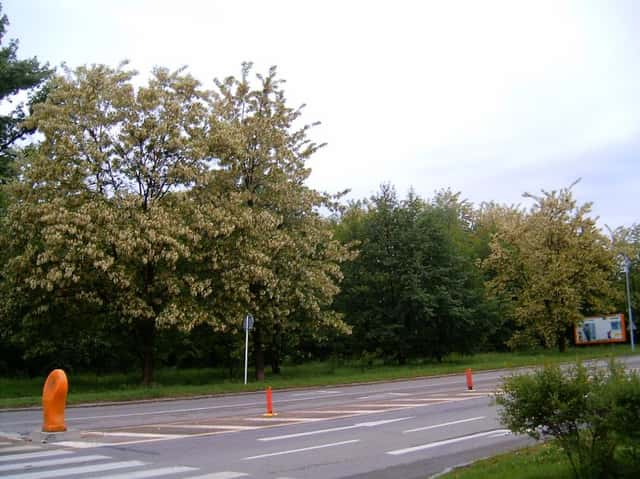
Robinia is a genus of trees and shrubs in the pea family (Fabaceae), native to North America and commonly called locusts. Plants of the World Online accepts four species, although other authorities count up to ten. The leaves are pinnate, with 7 to 21 oval leaflets, and drop in autumn. In spring the plants carry hanging clusters of fragrant white or pink pea-like flowers. Many species have thorny shoots and some have sticky hairs. The best known is black locust, Robinia pseudoacacia, a tree up to 25 m tall that is planted worldwide and has become invasive in many countries.
How to Propagate Locust?
Seed
Untreated seeds can take months to germinate.
- 1 Lightly sand the hard seed coat or soak the seeds overnight in hot water
- 2 Sow 1-2 cm deep in loose soil
- 3 Keep moist in a sunny spot
- 4 Move seedlings to their final place while still small
Materials needed:
Root suckers
Wear gloves: the shoots are thorny.
- 1 Pick a sucker that has come up from a root, away from the trunk
- 2 Cut the root joining it to the parent tree with a spade
- 3 Lift the sucker with a ball of soil
- 4 Replant and water well
Materials needed:
How Big Does Locust Grow?
TLDR: Locust can reach up to 25.0m tall with Fast growth rate.
Max height
25.0m
Growth rate
Fast
Foliage
Deciduous
Warning: Toxic Plant
This plant can be toxic if ingested. Keep out of reach of:
Plant Uses
Ornamental
Great for decoration
Edible
Can be consumed
Culinary Uses
- R. pseudoacacia flowers battered and fried as fritters, common in many parts of Europe
- Flowers in teas and pancakes
- Only the flowers are edible: bark, leaves and seeds are toxic
Is your plant showing symptoms?
Click on the symptom to discover possible causes:
What Diseases Commonly Affect Locust?
TLDR: Locust is susceptible to 9 known diseases. Monitor regularly for early detection.
Leafminers
Leafminers are the larvae of various insects including flies, moths, sawflies, and beetles that tunnel between leaf surfaces, creating distinctive serpentine trails or blotchy patches. While primarily cosmetic, severe infestations can weaken plants by reducing photosynthesis capacity and making them susceptible to secondary infections.
Caterpillars
Caterpillars are the larval stage of moths and butterflies that feed voraciously on plant foliage, stems, flowers, and fruits. Common species include cabbage loopers, tomato hornworms, armyworms, and cutworms. These pests can cause extensive damage by consuming large amounts of plant tissue in a short time. They vary in size from small (1/4 inch) to large (5 inches), with colors ranging from green to brown, often featuring stripes or spots. Caterpillars are highly mobile and can quickly spread throughout gardens, making them one of the most destructive common pests.
Curculionidae
Curculionidae (weevils) are small beetles that feed on plants. Adults chew leaf margins, leaving crescent-shaped notches, primarily at night. The larvae live in the substrate and consume roots, causing decline, yellowing, and wilting even when the substrate is moist, and in severe cases, plant death. They frequently affect ornamentals and garden plants such as strawberries, citrus, roses, hydrangeas, azaleas, blueberries, begonias, and many potted plants.
Scale Insects
Scale insects are small sap-sucking pests that appear as brown, shell-like bumps on plant stems and leaves. There are over 25 species, divided into armored (hard) and unarmored (soft) scales. They feed by piercing plant tissue and extracting sap, which weakens the plant and can lead to yellowing, stunted growth, and even death if left untreated. They also excrete honeydew, which attracts ants and promotes sooty mold growth.
Fun Facts
The genus is named after Jean Robin and his son Vespasien, gardeners to the French kings, who brought the plant to Europe in 1601
The roots fix nitrogen, so locusts grow in poor soil and are used to reclaim degraded land
In Europe, honey from black locust flowers is sold as acacia honey
Frequently asked questions
Is locust (Robinia) poisonous?
Is black locust an acacia?
How do I stop a locust from spreading?
When does Robinia flower?
Compare with similar plants
| Attribute | Difficulty | Light | Watering | Pet Safe |
|---|---|---|---|---|
| Field Maple | Easy | Bright indirect | 14d | ✓ |
| Iberian Houseleek | Easy | Direct sun | 14d | ✓ |
| Silver Birch | Easy | Direct sun | 14d | ✓ |
| Common Blanketflower | Easy | Direct sun | 10d | ✓ |





