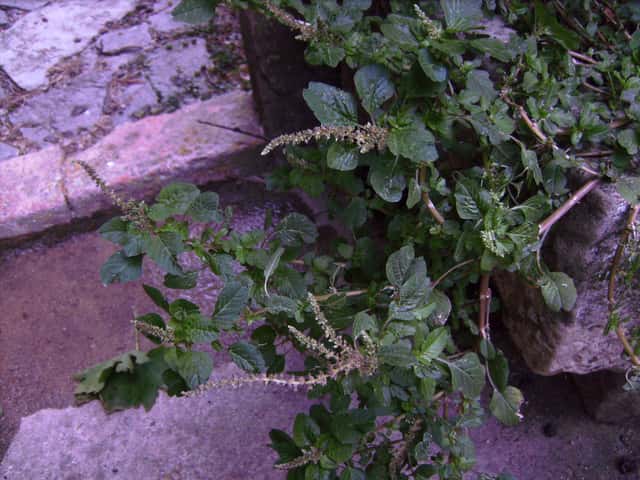
Amaranthaceae
Low Amaranth (Amaranthus deflexus)
Amaranthus deflexus
Extremely hardy and drought-tolerant. Thrives in full sun with well-drained soil. Water every 5 days, letting soil dry slightly between waterings. Monthly fertilization is sufficient. Prune periodically to encourage bushy leafy growth. No misting needed.
Every 5 days
Bright indirect
10° - 38°C
30% - 70%
Categories
What is Low Amaranth?
Low Amaranth (Amaranthus deflexus) is a easy-care plant from the Amaranthaceae family. Low Amaranth (Amaranthus deflexus) is a short-lived perennial or annual herb native to South America, now naturalized worldwide in warm and temperate regions. A highly adaptable and resilient weed-edible, its leaves and seeds are protein-rich and edible. Commonly found in disturbed soils, roadsides,...
Low Amaranth grows up to 50cm, spread of 60cm, watering every 5 days, 10°C – 38°C, 30–70% humidity. It is not suitable for indoor environments and safe for pets.
Unlike many tropical plants, Low Amaranth tolerates watering mistakes. Best for beginners. Unlike many popular species, Low Amaranth is safe to keep around pets.
How to Care for Low Amaranth?
TLDR: Low Amaranth needs Bright indirect, watering every 5 days, and temperatures between 10-38°C with 30-70% humidity.
How Often Should You Water Low Amaranth?
Water every 5 days. Allow the top layer of soil to dry slightly between waterings. Avoid waterlogging — roots are susceptible to rot in soggy conditions.
How Much Light Does Low Amaranth Need?
Requires full sun — 6 to 8 hours of direct sunlight per day. In partial shade, growth slows and leaf production drops significantly.
What Is the Best Soil for Low Amaranth?
Prefers well-drained, sandy or loamy soil. Ideal pH between 6.0 and 7.5. Tolerates nutrient-poor soils well.
Care Schedule
Fertilize
Every 30 days
What Is Low Amaranth and Where Does It Come From?
Low Amaranth (Amaranthus deflexus) is a short-lived perennial or annual herb native to South America, now naturalized worldwide in warm and temperate regions. A highly adaptable and resilient weed-edible, its leaves and seeds are protein-rich and edible. Commonly found in disturbed soils, roadsides, and gardens.
How Big Does Low Amaranth Grow?
TLDR: Low Amaranth can reach up to 50cm tall with Fast growth rate.
Max height
50cm
Spread
60cm
Growth rate
Fast
Foliage
Semi-evergreen
Plant Uses
Edible
Can be consumed
Medicinal
Medicinal properties
Ground Cover
Soil coverage
Medicinal Uses
- Traditionally used to treat fever, inflammation, and digestive ailments
Culinary Uses
- Young leaves cooked as greens or added to soups and stews; seeds ground into flour; popular in Brazilian northeastern cuisine
Is your plant showing symptoms?
Click on the symptom to discover possible causes:
What Diseases Commonly Affect Low Amaranth?
TLDR: Low Amaranth is susceptible to 5 known diseases. Monitor regularly for early detection.
Aphids
Aphids are small, soft-bodied, pear-shaped insects (1/16 to 1/8 inch long) that feed by sucking nutrient-rich sap from plants. They reproduce rapidly and can quickly weaken plants, causing distorted growth and transmitting plant viruses. Aphids come in various colors including green, black, red, yellow, brown, and gray. They secrete honeydew, a sticky substance that attracts ants and encourages sooty mold growth.
Anthracnose
Anthracnose is a fungal disease caused by fungi in the genus Colletotrichum that affects many plants, including vegetables, fruits, and trees. The disease thrives in cool, wet conditions, causing dark, sunken lesions on leaves, stems, flowers, and fruits.
Leafminers
Leafminers are the larvae of various insects including flies, moths, sawflies, and beetles that tunnel between leaf surfaces, creating distinctive serpentine trails or blotchy patches. While primarily cosmetic, severe infestations can weaken plants by reducing photosynthesis capacity and making them susceptible to secondary infections.
Caterpillars
Caterpillars are the larval stage of moths and butterflies that feed voraciously on plant foliage, stems, flowers, and fruits. Common species include cabbage loopers, tomato hornworms, armyworms, and cutworms. These pests can cause extensive damage by consuming large amounts of plant tissue in a short time. They vary in size from small (1/4 inch) to large (5 inches), with colors ranging from green to brown, often featuring stripes or spots. Caterpillars are highly mobile and can quickly spread throughout gardens, making them one of the most destructive common pests.
Fun Facts
Low Amaranth uses C4 photosynthesis, making it remarkably efficient with water and light — one reason it thrives where other plants struggle.
Its tiny seeds — roughly 1,000 seeds weigh only 0.4 g — are packed with protein and essential amino acids.
Listed as an invasive weed in over 50 countries, yet deliberately cultivated as a leafy vegetable in tropical regions.
Frequently asked questions
Are low amaranth leaves edible?
Is it drought tolerant?
Can it grow in a pot?
Compare with similar plants
| Attribute | Difficulty | Light | Watering | Pet Safe |
|---|---|---|---|---|
| Field Maple | Easy | Bright indirect | 14d | ✓ |
| Silver Birch | Easy | Direct sun | 14d | ✓ |
| Common Blanketflower | Easy | Direct sun | 10d | ✓ |
| Cushion Bush | Easy | Direct sun | 14d | ✓ |





