Malvaceae
Mandrinette (Hibiscus genevei)
Hibiscus genevei
A demanding tropical shrub: plenty of light (morning sun or filtered sun), warmth between 12 and 32 °C, high humidity and a fertile, well-draining mix kept lightly moist. It tolerates neither frost nor waterlogging.
Every 4 days
Bright indirect
12° - 32°C
60% - 85%
Categories
What is Mandrinette?
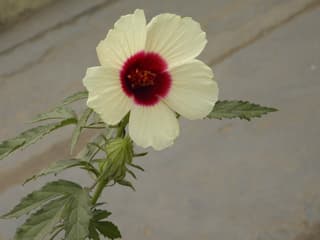
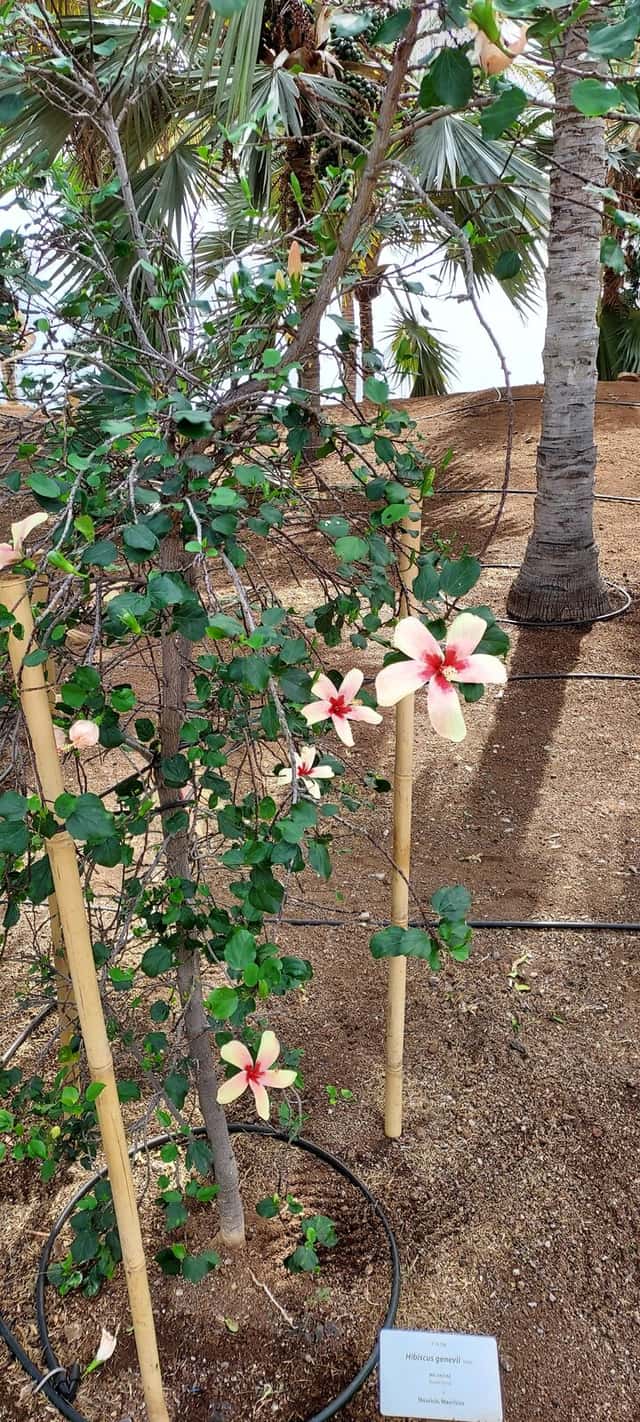
Mandrinette (Hibiscus genevei) is a hard-care plant from the Malvaceae family. Hibiscus genevei (also spelled H. genevii) is a shrub in the mallow family, Malvaceae, endemic to the island of Mauritius in the Indian Ocean. It grows 2-3 m tall with elliptic leaves 4-7 cm long and solitary flowers on long stalks, with five spreading petals in white to pale pink and a red centre,...
Mandrinette grows up to 3.0m, watering every 4 days, 12°C – 32°C, 60–85% humidity. It is not suitable for indoor environments and safe for pets.
Unlike easy-care plants, Mandrinette demands constant attention to humidity and light. Not recommended for beginners. Unlike many popular species, Mandrinette is safe to keep around pets.
How to Care for Mandrinette?
TLDR: Mandrinette needs Bright indirect, watering every 4 days, and temperatures between 12-32°C with 60-85% humidity.
How Often Should You Water Mandrinette?
Water when the top 2-3 cm of the mix is dry, usually every 3-5 days in warm weather and less often in winter. Keep the soil lightly moist, never soggy.
How Much Light Does Mandrinette Need?
Needs strong light to flower: full morning sun or bright filtered light. In very hot climates, shade it from harsh afternoon sun.
What Is the Best Soil for Mandrinette?
Use a fertile, humus-rich, well-draining mix (garden soil with compost and coarse sand or perlite) at pH 6.0-7.0.
What Pot Should You Use for Mandrinette?
A large, deep ceramic or plastic pot with good drainage holes; in tropical climates, plant it straight in the ground.
Care Schedule
Fertilize
Every 21 days
What Is Mandrinette and Where Does It Come From?
Hibiscus genevei (also spelled H. genevii) is a shrub in the mallow family, Malvaceae, endemic to the island of Mauritius in the Indian Ocean. It grows 2-3 m tall with elliptic leaves 4-7 cm long and solitary flowers on long stalks, with five spreading petals in white to pale pink and a red centre, often over 10 cm across. It was thought extinct for about 150 years until it was rediscovered in 1968, and it is now a very rare plant grown mainly in conservation nurseries and botanic gardens.
How to Propagate Mandrinette?
Stem cutting
Warmth (25 °C or more) and high humidity speed up rooting; this is how nurseries multiply rare hibiscus.
- 1 Take a 10-15 cm semi-hardwood cutting
- 2 Strip the lower leaves, leaving 2-3 at the top
- 3 Dip the base in rooting hormone
- 4 Insert into a light, moist mix and keep warm, bright and humid
Materials needed:
Seed
The seeds are grey and oval, borne in capsules 2-2.5 cm long.
- 1 Lightly nick the seeds or soak them in warm water for 12 hours
- 2 Sow 0.5 cm deep in moist mix
- 3 Keep at 22-28 °C in a bright spot
- 4 Pot on seedlings once they have 3-4 leaves
Materials needed:
How Big Does Mandrinette Grow?
TLDR: Mandrinette can reach up to 3.0m tall with Medium growth rate.
Max height
3.0m
Foliage
Evergreen
Plant Uses
Ornamental
Great for decoration
Is your plant showing symptoms?
Click on the symptom to discover possible causes:
What Diseases Commonly Affect Mandrinette?
TLDR: Mandrinette is susceptible to 8 known diseases. Monitor regularly for early detection.
Root Rot
Root rot is a serious fungal disease that affects the root system of plants, causing them to decay and die. It is primarily caused by overwatering, poor drainage, or soil-borne fungi such as Pythium, Phytophthora, Rhizoctonia, and Fusarium. The disease thrives in waterlogged conditions where roots are deprived of oxygen, making them susceptible to fungal infection.
Mealybugs
Mealybugs are small, soft-bodied insects covered with a white, waxy, cottony material. They are common pests of houseplants and outdoor plants in mild climates. These sap-sucking insects feed on plant tissue, causing damage, stunted growth, and can lead to plant death if left untreated. They produce sticky honeydew which attracts sooty mold.
Aphids
Aphids are small, soft-bodied, pear-shaped insects (1/16 to 1/8 inch long) that feed by sucking nutrient-rich sap from plants. They reproduce rapidly and can quickly weaken plants, causing distorted growth and transmitting plant viruses. Aphids come in various colors including green, black, red, yellow, brown, and gray. They secrete honeydew, a sticky substance that attracts ants and encourages sooty mold growth.
Whiteflies
Whiteflies are small, soft-bodied, winged insects closely related to aphids and mealybugs. They are moth-like in appearance, about 1/16 inch long, triangular in shape, and gray-white in color. These sap-sucking pests feed on plant tissue, causing yellowing, stunted growth, and wilting. They also excrete honeydew, which attracts ants and promotes sooty mold growth. Whiteflies can transmit serious plant viruses.
Fun Facts
It was presumed extinct for about 150 years and rediscovered on 21 January 1968 by L. Bernardi and J. Guého
It is one of only a handful of hibiscus native to the Mascarene Islands and a close relative of Hibiscus liliiflorus from Rodrigues
It was described by Wenceslas Bojer and illustrated in the Botanical Magazine in 1832
Frequently asked questions
How often should I water Hibiscus genevei?
Can the mandrinette handle cold?
Why is the mandrinette so hard to find?
What colour are Hibiscus genevei flowers?
Compare with similar plants
| Attribute | Difficulty | Light | Watering | Pet Safe |
|---|---|---|---|---|
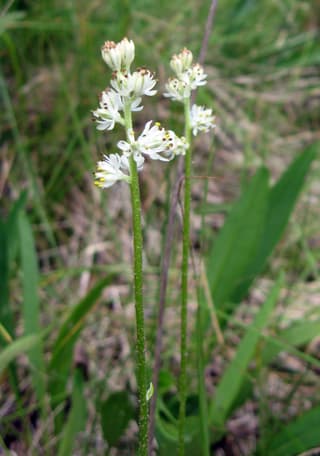
| Sticky false asphodel | Hard | Bright indirect | 1d | ✓ |
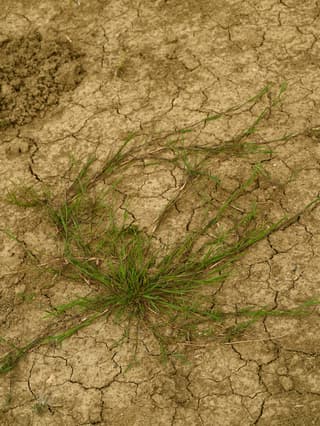
| Creeping bentgrass | Hard | Direct sun | 3d | ✓ |
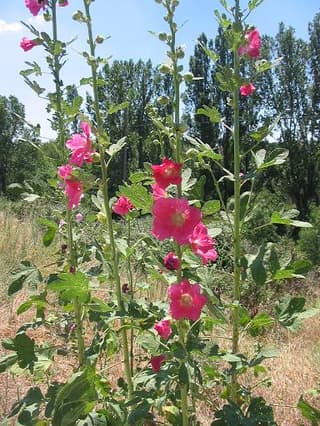
| Hollyhock | Medium | Direct sun | 5d | ✓ |
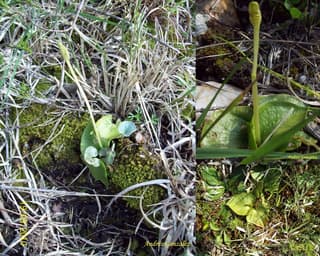
| Bulbous Adder's-tongue | Hard | Partial shade | 4d | ✓ |
Choose & Compare
Sources & References
- POWO - Hibiscus genevei Bojer ex Hook. (accepted)
- GBIF Backbone - Hibiscus genevii Bojer
- Hibiscus genevei - Wikipedia
- NTBG Tropical Plant Database - Hibiscus genevii
- Mashburn et al. - Taxonomic Revision of the Mascarene Hibiscus sect. Lilibiscus (Ann. Missouri Bot. Gard.)
- Recently Extinct Species - Hibiscus genevii (Mandrinette)