Colchicaceae
Autumn crocus: Medicinal Uses & Care Tips
Colchicum autumnale
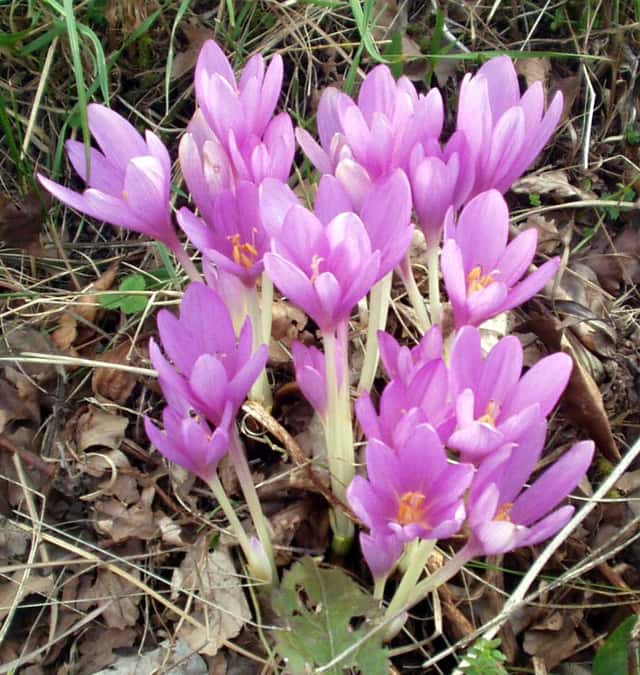
Autumn crocus is a low-maintenance perennial corm suitable for lawns, rock gardens, or flower beds. It blooms in the fall without leaves; the foliage grows in spring and dies back by early summer. It requires a sunny to partially shaded location, well-draining soil, and moderate watering during growth. All parts of the plant are highly toxic to humans and pets – wear gloves when handling and keep out of reach of children and animals.
Every 7 days
Bright indirect
-20° - 30°C
40% - 70%
Categories
What is Autumn crocus?
Autumn crocus (Colchicum autumnale) is a easy-care plant from the Colchicaceae family. The autumn crocus (Colchicum autumnale) is a perennial cormous (bulb-like) plant from the Colchicaceae family, native to the meadows and pastures of central and southern Europe. It is unusual because it blooms in late summer and autumn without any leaves present – the pinkish-purple to white flowers...
Autumn crocus grows up to 20cm, spread of 20cm, watering every 7 days, -20°C – 30°C, 40–70% humidity. It is not suitable for indoor environments and not safe for pets.
Unlike many tropical plants, Autumn crocus tolerates watering mistakes. Best for beginners. Without precautions, ingestion can cause irritation in pets. Keep out of reach of cats and dogs.
How to Care for Autumn crocus?
TLDR: Autumn crocus needs Bright indirect, watering every 7 days, and temperatures between -20-30°C with 40-70% humidity.
How Often Should You Water Autumn crocus?
During spring leaf growth and autumn flowering, water moderately and keep the soil moist, but never waterlogged. During the summer dormancy period (after the leaves die back), significantly reduce watering to prevent the corms from rotting.
How Much Light Does Autumn crocus Need?
Thrives best in a sunny to lightly shaded location; it can handle full sun as well as partial shade.
What Is the Best Soil for Autumn crocus?
Prefers fertile, well-drained soil with a slightly acidic to neutral pH (approximately 5.5–7.5). The soil must not remain waterlogged for long periods, otherwise the corms will rot.
What Pot Should You Use for Autumn crocus?
When growing in a container, choose a wider, shallower pot with plenty of drainage holes and a layer of drainage material at the bottom to prevent water from sitting around the corm.
Care Schedule
Repot
Every 730 days
What Is Autumn crocus and Where Does It Come From?
The autumn crocus (Colchicum autumnale) is a perennial cormous (bulb-like) plant from the Colchicaceae family, native to the meadows and pastures of central and southern Europe. It is unusual because it blooms in late summer and autumn without any leaves present – the pinkish-purple to white flowers emerge directly from the ground. The dark green leaves appear the following spring along with the seed capsule and die back by early summer. All parts of the plant, especially the corms and seeds, contain the alkaloid colchicine and are highly toxic to both humans and pets.
How to Propagate Autumn crocus?
Corm division
The easiest and most reliable method of propagation. Wear gloves when handling corms, as they contain toxic colchicine.
- 1 Carefully dig up the parent corms after the leaves have died back (early summer)
- 2 Separate the newly formed daughter corms (offsets) from the parent corm
- 3 Allow the cut surfaces to dry for a few hours
- 4 Plant the corms approximately 10 cm deep in well-draining soil
- 5 Water lightly and leave until autumn flowering or spring leaf growth
Materials needed:
Sowing seeds
A significantly slower method – plants grown from seed only bloom after 4–5 years.
- 1 Collect seeds after the seed capsules ripen in the spring
- 2 Sow into a moist, well-draining seed-starting substrate
- 3 Keep in a cool, bright place during stratification
- 4 Transplant seedlings after the first growing season
Materials needed:
How Big Does Autumn crocus Grow?
TLDR: Autumn crocus can reach up to 20cm tall with Medium growth rate.
Max height
20cm
Spread
20cm
Growth rate
Medium
Foliage
Deciduous
Warning: Toxic Plant
This plant can be toxic if ingested. Keep out of reach of:
Plant Uses
Ornamental
Great for decoration
Medicinal
Medicinal properties
Medicinal Uses
- Colchicine extracted from the plant is used in modern medicine to treat gout
- It is also used in the treatment of Familial Mediterranean Fever – strictly under medical supervision, as it is a highly toxic substance
Is your plant showing symptoms?
Click on the symptom to discover possible causes:
What Diseases Commonly Affect Autumn crocus?
TLDR: Autumn crocus is susceptible to 3 known diseases. Monitor regularly for early detection.
Slugs and Snails
Slugs and snails are mollusks that feed on plant tissue, causing irregular holes in leaves and damage to young seedlings. They are most active at night and in moist conditions, leaving characteristic silvery slime trails. These pests can quickly devastate gardens, especially during wet seasons.
Root Rot
Root rot is a serious fungal disease that affects the root system of plants, causing them to decay and die. It is primarily caused by overwatering, poor drainage, or soil-borne fungi such as Pythium, Phytophthora, Rhizoctonia, and Fusarium. The disease thrives in waterlogged conditions where roots are deprived of oxygen, making them susceptible to fungal infection.
Bacterial Soft Rot
Bacterial soft rot is a destructive plant disease caused primarily by bacteria from the genera Pectobacterium (formerly Erwinia) and Dickeya. These bacteria produce enzymes that break down plant cell walls, causing rapid and foul-smelling tissue decomposition. It mainly affects succulent tissues such as tubers, fruits, stems, and bulbs, being especially problematic in warm and humid conditions.
Meaning & Symbolism
The autumn crocus is a symbol of transience and deceptive beauty – it blooms 'naked', without leaves, amidst the autumnal decline of nature, reminding us of the brevity of life and the danger hidden beneath a beautiful appearance. Due to its high toxicity, it has also been associated in folk tradition with death and as a warning against hasty conclusions.
Compare with similar plants
| Attribute | Difficulty | Light | Watering | Pet Safe |
|---|---|---|---|---|
| Field Maple | Easy | Bright indirect | 14d | ✓ |
| Silver Birch | Easy | Direct sun | 14d | ✓ |
| Common Blanketflower | Easy | Direct sun | 10d | ✓ |
| Cushion Bush | Easy | Direct sun | 14d | ✓ |





