Amaranthaceae
Mediterranean Saltwort (Caroxylon vermiculatum)
Caroxylon vermiculatum
A full-sun plant, very tolerant of drought and salt, for poor, well-drained soils. It needs almost no water or feeding. It is grown mainly as livestock fodder and to restore degraded rangeland, not as an ornamental.
Every 21 days
Direct sun
° - °C
% - %
Categories
What is Mediterranean Saltwort?
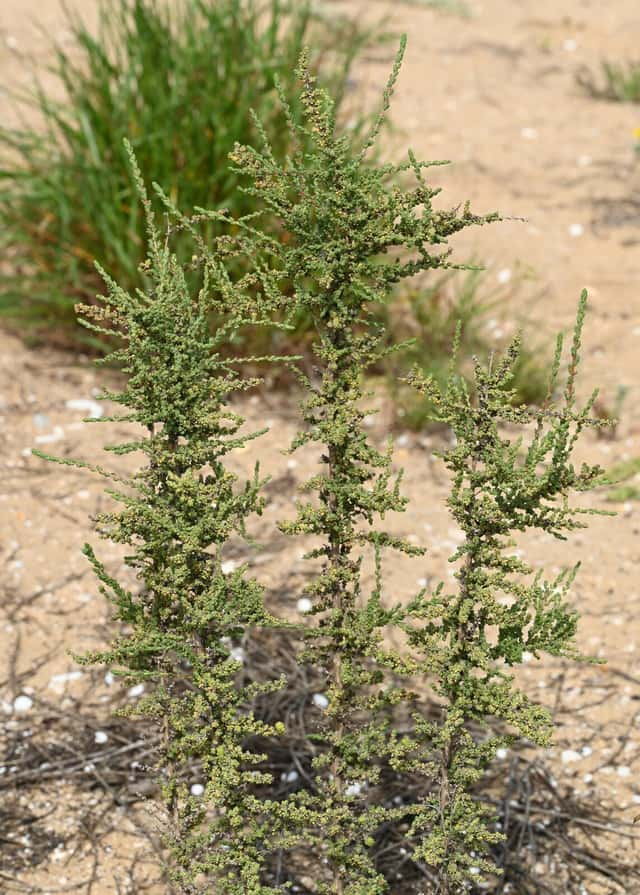
Mediterranean Saltwort (Caroxylon vermiculatum) is a easy-care plant from the Amaranthaceae family. Caroxylon vermiculatum, better known by its old name Salsola vermiculata, is a perennial subshrub of the dry lands of the Mediterranean, North Africa and the Middle East, including southern Spain and Portugal. It grows 25-100 cm tall, much-branched, greyish and woody at the base. The leaves are tiny...
Mediterranean Saltwort grows up to 1.0m, watering every 21 days. It is not suitable for indoor environments and safe for pets.
Unlike many tropical plants, Mediterranean Saltwort tolerates watering mistakes. Best for beginners. Unlike many popular species, Mediterranean Saltwort is safe to keep around pets.
How to Care for Mediterranean Saltwort?
TLDR: Mediterranean Saltwort needs Direct sun, watering every 21 days, and temperatures between 15-30°C with 40-70% humidity.
How Often Should You Water Mediterranean Saltwort?
Once established it lives on rainfall. Water young plants only at first, every 2-3 weeks, and never let the soil stay wet.
How Much Light Does Mediterranean Saltwort Need?
Full sun all day. It is a plant of open, sunny places.
What Is the Best Soil for Mediterranean Saltwort?
Poor sandy or stony soil that drains well; tolerates salinity and nitrogen-rich ground.
What Pot Should You Use for Mediterranean Saltwort?
Not well suited to pots. If you try, use a deep pot with drainage holes and a sandy mix.
What Is Mediterranean Saltwort and Where Does It Come From?
Caroxylon vermiculatum, better known by its old name Salsola vermiculata, is a perennial subshrub of the dry lands of the Mediterranean, North Africa and the Middle East, including southern Spain and Portugal. It grows 25-100 cm tall, much-branched, greyish and woody at the base. The leaves are tiny, fleshy and narrow, with no spines. The flowers have no petals and are barely visible, but in fruit the sepals grow pink to reddish papery wings about 1 cm across that colour the plant in summer. It grows on salty or nitrogen-rich soils, field edges, sunny coasts and steppe.
How to Propagate Mediterranean Saltwort?
Seed
In rangeland restoration, scarifying the soil before sowing gives denser stands.
- 1 Collect the ripe winged fruits in late summer or autumn
- 2 Sow directly in place in autumn on lightly scarified soil
- 3 Cover very lightly or just press the seed into the soil
- 4 Let the rains trigger germination
Materials needed:
How Big Does Mediterranean Saltwort Grow?
TLDR: Mediterranean Saltwort can reach up to 1.0m tall with Medium growth rate.
Max height
1.0m
Is your plant showing symptoms?
Click on the symptom to discover possible causes:
What Diseases Commonly Affect Mediterranean Saltwort?
TLDR: Mediterranean Saltwort is susceptible to 2 known diseases. Monitor regularly for early detection.
Caterpillars
Caterpillars are the larval stage of moths and butterflies that feed voraciously on plant foliage, stems, flowers, and fruits. Common species include cabbage loopers, tomato hornworms, armyworms, and cutworms. These pests can cause extensive damage by consuming large amounts of plant tissue in a short time. They vary in size from small (1/4 inch) to large (5 inches), with colors ranging from green to brown, often featuring stripes or spots. Caterpillars are highly mobile and can quickly spread throughout gardens, making them one of the most destructive common pests.
sap-sucking pests
Group of pests including aphids and scales, feeding on sugary sap on leaves, twigs, and branches. These pests often produce honeydew, which can later be infected by a fungal disease
Fun Facts
The pink 'flowers' seen in summer are actually the winged sepals around the fruit.
In North Africa its leaves and branches were used to wash hair and clothes.
Tiny Stefaniola midges form galls on it, which in turn host small parasitic wasps.
Frequently asked questions
Are Caroxylon vermiculatum and Salsola vermiculata the same plant?
What is it used for?
Does it need much water?
Can it become a weed?
Compare with similar plants
| Attribute | Difficulty | Light | Watering | Pet Safe |
|---|---|---|---|---|
| Field Maple | Easy | Bright indirect | 14d | ✓ |
| Iberian Houseleek | Easy | Direct sun | 14d | ✓ |
| Silver Birch | Easy | Direct sun | 14d | ✓ |
| Common Blanketflower | Easy | Direct sun | 10d | ✓ |
Choose & Compare
Sources & References
- Wikipedia - Caroxylon vermiculatum
- Aranzadi - Flora de Monteriza: Salsola vermiculata (sisallo)
- Herbari Virtual UIB - Salsola vermiculata (caramillo, sisallo; search snippet)
- ICARDA/CGIAR - Direct seeding of Salsola vermiculata for rangeland rehabilitation
- Weed Technology - Biology of Mediterranean saltwort (Salsola vermiculata)





