Euphorbiaceae
Mediterranean Spurge (Euphorbia characias) Care Guide
Euphorbia characias
Give Mediterranean spurge full sun and sharply drained soil, and it will reward you with years of low-maintenance structure. Water only to establish, then let it fend for itself through summer drought. Cut spent flowering stems to the base after blooming, wearing gloves to avoid the irritating sap.
Every 14 days
Direct sun
-10° - 35°C
30% - 60%
Categories
What is Mediterranean Spurge?
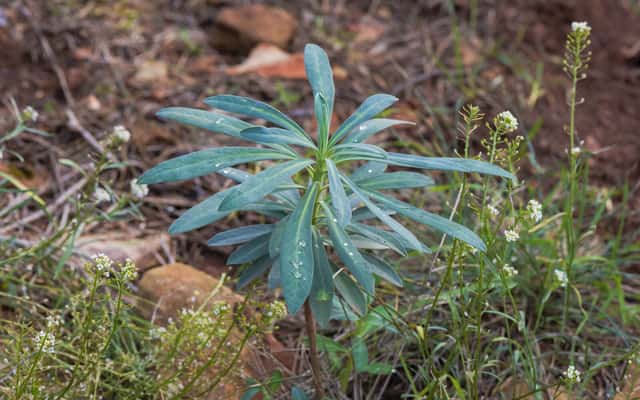
Mediterranean Spurge (Euphorbia characias) is a easy-care plant from the Euphorbiaceae family. Euphorbia characias, the Mediterranean spurge, is a robust evergreen sub-shrub native to rocky, sun-baked slopes across the Mediterranean basin. It forms dense clumps of upright stems lined with narrow, blue-green leaves, topped in late winter and early spring by dramatic chartreuse flower heads. Ev...
Mediterranean Spurge grows up to 1.2m, spread of 120cm, watering every 14 days, -10°C – 35°C, 30–60% humidity. It is not suitable for indoor environments and not safe for pets.
Unlike many tropical plants, Mediterranean Spurge tolerates watering mistakes. Best for beginners. Without precautions, ingestion can cause irritation in pets. Keep out of reach of cats and dogs.
How to Care for Mediterranean Spurge?
TLDR: Mediterranean Spurge needs Direct sun, watering every 14 days, and temperatures between -10-35°C with 30-60% humidity.
How Often Should You Water Mediterranean Spurge?
Water deeply but infrequently, letting the soil dry out completely between waterings. Once established (after the first year), this plant is drought-tolerant and rarely needs supplemental water except in prolonged dry spells.
How Much Light Does Mediterranean Spurge Need?
Plant in full sun for the best flowering and compact habit; it tolerates light, part shade in hot climates but may become leggy.
What Is the Best Soil for Mediterranean Spurge?
Any well-drained soil works, including poor, sandy, or chalky ground -- the one requirement is sharp drainage. Avoid heavy, waterlogged clay.
What Pot Should You Use for Mediterranean Spurge?
Use an unglazed terracotta pot with generous drainage holes; the porous material helps excess moisture evaporate and mimics the plant's native rocky, well-drained habitat.
What Is Mediterranean Spurge and Where Does It Come From?
Euphorbia characias, the Mediterranean spurge, is a robust evergreen sub-shrub native to rocky, sun-baked slopes across the Mediterranean basin. It forms dense clumps of upright stems lined with narrow, blue-green leaves, topped in late winter and early spring by dramatic chartreuse flower heads. Every part of the plant exudes a milky latex when cut, which is a skin and eye irritant, so it should be handled with gloves. Prized by gardeners for its drought tolerance and architectural presence, it thrives on neglect once established.
How to Propagate Mediterranean Spurge?
Clump division
Wear gloves throughout -- the milky sap is a skin and eye irritant. Avoid dividing in summer heat.
- 1 Dig up an established clump in early spring before new growth resumes
- 2 Use a sharp spade to divide the rootball into sections, each with several stems and roots
- 3 Replant divisions immediately at the same depth in well-drained soil
- 4 Water well to settle the soil, then treat as an established plant
Materials needed:
Stem cuttings
Always wear gloves and avoid touching your eyes -- the sap is a strong irritant.
- 1 Take a 10-15cm tip cutting from a non-flowering stem
- 2 Dip the cut end briefly in lukewarm water to stop the latex flow, then let it callus for a day
- 3 Insert the callused end into a gritty, well-drained propagation mix
- 4 Keep in bright, indirect light and barely moist until roots form
Materials needed:
Seed sowing
This species self-seeds readily in the garden, so unwanted seedlings are easy to find and transplant.
- 1 Collect ripe seed capsules before they split explosively, or allow the plant to self-seed
- 2 Sow seed shallowly in gritty, well-drained compost in autumn
- 3 Keep in a cold frame or sheltered spot over winter
- 4 Transplant seedlings in spring once large enough to handle
Materials needed:
How Big Does Mediterranean Spurge Grow?
TLDR: Mediterranean Spurge can reach up to 1.2m tall with Medium growth rate.
Max height
1.2m
Spread
1.2m
Growth rate
Medium
Foliage
Evergreen
Warning: Toxic Plant
This plant can be toxic if ingested. Keep out of reach of:
Plant Uses
Ornamental
Great for decoration
Ground Cover
Soil coverage
Medicinal Uses
- Historically applied topically in folk medicine to treat warts and skin blemishes, though the caustic latex makes this practice risky and is not recommended without professional guidance
Is your plant showing symptoms?
Click on the symptom to discover possible causes:
What Diseases Commonly Affect Mediterranean Spurge?
TLDR: Mediterranean Spurge is susceptible to 2 known diseases. Monitor regularly for early detection.
Aphids
Aphids are small, soft-bodied, pear-shaped insects (1/16 to 1/8 inch long) that feed by sucking nutrient-rich sap from plants. They reproduce rapidly and can quickly weaken plants, causing distorted growth and transmitting plant viruses. Aphids come in various colors including green, black, red, yellow, brown, and gray. They secrete honeydew, a sticky substance that attracts ants and encourages sooty mold growth.
Root Rot
Root rot is a serious fungal disease that affects the root system of plants, causing them to decay and die. It is primarily caused by overwatering, poor drainage, or soil-borne fungi such as Pythium, Phytophthora, Rhizoctonia, and Fusarium. The disease thrives in waterlogged conditions where roots are deprived of oxygen, making them susceptible to fungal infection.
Meaning & Symbolism
In Mediterranean folklore, Euphorbia characias is associated with resilience and protection, thriving where little else survives; its evergreen persistence through winter has made it a quiet symbol of endurance in cottage and coastal gardens.
Fun Facts
The flower heads are not petals at all -- the showy chartreuse "flowers" are actually modified leaf-like bracts called cyathia surrounding tiny true flowers.
Its stems are biennial: each shoot grows leaves the first year and flowers the second before dying back, so the plant is always a mix of ages.
The milky latex was once used by shepherds in the Mediterranean to stun fish in shallow pools.
Frequently asked questions
Is Euphorbia characias toxic to cats and dogs?
How often should I water Mediterranean spurge?
Why does my Euphorbia characias look leggy?
When should I prune Mediterranean spurge?
Is the sap dangerous to touch?
Compare with similar plants
| Attribute | Difficulty | Light | Watering | Pet Safe |
|---|---|---|---|---|
| Field Maple | Easy | Bright indirect | 14d | ✓ |
| Silver Birch | Easy | Direct sun | 14d | ✓ |
| Common Blanketflower | Easy | Direct sun | 10d | ✓ |
| Cushion Bush | Easy | Direct sun | 14d | ✓ |
Choose & Compare
Sources & References
- Euphorbia characias | NC State Extension Gardener Plant Toolbox
- Euphorbia characias | Mediterranean spurge - RHS
- Euphorbia characias subsp. wulfenii | Mediterranean spurge - RHS
- Euphorbia characias subsp. wulfenii - Missouri Botanical Garden Plant Finder
- Euphorbia | ASPCA Animal Poison Control
- Complete Guide to Euphorbia characias: Characteristics, Cultivation and Care





