Lamiaceae
Mexican Bush Sage (Salvia leucantha)
Salvia leucantha
Easy, drought-tolerant garden plant for full sun and well-drained soil. Water during dry spells, avoid wet soil in winter, and cut all stems to the ground at the end of winter so it regrows fresh.
Every 7 days
Direct sun
-2° - 35°C
% - %
Categories
What is Mexican Bush Sage?
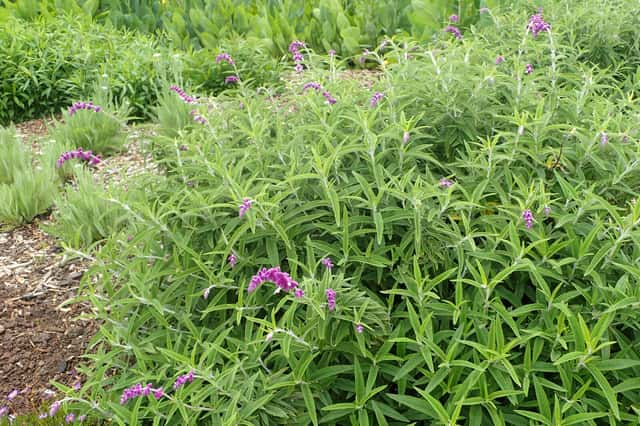
Mexican Bush Sage (Salvia leucantha) is a easy-care plant from the Lamiaceae family. Salvia leucantha is a perennial subshrub from Mexico and Central America, in the mint family. It forms a rounded clump of upright, gray-green stems about 0.6 to 1.5 m tall and wide, with narrow, soft, wrinkled leaves that are whitish underneath. From late summer until frost it carries long arching s...
Mexican Bush Sage grows up to 1.5m, spread of 150cm, watering every 7 days, -2°C – 35°C. It is not suitable for indoor environments and safe for pets.
Unlike many tropical plants, Mexican Bush Sage tolerates watering mistakes. Best for beginners. Unlike many popular species, Mexican Bush Sage is safe to keep around pets.
How to Care for Mexican Bush Sage?
TLDR: Mexican Bush Sage needs Direct sun, watering every 7 days, and temperatures between -2-35°C with 40-70% humidity.
How Often Should You Water Mexican Bush Sage?
Water about once a week while it gets established and during hot, dry weather, letting the top soil dry between waterings. Once established it handles short droughts. In winter water very little: soggy cold soil rots the roots.
How Much Light Does Mexican Bush Sage Need?
Full sun, at least six hours of direct light a day, gives the most flowers. In very hot climates it accepts some afternoon shade, but in deep shade it gets floppy and blooms less.
What Is the Best Soil for Mexican Bush Sage?
Any well-drained soil, from sandy to loamy, neutral to slightly alkaline. In heavy clay or in pots add grit or coarse sand. It needs little or no fertilizer.
What Pot Should You Use for Mexican Bush Sage?
Large, deep pot (at least 40 cm) with drainage holes; terracotta helps the soil dry out in winter.
What Is Mexican Bush Sage and Where Does It Come From?
Salvia leucantha is a perennial subshrub from Mexico and Central America, in the mint family. It forms a rounded clump of upright, gray-green stems about 0.6 to 1.5 m tall and wide, with narrow, soft, wrinkled leaves that are whitish underneath. From late summer until frost it carries long arching spikes of flowers: small white corollas sticking out of velvety purple calyces, which keep their color for weeks. Some forms are all purple or pink and white. The flowers draw hummingbirds, butterflies and bees, and deer usually leave the plant alone.
How to Propagate Mexican Bush Sage?
Stem cuttings
Choose shoots without flower spikes; they root faster. Cuttings taken in late summer can be kept indoors over winter as insurance in cold areas.
- 1 Cut 10-15 cm non-flowering shoot tips in spring or early summer
- 2 Remove the lower leaves
- 3 Insert the cuttings in a moist mix of potting soil and perlite
- 4 Keep in bright, indirect light and slightly moist until new growth appears
- 5 Pot up individually once rooted
Materials needed:
Division
Divide older clumps every few years to keep them vigorous.
- 1 In early spring, after cutting back, dig up the clump
- 2 Split it into sections with roots and several buds
- 3 Replant at once and water well
Materials needed:
Seed
Seed is not always available and cultivars do not come true; cuttings are the usual method.
- 1 Sow on the surface of a seed mix in spring
- 2 Cover very lightly and keep moist and warm
- 3 Transplant seedlings when they have a few true leaves
Materials needed:
How Big Does Mexican Bush Sage Grow?
TLDR: Mexican Bush Sage can reach up to 1.5m tall with Fast growth rate.
Max height
1.5m
Spread
1.5m
Growth rate
Fast
Foliage
Evergreen
Plant Uses
Ornamental
Great for decoration
Is your plant showing symptoms?
Click on the symptom to discover possible causes:
What Diseases Commonly Affect Mexican Bush Sage?
TLDR: Mexican Bush Sage is susceptible to 9 known diseases. Monitor regularly for early detection.
Root Rot
Root rot is a serious fungal disease that affects the root system of plants, causing them to decay and die. It is primarily caused by overwatering, poor drainage, or soil-borne fungi such as Pythium, Phytophthora, Rhizoctonia, and Fusarium. The disease thrives in waterlogged conditions where roots are deprived of oxygen, making them susceptible to fungal infection.
Powdery Mildew
Powdery mildew is a common fungal disease caused by various fungi species including Erysiphe, Podosphaera, Oïdium, and Leveillula. It affects over 10,000 plant species worldwide. The disease thrives in warm, dry climates with high humidity and appears as a distinctive white powdery coating on plant surfaces.
Rust
Rust is a common fungal disease caused by fungi in the order Pucciniales that affects a wide variety of plants. The disease gets its name from the characteristic orange, yellow, or reddish-brown pustules that appear on leaves, resembling metal rust. This obligate fungal parasite requires living plants to survive and can cause significant economic losses in agricultural crops.
Leaf Spot
Leaf spot is a common fungal disease caused by various pathogens including Alternaria, Ascochyta, Colletotrichum, Septoria, and Venturia. It primarily affects leaves, causing discolored spots that can lead to premature leaf drop if left untreated.
Fun Facts
The purple color comes from the fuzzy calyces, not the petals; the true flowers are small and white.
It is a favorite nectar plant of hummingbirds during their autumn migration.
Its velvety leaves and stems make it unattractive to deer.
Frequently asked questions
When does Mexican bush sage bloom?
Is Mexican bush sage cold hardy?
Should I cut back Mexican bush sage?
Is Mexican bush sage toxic to pets?
Compare with similar plants
| Attribute | Difficulty | Light | Watering | Pet Safe |
|---|---|---|---|---|
| Field Maple | Easy | Bright indirect | 14d | ✓ |
| Iberian Houseleek | Easy | Direct sun | 14d | ✓ |
| Silver Birch | Easy | Direct sun | 14d | ✓ |
| Common Blanketflower | Easy | Direct sun | 10d | ✓ |





