Bignoniaceae
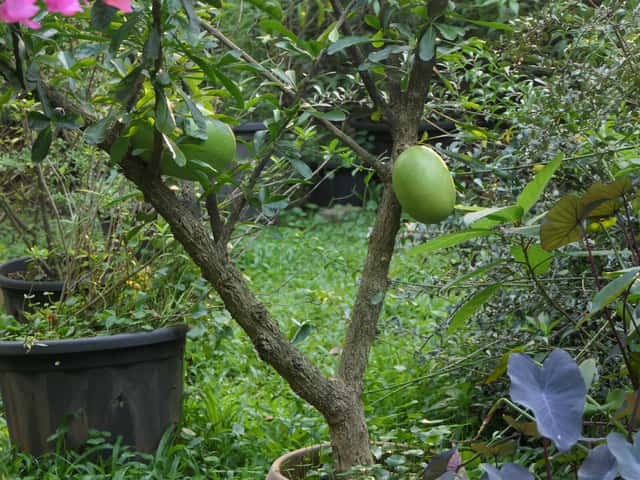
Mexican calabash (Crescentia alata)
Crescentia alata
Easy, fast-growing tropical tree for full sun that takes drought once established. It cannot take frost.
Every 10 days
Direct sun
0° - °C
% - %
Categories
What is Mexican calabash?
Mexican calabash (Crescentia alata) is a easy-care plant from the Bignoniaceae family. Crescentia alata is a small tree in the trumpet-creeper family, native from Mexico through Central America to Costa Rica, where it is common in dry forest. It usually grows to about 8 m with an open, rounded crown. Each leaf has three leaflets and a broad winged stalk that looks like a fourth leafle...
Mexican calabash grows up to 8.0m, watering every 10 days. It is suitable for indoor environments and safe for pets.
Unlike many tropical plants, Mexican calabash tolerates watering mistakes. Best for beginners. Unlike many popular species, Mexican calabash is safe to keep around pets. Without adequate drainage, root rot can develop within 20 days.
How to Care for Mexican calabash?
TLDR: Mexican calabash needs Direct sun, watering every 10 days, and temperatures between 0-30°C with 40-70% humidity.
How Often Should You Water Mexican calabash?
Water about every 10 days, when the top of the soil is dry. Once established it is drought tolerant. In a pot, never let the mix stay soggy.
How Much Light Does Mexican calabash Need?
Full sun. Takes part shade, and a very bright spot when grown in a pot.
What Is the Best Soil for Mexican calabash?
Deep, well-drained soil of average fertility. Avoid spots where water collects.
What Pot Should You Use for Mexican calabash?
Large, deep pot (40 liters or more) with good drainage; in a pot the tree stays smaller. In cold climates, bring it inside before temperatures drop.
What Is Mexican calabash and Where Does It Come From?
Crescentia alata is a small tree in the trumpet-creeper family, native from Mexico through Central America to Costa Rica, where it is common in dry forest. It usually grows to about 8 m with an open, rounded crown. Each leaf has three leaflets and a broad winged stalk that looks like a fourth leaflet, so the leaves look like small crosses. Yellow-green flowers with maroon veins grow straight from the trunk and branches, open at night and are pollinated by bats. The fruits are hard balls 7 to 10 cm across, used as cups and for crafts; the seeds are edible.
How to Propagate Mexican calabash?
Seed
Seeds only germinate once out of the fruit, and do best with warmth, around 30 °C, and light.
- 1 Break open a ripe fruit and remove the seeds
- 2 Rinse off the pulp
- 3 Sow shallowly in a light, moist mix
- 4 Keep in a warm, bright place
Materials needed:
How Big Does Mexican calabash Grow?
TLDR: Mexican calabash can reach up to 8.0m tall with Fast growth rate.
Max height
8.0m
Growth rate
Fast
Foliage
Deciduous
Plant Uses
Ornamental
Great for decoration
Edible
Can be consumed
Medicinal
Medicinal properties
Medicinal Uses
- The fruit pulp is used in folk medicine for colds, chest complaints and kidney problems
Culinary Uses
- Ground seeds make a horchata drink (semilla de jicaro) in Central America
- The seeds yield an oil
Is your plant showing symptoms?
Click on the symptom to discover possible causes:
What Diseases Commonly Affect Mexican calabash?
TLDR: Mexican calabash is susceptible to 2 known diseases. Monitor regularly for early detection.
Caterpillars
Caterpillars are the larval stage of moths and butterflies that feed voraciously on plant foliage, stems, flowers, and fruits. Common species include cabbage loopers, tomato hornworms, armyworms, and cutworms. These pests can cause extensive damage by consuming large amounts of plant tissue in a short time. They vary in size from small (1/4 inch) to large (5 inches), with colors ranging from green to brown, often featuring stripes or spots. Caterpillars are highly mobile and can quickly spread throughout gardens, making them one of the most destructive common pests.
Root Rot
Root rot is a serious fungal disease that affects the root system of plants, causing them to decay and die. It is primarily caused by overwatering, poor drainage, or soil-borne fungi such as Pythium, Phytophthora, Rhizoctonia, and Fusarium. The disease thrives in waterlogged conditions where roots are deprived of oxygen, making them susceptible to fungal infection.
Fun Facts
The flowers grow straight from the trunk and are pollinated by bats
Dried fruits become cups, piggy banks and painted ornaments
The winged leaf stalk makes each leaf look like a small cross
Frequently asked questions
How is Crescentia alata different from the calabash tree (Crescentia cujete)?
Are the seeds edible?
Is it cold hardy?
Why did it drop its leaves?
Compare with similar plants
| Attribute | Difficulty | Light | Watering | Pet Safe |
|---|---|---|---|---|
| Field Maple | Easy | Bright indirect | 14d | ✓ |
| Iberian Houseleek | Easy | Direct sun | 14d | ✓ |
| Silver Birch | Easy | Direct sun | 14d | ✓ |
| Common Blanketflower | Easy | Direct sun | 10d | ✓ |





