Cactaceae
Mexican Fence Post Cactus: Full Sun Plant
Marginatocereus marginatus
A very robust and easy-to-grow plant: it requires full sun, well-draining soil, and infrequent watering. It is sensitive to frost and excessive humidity, which can cause crown and root rot. If grown in a pot, it should be moved indoors when temperatures drop below approximately 46°F (8°C). Fertilize once a month with a low-nitrogen cactus fertilizer only during spring and summer.
Every 14 days
Direct sun
8° - 40°C
10% - 40%
Categories
What is Mexican Fence Post Cactus?
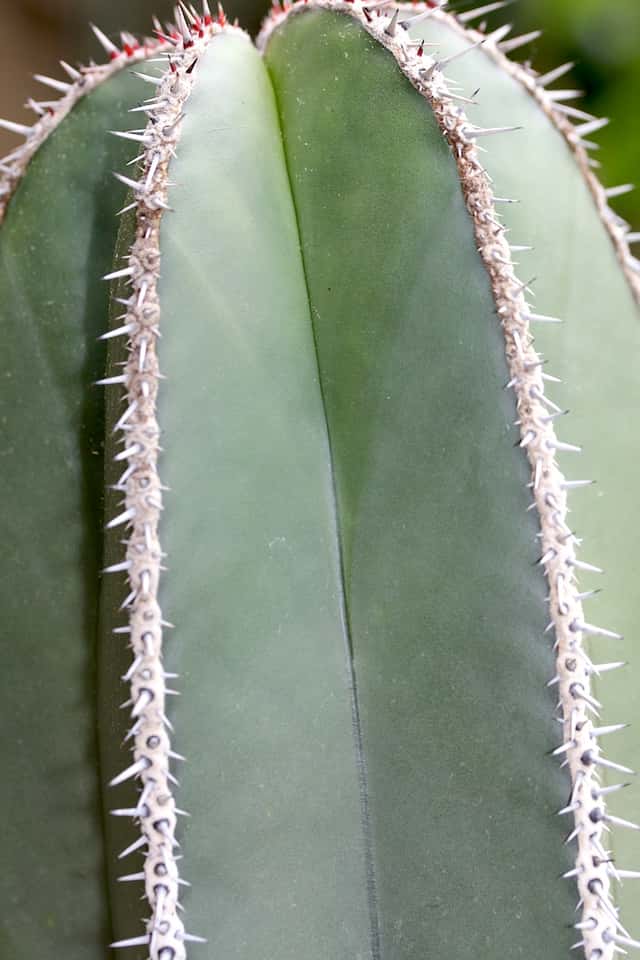
Mexican Fence Post Cactus (Marginatocereus marginatus) is a easy-care plant from the Cactaceae family. Marginatocereus marginatus, also known as Pachycereus marginatus, is a columnar cactus native to central Mexico. It forms erect, ribbed green stems about 7-10 cm thick that grow densely and parallel to each other, reaching over 6 meters in the wild with a slow growth rate. The spines are short and r...
Mexican Fence Post Cactus grows up to 6.0m, spread of 100cm, watering every 14 days, 8°C – 40°C, 10–40% humidity. It is suitable for indoor environments and safe for pets.
Unlike many tropical plants, Mexican Fence Post Cactus tolerates watering mistakes. Best for beginners. Unlike many popular species, Mexican Fence Post Cactus is safe to keep around pets. Without adequate drainage, root rot can develop within 28 days.
How to Care for Mexican Fence Post Cactus?
TLDR: Mexican Fence Post Cactus needs Direct sun, watering every 14 days, and temperatures between 8-40°C with 10-40% humidity.
How Often Should You Water Mexican Fence Post Cactus?
In spring and summer, water thoroughly but only every two or three weeks, once the soil is completely dry. In fall and winter, reduce watering to a minimum or suspend it entirely. Excess water is the primary cause of rot.
How Much Light Does Mexican Fence Post Cactus Need?
Thrives in full sun: it needs at least 6-8 hours of direct light per day. Indoors, place it near the brightest window, preferably south-facing, and acclimate it gradually to the sun to avoid sunburn.
What Is the Best Soil for Mexican Fence Post Cactus?
Use a highly draining substrate for cacti and succulents, enriched with coarse sand, pumice, volcanic gravel, or perlite. A slightly acidic to neutral pH is ideal.
What Pot Should You Use for Mexican Fence Post Cactus?
Terracotta or ceramic pot with drainage holes, sized proportionally to the plant. Repot in early spring when the roots fill the container.
Care Schedule
Fertilize
Every 30 days
Rotate
Every 30 days
Repot
Every 730 days
What Is Mexican Fence Post Cactus and Where Does It Come From?
Marginatocereus marginatus, also known as Pachycereus marginatus, is a columnar cactus native to central Mexico. It forms erect, ribbed green stems about 7-10 cm thick that grow densely and parallel to each other, reaching over 6 meters in the wild with a slow growth rate. The spines are short and relatively harmless. In spring, reddish funnel-shaped flowers appear at the top of the stems—though these are rare on young potted specimens—followed by spherical fruits about 4 cm wide covered in spines and fuzz. In Mexico, cuttings are used to create living fences.
How to Propagate Mexican Fence Post Cactus?
- 1 Cut a healthy stem segment.
- 2 Allow the wound to dry for several days until a callus forms.
- 3 Plant the cutting in sand or a sandy, well-draining substrate.
- 4 Water sparingly only when the substrate is dry.
- 1 Sow in spring in a sandy substrate.
- 2 Maintain warmth and light moisture until germination occurs.
How Big Does Mexican Fence Post Cactus Grow?
TLDR: Mexican Fence Post Cactus can reach up to 6.0m tall with Slow growth rate.
Max height
6.0m
Spread
1.0m
Growth rate
Slow
Foliage
Evergreen
Plant Uses
Ornamental
Great for decoration
Is your plant showing symptoms?
Click on the symptom to discover possible causes:
What Diseases Commonly Affect Mexican Fence Post Cactus?
TLDR: Mexican Fence Post Cactus is susceptible to 8 known diseases. Monitor regularly for early detection.
Root Rot
Root rot is a serious fungal disease that affects the root system of plants, causing them to decay and die. It is primarily caused by overwatering, poor drainage, or soil-borne fungi such as Pythium, Phytophthora, Rhizoctonia, and Fusarium. The disease thrives in waterlogged conditions where roots are deprived of oxygen, making them susceptible to fungal infection.
Crown Rot
Crown rot is a serious fungal disease that attacks the crown (base) of the plant where the stem meets the soil. It is caused by various fungal pathogens including Phytophthora, Fusarium, and Rhizoctonia. The disease thrives in waterlogged conditions and can quickly spread to kill the entire plant if not addressed promptly.
Pythium Root Rot
Pythium root rot is a serious fungal disease caused by various Pythium species including P. aphanidermatum, P. ultimum, and P. irregulare. These water molds are present in practically all cultivated soils and attack plant roots under wet conditions, causing rapid wet rot that can extend into the stem. The disease is favored by poor drainage, overwatering, and specific temperatures depending on the species.
Mealybugs
Mealybugs are small, soft-bodied insects covered with a white, waxy, cottony material. They are common pests of houseplants and outdoor plants in mild climates. These sap-sucking insects feed on plant tissue, causing damage, stunted growth, and can lead to plant death if left untreated. They produce sticky honeydew which attracts sooty mold.
Meaning & Symbolism
A symbol of endurance and protection: in Mexico, it is planted in compact rows to serve as a living fence.
Compare with similar plants
| Attribute | Difficulty | Light | Watering | Pet Safe |
|---|---|---|---|---|
| Field Maple | Easy | Bright indirect | 14d | ✓ |
| Silver Birch | Easy | Direct sun | 14d | ✓ |
| Common Blanketflower | Easy | Direct sun | 10d | ✓ |
| Cushion Bush | Easy | Direct sun | 14d | ✓ |





