Crassulaceae
Mexican Stonecrop: Complete Growing Guide
Sedum mexicanum
Grow in full sun with well-draining soil, and water only once the soil has dried out completely. It is a low-maintenance, drought-tolerant plant that is very sensitive to overwatering.
Every 14 days
Direct sun
10° - 30°C
30% - 50%
Categories
What is Mexican Stonecrop?
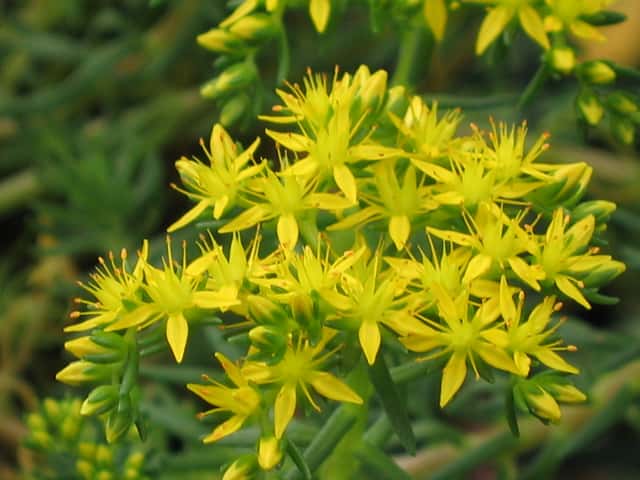
Mexican Stonecrop (Sedum mexicanum) is a easy-care plant from the Crassulaceae family. Mexican Stonecrop (Sedum mexicanum) is a low-growing succulent groundcover in the Crassulaceae family, native to Mexico. It forms dense mats of bright green, needle-like leaves and produces masses of small, star-shaped yellow flowers in late spring to early summer. It is widely used in rock gardens,...
Mexican Stonecrop grows up to 15cm, watering every 14 days, 10°C – 30°C, 30–50% humidity. It is suitable for indoor environments and safe for pets.
Unlike many tropical plants, Mexican Stonecrop tolerates watering mistakes. Best for beginners. Unlike many popular species, Mexican Stonecrop is safe to keep around pets. Without adequate drainage, root rot can develop within 28 days.
How to Care for Mexican Stonecrop?
TLDR: Mexican Stonecrop needs Direct sun, watering every 14 days, and temperatures between 10-30°C with 30-50% humidity.
How Often Should You Water Mexican Stonecrop?
Let the soil dry out completely between waterings. Water deeply, then wait until the soil is fully dry before watering again — overwatering is the most common cause of problems for this succulent.
How Much Light Does Mexican Stonecrop Need?
Prefers full sun (at least 6 hours of direct light daily). In low light, stems stretch and lose their vibrant color.
What Is the Best Soil for Mexican Stonecrop?
Use well-draining soil, such as a mix of coarse sand and organic matter, with a pH between 6.0 and 7.5. Avoid soil that retains excess moisture.
What Pot Should You Use for Mexican Stonecrop?
A shallow, wide terracotta or clay pot with drainage holes, suited to spreading, mat-forming plants.
Care Schedule
Fertilize
Every 365 days
What Is Mexican Stonecrop and Where Does It Come From?
Mexican Stonecrop (Sedum mexicanum) is a low-growing succulent groundcover in the Crassulaceae family, native to Mexico. It forms dense mats of bright green, needle-like leaves and produces masses of small, star-shaped yellow flowers in late spring to early summer. It is widely used in rock gardens, borders, and green roofs.
How to Propagate Mexican Stonecrop?
Stem cutting
Avoid watering for the first few days after planting to prevent the cutting from rotting.
- 1 Cut a healthy stem segment with a few leaves
- 2 Let it callus over for 1-2 days in a shaded spot
- 3 Place on well-draining soil, lightly moistened
Materials needed:
Clump division
Keep the soil lightly moist until established.
- 1 Remove a rooted section of the mat
- 2 Replant immediately in a new pot or bed
Materials needed:
How Big Does Mexican Stonecrop Grow?
TLDR: Mexican Stonecrop can reach up to 15cm tall with Fast growth rate.
Max height
15cm
Growth rate
Fast
Foliage
Evergreen
Warning: Toxic Plant
This plant can be toxic if ingested. Keep out of reach of:
Plant Uses
Ornamental
Great for decoration
Ground Cover
Soil coverage
Is your plant showing symptoms?
Click on the symptom to discover possible causes:
What Diseases Commonly Affect Mexican Stonecrop?
TLDR: Mexican Stonecrop is susceptible to 8 known diseases. Monitor regularly for early detection.
Powdery Mildew
Powdery mildew is a common fungal disease caused by various fungi species including Erysiphe, Podosphaera, Oïdium, and Leveillula. It affects over 10,000 plant species worldwide. The disease thrives in warm, dry climates with high humidity and appears as a distinctive white powdery coating on plant surfaces.
Root Rot
Root rot is a serious fungal disease that affects the root system of plants, causing them to decay and die. It is primarily caused by overwatering, poor drainage, or soil-borne fungi such as Pythium, Phytophthora, Rhizoctonia, and Fusarium. The disease thrives in waterlogged conditions where roots are deprived of oxygen, making them susceptible to fungal infection.
Rust
Rust is a common fungal disease caused by fungi in the order Pucciniales that affects a wide variety of plants. The disease gets its name from the characteristic orange, yellow, or reddish-brown pustules that appear on leaves, resembling metal rust. This obligate fungal parasite requires living plants to survive and can cause significant economic losses in agricultural crops.
Mealybugs
Mealybugs are small, soft-bodied insects covered with a white, waxy, cottony material. They are common pests of houseplants and outdoor plants in mild climates. These sap-sucking insects feed on plant tissue, causing damage, stunted growth, and can lead to plant death if left untreated. They produce sticky honeydew which attracts sooty mold.
Meaning & Symbolism
Symbolizes tranquility, resilience, and perseverance, reflecting the plant's ability to thrive in arid, rocky environments.
Fun Facts
Forms dense mats and is often used on green roofs.
Its star-shaped yellow flowers attract pollinators.
It is drought- and heat-tolerant but very sensitive to overwatering.
Frequently asked questions
How often should I water Mexican Stonecrop?
Is Mexican Stonecrop toxic to cats and dogs?
How much sun does Mexican Stonecrop need?
Compare with similar plants
| Attribute | Difficulty | Light | Watering | Pet Safe |
|---|---|---|---|---|
| Field Maple | Easy | Bright indirect | 14d | ✓ |
| Silver Birch | Easy | Direct sun | 14d | ✓ |
| Common Blanketflower | Easy | Direct sun | 10d | ✓ |
| Cushion Bush | Easy | Direct sun | 14d | ✓ |
Choose & Compare
Sources & References
- Mexican Stonecrop (Sedum Mexicanum) Care Guide - Plantiary
- Mexican stonecrop Plant Care & Growing Basics - PlantIn
- How to Grow and Care for Sedum - World of Succulents
- Sedum Mexicanum Care - Greg App
- Common Sedum mexicanum Problems - Greg App
- Common Sedum Problems and How to Fix Them - Biology Insights
- Sedum mexicanum - Mexican stonecrop care and culture
- Uva de gato mexicana (Sedum mexicanum) - PictureThis
- The Language and Meaning of Stonecrops - PictureThis





