Araliaceae
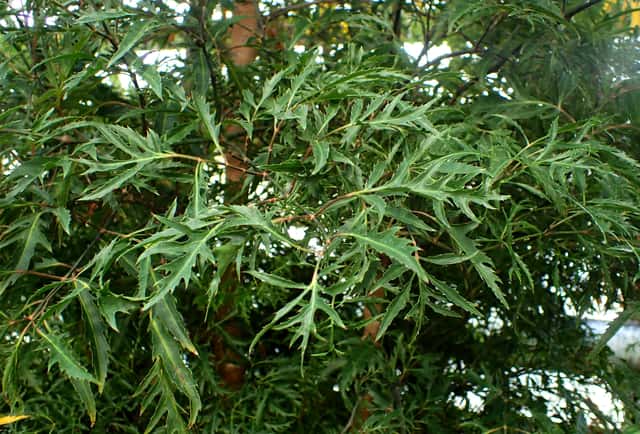
Ming Aralia (Polyscias fruticosa)
Polyscias fruticosa
Ming Aralia thrives in bright indirect light with moderate to high humidity (50-70%). Water when the top inch of soil is dry, roughly once a week. Keep temperatures between 16-29°C and protect from cold drafts. Feed monthly during the growing season.
Every 7 days
Partial shade
16° - 29°C
50% - 70%
Categories
What is Ming Aralia?
Ming Aralia (Polyscias fruticosa) is a medium-care plant from the Araliaceae family. Ming Aralia (Polyscias fruticosa) is an elegant tropical evergreen shrub from the Araliaceae family, prized for its finely divided, lace-like foliage that gives it an almost bonsai-like appearance. Native to India and Southeast Asia, it can grow up to 2.4 meters indoors and up to 7.5 meters in its n...
Ming Aralia grows up to 2.4m, spread of 120cm, watering every 7 days, 16°C – 29°C, 50–70% humidity. It is suitable for indoor environments and not safe for pets.
Without precautions, ingestion can cause irritation in pets. Keep out of reach of cats and dogs. Without adequate drainage, root rot can develop within 14 days.
How to Care for Ming Aralia?
TLDR: Ming Aralia needs Partial shade, watering every 7 days, and temperatures between 16-29°C with 50-70% humidity.
How Often Should You Water Ming Aralia?
Allow the top 2-3 cm of soil to dry between waterings. Avoid overwatering as the plant is susceptible to root rot. Use filtered or rainwater if your tap water is heavily mineralized.
How Much Light Does Ming Aralia Need?
Provide bright, indirect light. Avoid direct harsh sunlight which can scorch the delicate leaves. The plant can tolerate lower light but may become leggy and lose leaves.
What Is the Best Soil for Ming Aralia?
Use a well-draining mix of equal parts peat moss (or coco coir), perlite, and aged compost. The soil should retain some moisture but never become waterlogged. Slightly acidic to neutral pH (6.0-7.5) is ideal.
What Pot Should You Use for Ming Aralia?
Use a ceramic or terracotta pot with drainage holes. Terracotta helps wick away excess moisture, reducing root rot risk. Choose a pot only slightly larger than the root ball.
Care Schedule
Fertilize
Every 30 days
Misting
Every 3 days
Rotate
Every 14 days
Repot
Every 730 days
What Is Ming Aralia and Where Does It Come From?
Ming Aralia (Polyscias fruticosa) is an elegant tropical evergreen shrub from the Araliaceae family, prized for its finely divided, lace-like foliage that gives it an almost bonsai-like appearance. Native to India and Southeast Asia, it can grow up to 2.4 meters indoors and up to 7.5 meters in its natural habitat. Its slow growth rate and graceful vertical form make it a striking specimen houseplant.
How to Propagate Ming Aralia?
Stem cutting
Use clean, sharp pruning shears. Maintain high humidity around the cutting and warmth above 22°C for best results.
- 1 Select a healthy stem with 2-3 leaf nodes, about 10-15 cm long
- 2 Remove lower leaves, keeping only the top pair
- 3 Dip the cut end in rooting hormone
- 4 Plant in moist perlite or peat-perlite mix
- 5 Cover with a clear plastic bag to maintain humidity
- 6 Place in warm spot (22°C+) with bright indirect light
- 7 Remove cover after roots develop in 4-5 weeks
Materials needed:
How Big Does Ming Aralia Grow?
TLDR: Ming Aralia can reach up to 2.4m tall with Slow growth rate.
Max height
2.4m
Spread
1.2m
Growth rate
Slow
Foliage
Evergreen
Warning: Toxic Plant
This plant can be toxic if ingested. Keep out of reach of:
Plant Uses
Ornamental
Great for decoration
Medicinal
Medicinal properties
Medicinal Uses
- Traditional Asian medicine uses extracts to address inflammation and neurological conditions
Culinary Uses
- Young leaves and shoots can be cooked as a vegetable and used as flavoring in Asian cuisine
Is your plant showing symptoms?
Click on the symptom to discover possible causes:
What Diseases Commonly Affect Ming Aralia?
TLDR: Ming Aralia is susceptible to 9 known diseases. Monitor regularly for early detection.
Spider Mites
Spider mites are tiny arachnids (less than 1/20 inch long) related to spiders and ticks that feed on plant sap. They thrive in hot, dry conditions and can cause significant damage to ornamental and vegetable plants. During severe infestations, crop losses can reach 14% or higher as these pests disrupt vital plant processes including photosynthesis, carbon dioxide absorption, and transpiration.
Mealybugs
Mealybugs are small, soft-bodied insects covered with a white, waxy, cottony material. They are common pests of houseplants and outdoor plants in mild climates. These sap-sucking insects feed on plant tissue, causing damage, stunted growth, and can lead to plant death if left untreated. They produce sticky honeydew which attracts sooty mold.
Scale Insects
Scale insects are small sap-sucking pests that appear as brown, shell-like bumps on plant stems and leaves. There are over 25 species, divided into armored (hard) and unarmored (soft) scales. They feed by piercing plant tissue and extracting sap, which weakens the plant and can lead to yellowing, stunted growth, and even death if left untreated. They also excrete honeydew, which attracts ants and promotes sooty mold growth.
Aphids
Aphids are small, soft-bodied, pear-shaped insects (1/16 to 1/8 inch long) that feed by sucking nutrient-rich sap from plants. They reproduce rapidly and can quickly weaken plants, causing distorted growth and transmitting plant viruses. Aphids come in various colors including green, black, red, yellow, brown, and gray. They secrete honeydew, a sticky substance that attracts ants and encourages sooty mold growth.
Meaning & Symbolism
In Asian culture, Ming Aralia represents good fortune and prosperity. The name references the Ming Dynasty and means "bright".
Fun Facts
Ming Aralia was extremely popular during the Victorian era as a parlor plant
The plant can be trained as a bonsai due to its naturally woody stems and slow growth
Its name references the Chinese Ming Dynasty, meaning "bright" or "brilliant"
In its native tropical habitat, it can grow up to 7.5 meters tall
Frequently asked questions
How often should I water my Ming Aralia?
Why is my Ming Aralia dropping leaves?
Is Ming Aralia toxic to pets?
How do I propagate Ming Aralia?
Compare with similar plants
| Attribute | Difficulty | Light | Watering | Pet Safe |
|---|---|---|---|---|
| Dark Fieldcap | Medium | Low light | 2d | ⚠️ |
| Azalea | Medium | Partial shade | 3d | ⚠️ |
| Muriel's Bamboo | Medium | Partial shade | 3d | ✓ |
| Bougainvillea | Medium | Direct sun | 7d | ⚠️ |




