Cactaceae
Mistletoe cactus (Rhipsalis burchellii)
Rhipsalis burchellii
A forest cactus: bright light without harsh sun, an airy mix and water when the surface dries. Likes humidity and dislikes soggy soil and cold below 10 °C.
Every 7 days
Partial shade
10° - 32°C
40% - 80%
Categories
What is Mistletoe cactus?
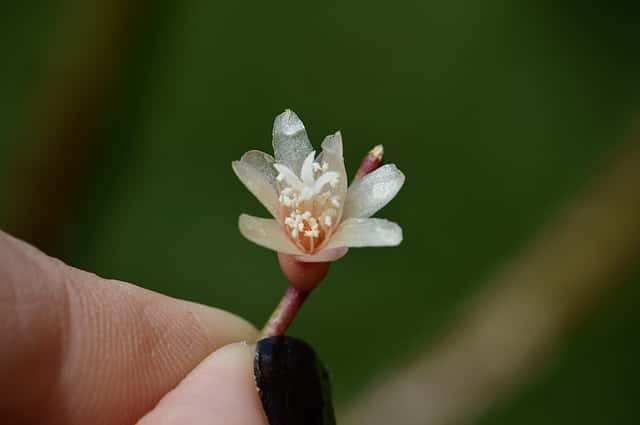
Mistletoe cactus (Rhipsalis burchellii) is a easy-care plant from the Cactaceae family. Rhipsalis burchellii is a spineless cactus that grows on trees in the Atlantic Forest of São Paulo and Paraná, Brazil, up to about 900 m. Its stems are thin, cylindrical and pendant, forking in pairs, with tips 4 to 10 cm long. Near the tips it opens white to cream flowers about 1 cm long, followed...
Mistletoe cactus grows up to 1.0m, spread of 50cm, watering every 7 days, 10°C – 32°C, 40–80% humidity. It is suitable for indoor environments and safe for pets.
Unlike many tropical plants, Mistletoe cactus tolerates watering mistakes. Best for beginners. Unlike many popular species, Mistletoe cactus is safe to keep around pets. Without adequate drainage, root rot can develop within 14 days.
How to Care for Mistletoe cactus?
TLDR: Mistletoe cactus needs Partial shade, watering every 7 days, and temperatures between 10-32°C with 40-80% humidity.
How Often Should You Water Mistletoe cactus?
Water when the top 2 cm of mix is dry, about once a week in summer and every 2 weeks in winter. Never leave water standing in the saucer.
How Much Light Does Mistletoe cactus Need?
Bright, filtered light, like under a tree canopy. Morning sun is fine; strong afternoon sun scorches and reddens the stems.
What Is the Best Soil for Mistletoe cactus?
Light, slightly acidic epiphyte mix: pine bark, coco fiber and a little potting soil with perlite.
What Pot Should You Use for Mistletoe cactus?
A hanging basket or tall pot with drainage so the stems can trail. Terracotta or plastic both work; repot every 2 to 3 years.
Care Schedule
Fertilize
Every 30 days
Misting
Every 7 days
Repot
Every 730 days
What Is Mistletoe cactus and Where Does It Come From?
Rhipsalis burchellii is a spineless cactus that grows on trees in the Atlantic Forest of São Paulo and Paraná, Brazil, up to about 900 m. Its stems are thin, cylindrical and pendant, forking in pairs, with tips 4 to 10 cm long. Near the tips it opens white to cream flowers about 1 cm long, followed by pink to magenta berries that set it apart from the similar orange-fruited Rhipsalis campos-portoana. In a hanging pot it forms a green cascade that can pass 1 m.
How to Propagate Mistletoe cactus?
Stem cutting
Let the cut dry for a day before planting, and put several cuttings in one pot for a fuller plant.
- 1 Cut a 10 to 15 cm stem
- 2 Let the cut end dry for 1 to 2 days
- 3 Push the base 2 cm into moist, airy mix
- 4 Keep in bright light and mist the mix until it roots
Materials needed:
How Big Does Mistletoe cactus Grow?
TLDR: Mistletoe cactus can reach up to 1.0m tall with Medium growth rate.
Max height
1.0m
Spread
50cm
Growth rate
Medium
Foliage
Evergreen
Plant Uses
Ornamental
Great for decoration
Is your plant showing symptoms?
Click on the symptom to discover possible causes:
What Diseases Commonly Affect Mistletoe cactus?
TLDR: Mistletoe cactus is susceptible to 7 known diseases. Monitor regularly for early detection.
Root Rot
Root rot is a serious fungal disease that affects the root system of plants, causing them to decay and die. It is primarily caused by overwatering, poor drainage, or soil-borne fungi such as Pythium, Phytophthora, Rhizoctonia, and Fusarium. The disease thrives in waterlogged conditions where roots are deprived of oxygen, making them susceptible to fungal infection.
Overwatering
Overwatering occurs when plants receive too much water, depriving roots of oxygen and causing root rot. This environmental stress is one of the most common causes of houseplant death, as waterlogged soil prevents roots from breathing and functioning properly.
Mealybugs
Mealybugs are small, soft-bodied insects covered with a white, waxy, cottony material. They are common pests of houseplants and outdoor plants in mild climates. These sap-sucking insects feed on plant tissue, causing damage, stunted growth, and can lead to plant death if left untreated. They produce sticky honeydew which attracts sooty mold.
Scale Insects
Scale insects are small sap-sucking pests that appear as brown, shell-like bumps on plant stems and leaves. There are over 25 species, divided into armored (hard) and unarmored (soft) scales. They feed by piercing plant tissue and extracting sap, which weakens the plant and can lead to yellowing, stunted growth, and even death if left untreated. They also excrete honeydew, which attracts ants and promotes sooty mold growth.
Fun Facts
It lives on trees and almost never touches the ground
It was described in 1923 from plants collected in Jabaquara, São Paulo
Rhipsalis is the only cactus genus also native to Africa and Asia
Frequently asked questions
Does Rhipsalis burchellii need sun?
Is it toxic to cats and dogs?
How do I tell it from Rhipsalis campos-portoana?
Why are the stems limp and soft at the base?
Compare with similar plants
| Attribute | Difficulty | Light | Watering | Pet Safe |
|---|---|---|---|---|
| Field Maple | Easy | Bright indirect | 14d | ✓ |
| Iberian Houseleek | Easy | Direct sun | 14d | ✓ |
| Silver Birch | Easy | Direct sun | 14d | ✓ |
| Common Blanketflower | Easy | Direct sun | 10d | ✓ |





