Caprifoliaceae
Morrow's Honeysuckle (Lonicera morrowii)
Lonicera morrowii
A tough shrub that handles hard frost and almost any soil. It wants sun or part shade and little water once established. It is invasive in many areas, so check local rules before planting.
Every 10 days
Bright indirect
-35° - 35°C
% - %
Categories
What is Morrow's honeysuckle?
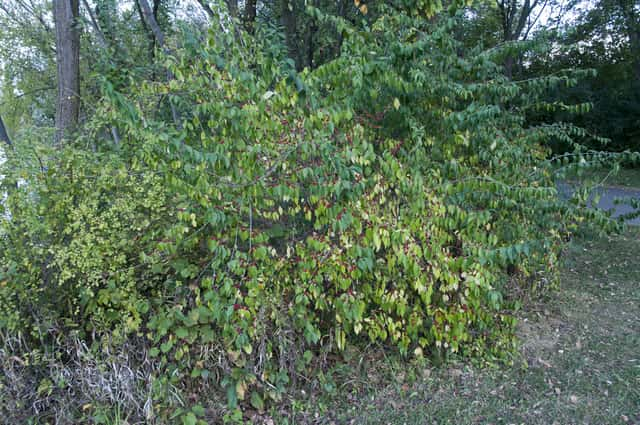
Morrow's honeysuckle (Lonicera morrowii) is a easy-care plant from the Caprifoliaceae family. Lonicera morrowii is a shrubby honeysuckle in the family Caprifoliaceae, native to Japan, Korea and northeast China. It grows as a dense, multi-stemmed bush 2 to 3.5 metres tall and about as wide. The leaves are oval, 4 to 6 cm long, grey-green and softly hairy underneath, and they come out in sprin...
Morrow's honeysuckle grows up to 3.6m, spread of 240cm, watering every 10 days, -35°C – 35°C. It is not suitable for indoor environments and safe for pets.
Unlike many tropical plants, Morrow's honeysuckle tolerates watering mistakes. Best for beginners. Unlike many popular species, Morrow's honeysuckle is safe to keep around pets.
How to Care for Morrow's honeysuckle?
TLDR: Morrow's honeysuckle needs Bright indirect, watering every 10 days, and temperatures between -35-35°C with 40-70% humidity.
How Often Should You Water Morrow's honeysuckle?
Water every 10 days in dry weather during the first year. After that, rain is usually enough.
How Much Light Does Morrow's honeysuckle Need?
Full sun or part shade. It flowers more in sun.
What Is the Best Soil for Morrow's honeysuckle?
Grows in almost any soil, sandy to clay, as long as it does not stay waterlogged.
What Is Morrow's honeysuckle and Where Does It Come From?
Lonicera morrowii is a shrubby honeysuckle in the family Caprifoliaceae, native to Japan, Korea and northeast China. It grows as a dense, multi-stemmed bush 2 to 3.5 metres tall and about as wide. The leaves are oval, 4 to 6 cm long, grey-green and softly hairy underneath, and they come out in spring a week or two before most other shrubs. In May it opens fragrant tubular flowers in pairs, white at first and turning yellow with age. Red berries follow in summer, also in pairs, and birds eat them and spread the seeds. Older stems are hollow inside. In the northeastern and midwestern United States it has escaped from gardens and become a serious invasive, forming thickets along woodland edges, roadsides and old fields.
How to Propagate Morrow's honeysuckle?
Softwood cuttings
Roots easily. Where it is invasive, choose a native honeysuckle instead.
- 1 Take tips of this year's shoots, 10 to 15 cm long, in early summer
- 2 Strip the lower leaves
- 3 Insert in a light, moist mix
- 4 Keep in bright shade and moist until rooted
Materials needed:
How Big Does Morrow's honeysuckle Grow?
TLDR: Morrow's honeysuckle can reach up to 3.6m tall with Fast growth rate.
Max height
3.6m
Spread
2.4m
Growth rate
Fast
Foliage
Deciduous
Warning: Toxic Plant
This plant can be toxic if ingested. Keep out of reach of:
Plant Uses
Ornamental
Great for decoration
Is your plant showing symptoms?
Click on the symptom to discover possible causes:
What Diseases Commonly Affect Morrow's honeysuckle?
TLDR: Morrow's honeysuckle is susceptible to 4 known diseases. Monitor regularly for early detection.
Hyadaphis
Hyadaphis is a genus of aphids—small, soft-bodied insects that suck plant sap. They are most common on honeysuckle (Lonicera) and herbs in the carrot family (Apiaceae), such as dill, fennel, coriander/cilantro, parsley, and sometimes carrots and celery. Look for clusters on tender shoots and the undersides of leaves, leaf curling and puckering, distorted new growth, sticky honeydew, visiting ants, and black sooty mold. Heavy infestations can slow growth and weaken plants. These aphids often begin on honeysuckle in spring; later, winged adults spread to nearby herbs as weather warms.
Aphids
Aphids are small, soft-bodied, pear-shaped insects (1/16 to 1/8 inch long) that feed by sucking nutrient-rich sap from plants. They reproduce rapidly and can quickly weaken plants, causing distorted growth and transmitting plant viruses. Aphids come in various colors including green, black, red, yellow, brown, and gray. They secrete honeydew, a sticky substance that attracts ants and encourages sooty mold growth.
Powdery Mildew
Powdery mildew is a common fungal disease caused by various fungi species including Erysiphe, Podosphaera, Oïdium, and Leveillula. It affects over 10,000 plant species worldwide. The disease thrives in warm, dry climates with high humidity and appears as a distinctive white powdery coating on plant surfaces.
Leaf Spot
Leaf spot is a common fungal disease caused by various pathogens including Alternaria, Ascochyta, Colletotrichum, Septoria, and Venturia. It primarily affects leaves, causing discolored spots that can lead to premature leaf drop if left untreated.
Fun Facts
It leafs out one or two weeks before native plants, giving it a head start in the race for light.
Crossed with Tatarian honeysuckle, it produced Lonicera × bella, another invasive bush honeysuckle.
The name honours James Morrow, agriculturist on the US expedition that visited Japan in 1854.
Frequently asked questions
Are the red berries edible?
Why is it called invasive?
How can I tell it from native honeysuckles?
Why are the shoot tips stunted and bunched up?
Compare with similar plants
| Attribute | Difficulty | Light | Watering | Pet Safe |
|---|---|---|---|---|
| Field Maple | Easy | Bright indirect | 14d | ✓ |
| Iberian Houseleek | Easy | Direct sun | 14d | ✓ |
| Silver Birch | Easy | Direct sun | 14d | ✓ |
| Common Blanketflower | Easy | Direct sun | 10d | ✓ |
Choose & Compare
Sources & References
- Wikipedia - Lonicera morrowii
- Wisconsin DNR - Morrow's honeysuckle (invasive species fact sheet)
- Virginia Tech Dendrology - Morrow honeysuckle fact sheet
- US National Park Service - Morrow's honeysuckle (Acadia)
- Morton Arboretum - Honeysuckle aphid
- University of Illinois Extension - Honeysuckle aphid





