Scrophulariaceae
Mullein (Genus Verbascum)
Verbascum
An easy garden plant: full sun, poor free-draining soil and little water once established. It needs no feeding. Cut back spent spikes for a second flush and to limit self-seeding. Watch out for mullein moth caterpillars.
Every 10 days
Bright indirect
° - °C
% - %
Categories
What is Mullein?
Mullein (Verbascum) is a easy-care plant from the Scrophulariaceae family. Verbascum is the mullein genus, with more than 450 species in the figwort family (Scrophulariaceae), native to Europe, Africa and Asia and most diverse around the Mediterranean. Most are biennials or short-lived perennials: in the first year they form a rosette of large leaves, often covered in soft...
Mullein grows up to 3.0m, spread of 60cm, watering every 10 days. It is not suitable for indoor environments and safe for pets.
Unlike many tropical plants, Mullein tolerates watering mistakes. Best for beginners. Unlike many popular species, Mullein is safe to keep around pets.
How to Care for Mullein?
TLDR: Mullein needs Bright indirect, watering every 10 days, and temperatures between 15-30°C with 40-70% humidity.
How Often Should You Water Mullein?
Water regularly only until the plant is established. After that, water just during long dry spells. Mulleins hate soggy soil, especially in winter, which rots the roots.
How Much Light Does Mullein Need?
Full sun, 6 to 8 hours a day. It tolerates light shade but flowers less and the spikes may flop.
What Is the Best Soil for Mullein?
Poor, sandy or stony soil with excellent drainage. In rich soil growth is soft and the spikes need staking.
What Pot Should You Use for Mullein?
Best grown in the ground. In a container, use a deep, heavy pot with good drainage and gritty compost.
What Is Mullein and Where Does It Come From?
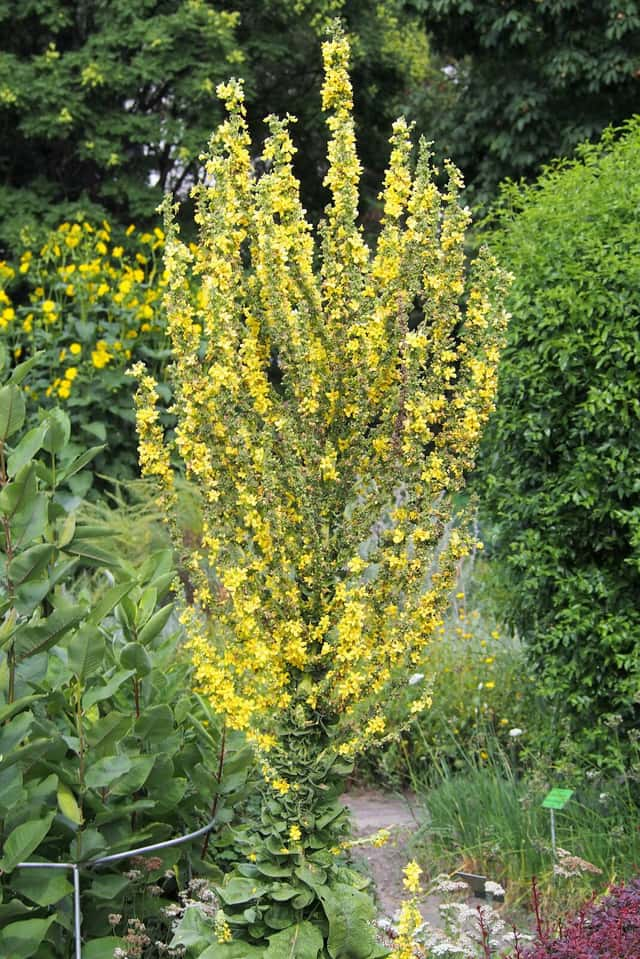
Verbascum is the mullein genus, with more than 450 species in the figwort family (Scrophulariaceae), native to Europe, Africa and Asia and most diverse around the Mediterranean. Most are biennials or short-lived perennials: in the first year they form a rosette of large leaves, often covered in soft hairs, then send up a tall flower spike from 50 cm to 3 m. Flowers are usually yellow but can also be white, pink or purple, opening from late spring through summer. They are loved by bees and add vertical interest to dry borders and gravel gardens.
How to Propagate Mullein?
Seed
Collect seed when the spikes dry in late summer. Plants self-seed freely.
- 1 Sow in trays 6-8 weeks before the last frost, or directly outdoors in late spring
- 2 Barely cover the seeds and keep the compost moist
- 3 Prick out seedlings once they have a few leaves
- 4 Plant out 30-45 cm apart
Materials needed:
Root cutting
This keeps named hybrids true; seedlings of hybrids may vary.
- 1 In winter, while the plant is dormant, remove a piece of thick root
- 2 Cut it into 5 cm sections, noting which end is the top
- 3 Insert upright in gritty compost with the top level with the surface
- 4 Keep lightly moist in a cool place until shoots appear
Materials needed:
How Big Does Mullein Grow?
TLDR: Mullein can reach up to 3.0m tall with Medium growth rate.
Max height
3.0m
Spread
60cm
Plant Uses
Ornamental
Great for decoration
Medicinal
Medicinal properties
Medicinal Uses
- Leaves and flowers of some species, especially V. thapsus, are traditionally used in teas for coughs and sore throats.
Is your plant showing symptoms?
Click on the symptom to discover possible causes:
What Diseases Commonly Affect Mullein?
TLDR: Mullein is susceptible to 9 known diseases. Monitor regularly for early detection.
Caterpillars
Caterpillars are the larval stage of moths and butterflies that feed voraciously on plant foliage, stems, flowers, and fruits. Common species include cabbage loopers, tomato hornworms, armyworms, and cutworms. These pests can cause extensive damage by consuming large amounts of plant tissue in a short time. They vary in size from small (1/4 inch) to large (5 inches), with colors ranging from green to brown, often featuring stripes or spots. Caterpillars are highly mobile and can quickly spread throughout gardens, making them one of the most destructive common pests.
Powdery Mildew
Powdery mildew is a common fungal disease caused by various fungi species including Erysiphe, Podosphaera, Oïdium, and Leveillula. It affects over 10,000 plant species worldwide. The disease thrives in warm, dry climates with high humidity and appears as a distinctive white powdery coating on plant surfaces.
Leaf Spot
Leaf spot is a common fungal disease caused by various pathogens including Alternaria, Ascochyta, Colletotrichum, Septoria, and Venturia. It primarily affects leaves, causing discolored spots that can lead to premature leaf drop if left untreated.
Spider Mites
Spider mites are tiny arachnids (less than 1/20 inch long) related to spiders and ticks that feed on plant sap. They thrive in hot, dry conditions and can cause significant damage to ornamental and vegetable plants. During severe infestations, crop losses can reach 14% or higher as these pests disrupt vital plant processes including photosynthesis, carbon dioxide absorption, and transpiration.
Fun Facts
The genus has more than 450 species, most of them around the Mediterranean.
Some species reach 3 m tall.
The hairy leaves help keep rabbits and deer away.
Frequently asked questions
Does mullein die after flowering?
How do I get mullein to bloom again?
What pests attack mullein?
Is mullein drought tolerant?
Compare with similar plants
| Attribute | Difficulty | Light | Watering | Pet Safe |
|---|---|---|---|---|
| Field Maple | Easy | Bright indirect | 14d | ✓ |
| Iberian Houseleek | Easy | Direct sun | 14d | ✓ |
| Silver Birch | Easy | Direct sun | 14d | ✓ |
| Common Blanketflower | Easy | Direct sun | 10d | ✓ |





