Brassicaceae
Mustard (genus Sinapis)
Sinapis
An easy, fast annual. Sow directly where it is to grow, in full sun and fertile, well-drained soil, in late winter or early spring (or autumn in mild climates). Keep the soil moist but not waterlogged, especially during flowering and pod set. It prefers cool weather (18-25 °C) and tolerates light frost. Pick young leaves before flowering, and harvest seed when the pods turn yellow, before they split.
Every 7 days
Direct sun
-7° - 25°C
% - %
Categories
What is Mustard (genus)?
Mustard (genus) (Sinapis) is a easy-care plant from the Brassicaceae family. Sinapis is a small genus of annual herbs in the cabbage family (Brassicaceae), native to the Mediterranean, Europe and western Asia. The best-known species is white or yellow mustard (Sinapis alba), whose ground seeds make yellow table mustard; charlock or wild mustard (S. arvensis), a common weed o...
Mustard (genus) grows up to 80cm, watering every 7 days, -7°C – 25°C. It is not suitable for indoor environments and safe for pets.
Unlike many tropical plants, Mustard (genus) tolerates watering mistakes. Best for beginners. Unlike many popular species, Mustard (genus) is safe to keep around pets.
How to Care for Mustard (genus)?
TLDR: Mustard (genus) needs Direct sun, watering every 7 days, and temperatures between -7-25°C with 40-70% humidity.
How Often Should You Water Mustard (genus)?
Water about once a week, or whenever the soil starts to dry. It tolerates neither long drought nor waterlogging. Flowering and pod formation are the most sensitive stages.
How Much Light Does Mustard (genus) Need?
Full sun. In shade it gets leggy, flowers poorly and sets less seed.
What Is the Best Soil for Mustard (genus)?
Fertile, well-drained loam or sandy loam with a pH of 6-7.5. Avoid ground where cabbages or other brassicas grew recently, because of clubroot.
What Pot Should You Use for Mustard (genus)?
A pot or trough at least 20 cm deep with drainage holes; for leaves and microgreens, shallow trays.
What Is Mustard (genus) and Where Does It Come From?
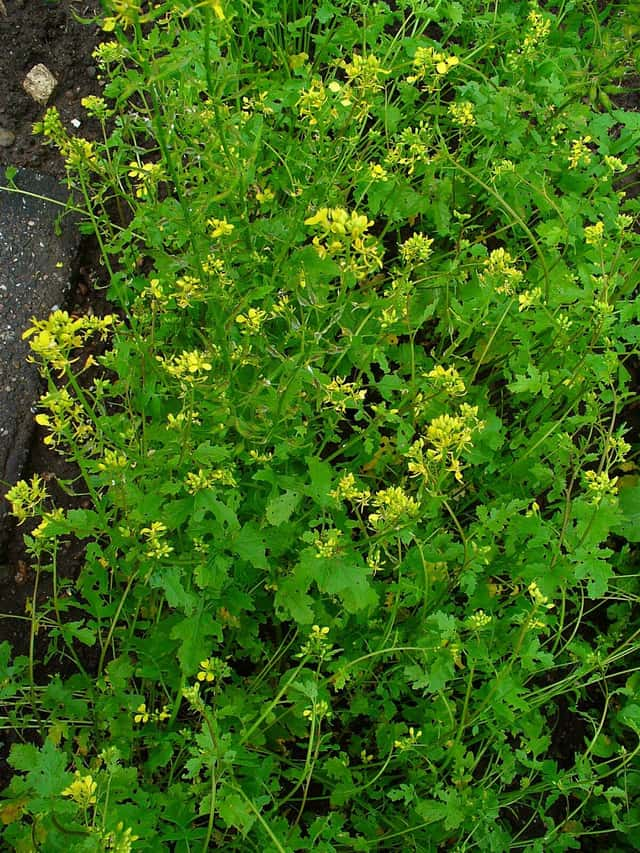
Sinapis is a small genus of annual herbs in the cabbage family (Brassicaceae), native to the Mediterranean, Europe and western Asia. The best-known species is white or yellow mustard (Sinapis alba), whose ground seeds make yellow table mustard; charlock or wild mustard (S. arvensis), a common weed of arable fields, is also often placed in the genus. They are upright plants 50 cm to 1 m tall, with rough, lobed leaves and clusters of four-petalled yellow flowers in spring and summer, followed by slender seed pods. They grow very fast, flowering 4-6 weeks after sowing. Besides the condiment, young leaves are eaten cooked, and in Europe white mustard is widely sown as a green manure and cover crop.
How to Propagate Mustard (genus)?
Direct sowing
Early spring sowings give more seed; late sowings in hot weather bolt fast and yield less. For leaves, sow little and often every 2-3 weeks.
- 1 Prepare loose, fine soil
- 2 Broadcast the seed or sow in shallow rows 15 cm apart
- 3 Cover with just a few millimetres of soil
- 4 Keep moist until germination and thin seedlings if crowded
Materials needed:
How Big Does Mustard (genus) Grow?
TLDR: Mustard (genus) can reach up to 80cm tall with Fast growth rate.
Max height
80cm
Growth rate
Fast
Foliage
Deciduous
Plant Uses
Edible
Can be consumed
Medicinal
Medicinal properties
Medicinal Uses
- Mustard plasters traditionally used to warm the skin and ease chest congestion
- Seeds traditionally used as a digestive
Culinary Uses
- Ground seed for table mustard
- Whole seed in pickles and preserves
- Young leaves cooked or stir-fried
- Sprouts and microgreens
Is your plant showing symptoms?
Click on the symptom to discover possible causes:
What Diseases Commonly Affect Mustard (genus)?
TLDR: Mustard (genus) is susceptible to 11 known diseases. Monitor regularly for early detection.
Flea beetle damage
Flea beetles are small, jumping insects that feed on the leaves of many vegetable crops. They chew numerous small, circular holes, creating a characteristic 'shothole' appearance. While established plants can often tolerate the damage, young seedlings are highly susceptible and can be stunted or killed if the infestation is severe.
Aphids
Aphids are small, soft-bodied, pear-shaped insects (1/16 to 1/8 inch long) that feed by sucking nutrient-rich sap from plants. They reproduce rapidly and can quickly weaken plants, causing distorted growth and transmitting plant viruses. Aphids come in various colors including green, black, red, yellow, brown, and gray. They secrete honeydew, a sticky substance that attracts ants and encourages sooty mold growth.
Whiteflies
Whiteflies are small, soft-bodied, winged insects closely related to aphids and mealybugs. They are moth-like in appearance, about 1/16 inch long, triangular in shape, and gray-white in color. These sap-sucking pests feed on plant tissue, causing yellowing, stunted growth, and wilting. They also excrete honeydew, which attracts ants and promotes sooty mold growth. Whiteflies can transmit serious plant viruses.
Caterpillars
Caterpillars are the larval stage of moths and butterflies that feed voraciously on plant foliage, stems, flowers, and fruits. Common species include cabbage loopers, tomato hornworms, armyworms, and cutworms. These pests can cause extensive damage by consuming large amounts of plant tissue in a short time. They vary in size from small (1/4 inch) to large (5 inches), with colors ranging from green to brown, often featuring stripes or spots. Caterpillars are highly mobile and can quickly spread throughout gardens, making them one of the most destructive common pests.
Fun Facts
Yellow table mustard is made mainly from Sinapis alba seed
The heat only develops when the seed is crushed and mixed with water
In Europe, white mustard is sown after harvest to protect and feed the soil
Frequently asked questions
How long does mustard take to grow?
Can I grow mustard in a pot?
Is mustard toxic to animals?
What pests attack mustard?
Compare with similar plants
| Attribute | Difficulty | Light | Watering | Pet Safe |
|---|---|---|---|---|
| Field Maple | Easy | Bright indirect | 14d | ✓ |
| Iberian Houseleek | Easy | Direct sun | 14d | ✓ |
| Silver Birch | Easy | Direct sun | 14d | ✓ |
| Common Blanketflower | Easy | Direct sun | 10d | ✓ |
Choose & Compare
Sources & References
- Wikipedia — Sinapis (accepted species per POWO)
- Wikipedia — White mustard (Sinapis alba)
- Slovak University of Agriculture HortiEdu — White mustard (Sinapis alba)
- Wikifarmer — Plagas y enfermedades de la mostaza
- Cotswold Seeds — Sowing and growing mustard (cover crop, clubroot)
- Archives of Razi Institute — Possible acute poisoning by Sinapis arvensis in sheep





