Cactaceae
Myrtillocactus
Myrtillocactus
An easy cactus for strong sun and gritty soil. Water deeply only when the soil is dry and nearly stop in winter. The main risk is rot from cold, wet soil. It can take a short dip to 25 °F (-4 °C), but it's safer above 50 °F (10 °C). Outdoors it fits USDA zone 9b and warmer.
Every 14 days
Direct sun
-4° - °C
% - %
Categories
What is Myrtillocactus?
Myrtillocactus (Myrtillocactus) is a easy-care plant from the Cactaceae family. Myrtillocactus is a genus of four candelabra-shaped cacti from Mexico and Guatemala. The best known is Myrtillocactus geometrizans, which has its own page. The others are M. cochal from Baja California, M. schenckii and M. eichlamii. Stems are green to blue-green, ribbed and spiny, and branch from a...
Myrtillocactus grows up to 13.0m, watering every 14 days. It is suitable for indoor environments and safe for pets.
Unlike many tropical plants, Myrtillocactus tolerates watering mistakes. Best for beginners. Unlike many popular species, Myrtillocactus is safe to keep around pets. Without adequate drainage, root rot can develop within 28 days.
How to Care for Myrtillocactus?
TLDR: Myrtillocactus needs Direct sun, watering every 14 days, and temperatures between -4-30°C with 40-70% humidity.
How Often Should You Water Myrtillocactus?
From spring to early fall, soak the soil, then wait until it's completely dry before watering again. In winter, keep it nearly dry. Wet soil in cold weather can rot roots and stems.
How Much Light Does Myrtillocactus Need?
Give it direct sun. Indoors, use your brightest window with a few hours of sun. If it's been in low light, move it into sun gradually so it doesn't scorch.
What Is the Best Soil for Myrtillocactus?
Use cactus mix with plenty of coarse sand and grit, loose and fast-draining. Limestone soil works too.
What Pot Should You Use for Myrtillocactus?
A heavy clay pot with drainage holes, so it won't tip over. The roots are large: repot every 2 years or when it gets tight.
Care Schedule
Fertilize
Every 30 days
Repot
Every 730 days
What Is Myrtillocactus and Where Does It Come From?
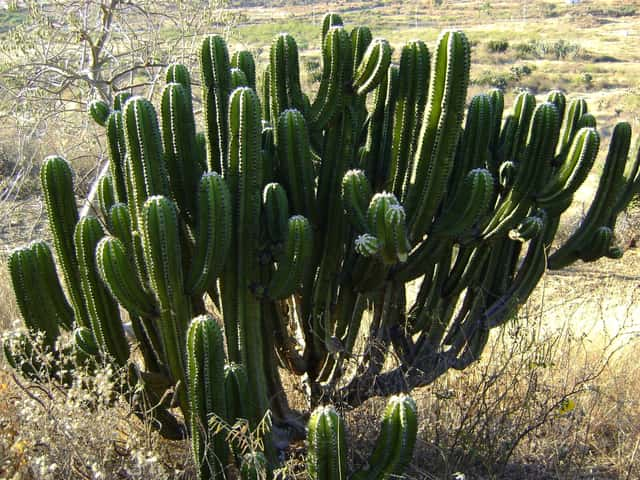
Myrtillocactus is a genus of four candelabra-shaped cacti from Mexico and Guatemala. The best known is Myrtillocactus geometrizans, which has its own page. The others are M. cochal from Baja California, M. schenckii and M. eichlamii. Stems are green to blue-green, ribbed and spiny, and branch from a trunk. The largest plants reach 43 ft (13 m) in the wild, but stay far smaller in pots. Small white to cream flowers open in summer, followed by round fruits up to 0.6 in (1.5 cm) across, red to purple. Those fruits give the genus its name, which means blueberry cactus.
How to Propagate Myrtillocactus?
Stem cutting
Cuttings only root in hot weather. If the cut hasn't dried well before planting, it can rot.
- 1 In summer heat, cut off an arm with a clean knife, wearing thick gloves
- 2 Let the cut dry in the shade until it forms a callus
- 3 Set the cutting in dry cactus mix
- 4 Start light watering only once it has rooted
Materials needed:
Seed
The seeds are tiny, so barely cover them.
- 1 Take seeds from ripe fruit and rinse off the pulp
- 2 Scatter on moist fine cactus mix
- 3 Cover the pot with a clear lid and keep it warm and bright
- 4 Remove the lid little by little once seedlings appear
Materials needed:
How Big Does Myrtillocactus Grow?
TLDR: Myrtillocactus can reach up to 13.0m tall with Medium growth rate.
Max height
13.0m
Growth rate
Medium
Foliage
Evergreen
Plant Uses
Ornamental
Great for decoration
Edible
Can be consumed
Culinary Uses
- Fruits are eaten fresh or in jams and ice cream in Mexico; confirm the species before tasting
Is your plant showing symptoms?
Click on the symptom to discover possible causes:
What Diseases Commonly Affect Myrtillocactus?
TLDR: Myrtillocactus is susceptible to 4 known diseases. Monitor regularly for early detection.
Mealybugs
Mealybugs are small, soft-bodied insects covered with a white, waxy, cottony material. They are common pests of houseplants and outdoor plants in mild climates. These sap-sucking insects feed on plant tissue, causing damage, stunted growth, and can lead to plant death if left untreated. They produce sticky honeydew which attracts sooty mold.
Root Rot
Root rot is a serious fungal disease that affects the root system of plants, causing them to decay and die. It is primarily caused by overwatering, poor drainage, or soil-borne fungi such as Pythium, Phytophthora, Rhizoctonia, and Fusarium. The disease thrives in waterlogged conditions where roots are deprived of oxygen, making them susceptible to fungal infection.
Overwatering
Overwatering occurs when plants receive too much water, depriving roots of oxygen and causing root rot. This environmental stress is one of the most common causes of houseplant death, as waterlogged soil prevents roots from breathing and functioning properly.
Cold Damage
Cold damage, also known as frost injury, occurs when plants are exposed to freezing or near-freezing temperatures. This environmental stress can cause cellular damage as ice crystals form within plant tissues, rupturing cells and disrupting normal plant functions. Chilling injury can also occur in sensitive species at temperatures between 32-55°F (0-10°C), even without actual freezing.
Fun Facts
The name means blueberry cactus, after its small fruits.
In Mexico, garambullo fruit is sold in markets from June to September.
Myrtillocactus geometrizans is widely used as a grafting base for other cacti.
Frequently asked questions
Can Myrtillocactus handle cold?
How often should I water it?
Can you eat the fruit?
Is it toxic to cats and dogs?
Compare with similar plants
| Attribute | Difficulty | Light | Watering | Pet Safe |
|---|---|---|---|---|
| Field Maple | Easy | Bright indirect | 14d | ✓ |
| Iberian Houseleek | Easy | Direct sun | 14d | ✓ |
| Silver Birch | Easy | Direct sun | 14d | ✓ |
| Common Blanketflower | Easy | Direct sun | 10d | ✓ |





