Scrophulariaceae
Nemesia
Nemesia
A cool-weather bloomer: full sun, well-drained soil kept lightly moist. After the first flush, cut back by half to get more flowers.
Every 4 days
Bright indirect
-5° - 28°C
% - %
Categories
What is Nemesia?
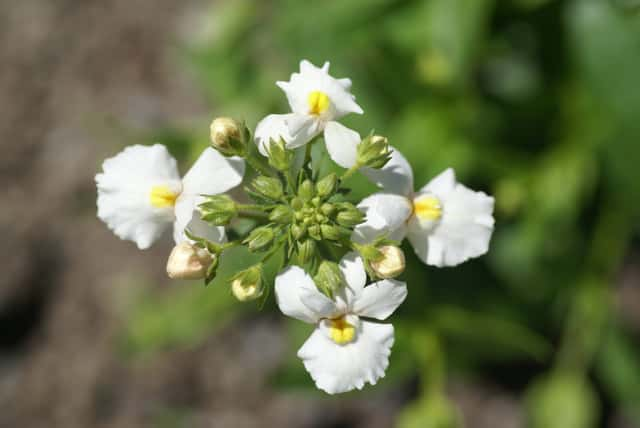
Nemesia (Nemesia) is a easy-care plant from the Scrophulariaceae family. Nemesia is a genus of about 65 species in the figwort family, native to South Africa, where they grow on sandy coasts and disturbed ground. There are annuals, perennials and small shrubs. Garden nemesias form 20 to 45 cm mounds covered in small two-lipped flowers, like tiny snapdragons, in blue, lil...
Nemesia grows up to 45cm, spread of 30cm, watering every 4 days, -5°C – 28°C. It is not suitable for indoor environments and safe for pets.
Unlike many tropical plants, Nemesia tolerates watering mistakes. Best for beginners. Unlike many popular species, Nemesia is safe to keep around pets.
How to Care for Nemesia?
TLDR: Nemesia needs Bright indirect, watering every 4 days, and temperatures between -5-28°C with 40-70% humidity.
How Often Should You Water Nemesia?
Keep the soil lightly moist, watering every 3 to 5 days, more often in heat and in pots. Don't let it get soggy, or the roots rot.
How Much Light Does Nemesia Need?
Full sun in mild weather. Where summers are hot, give morning sun and afternoon shade so it keeps blooming longer.
What Is the Best Soil for Nemesia?
Fertile, loose, well-drained soil, slightly acidic to neutral. In pots, use a flower potting mix with some sand or perlite.
What Pot Should You Use for Nemesia?
A 15 to 20 cm pot, window box or hanging basket with drainage and a flower potting mix. Great at the edge of beds.
Care Schedule
Fertilize
Every 14 days
What Is Nemesia and Where Does It Come From?
Nemesia is a genus of about 65 species in the figwort family, native to South Africa, where they grow on sandy coasts and disturbed ground. There are annuals, perennials and small shrubs. Garden nemesias form 20 to 45 cm mounds covered in small two-lipped flowers, like tiny snapdragons, in blue, lilac, pink, white, yellow, orange or red, often bicolored and scented. They bloom best in cool weather. The most widely grown are Nemesia strumosa and Nemesia fruticans, which have their own entries.
How to Propagate Nemesia?
Seed
Germinates best when cool, around 15 to 20 °C. Pinch the tips of seedlings for bushier plants.
- 1 Sow in trays 6 to 8 weeks before the last frost, or in autumn in mild climates
- 2 Cover the seeds with a very thin layer of mix
- 3 Keep moist and cool until they sprout
- 4 Plant out 20 cm apart once hard frosts are over
Materials needed:
Stem cutting
Works for perennial and hybrid nemesias. Use non-flowering tips.
- 1 Take 5 to 8 cm non-flowering tips
- 2 Strip the lower leaves
- 3 Insert into moist, sandy mix
- 4 Keep in bright shade until rooted
Materials needed:
How Big Does Nemesia Grow?
TLDR: Nemesia can reach up to 45cm tall with Fast growth rate.
Max height
45cm
Spread
30cm
Growth rate
Fast
Plant Uses
Ornamental
Great for decoration
Aromatic
Pleasant fragrance
Is your plant showing symptoms?
Click on the symptom to discover possible causes:
What Diseases Commonly Affect Nemesia?
TLDR: Nemesia is susceptible to 6 known diseases. Monitor regularly for early detection.
Root Rot
Root rot is a serious fungal disease that affects the root system of plants, causing them to decay and die. It is primarily caused by overwatering, poor drainage, or soil-borne fungi such as Pythium, Phytophthora, Rhizoctonia, and Fusarium. The disease thrives in waterlogged conditions where roots are deprived of oxygen, making them susceptible to fungal infection.
Powdery Mildew
Powdery mildew is a common fungal disease caused by various fungi species including Erysiphe, Podosphaera, Oïdium, and Leveillula. It affects over 10,000 plant species worldwide. The disease thrives in warm, dry climates with high humidity and appears as a distinctive white powdery coating on plant surfaces.
Aphids
Aphids are small, soft-bodied, pear-shaped insects (1/16 to 1/8 inch long) that feed by sucking nutrient-rich sap from plants. They reproduce rapidly and can quickly weaken plants, causing distorted growth and transmitting plant viruses. Aphids come in various colors including green, black, red, yellow, brown, and gray. They secrete honeydew, a sticky substance that attracts ants and encourages sooty mold growth.
Grey Mould
Fun Facts
Nemesias are relatives of snapdragons and butterfly bush
Many varieties are scented, often of vanilla or honey
The wild species grow on sandy South African coasts
Frequently asked questions
Why did my nemesia stop blooming?
Does nemesia come back every year?
Is nemesia toxic to cats and dogs?
Do I need to deadhead it?
Compare with similar plants
| Attribute | Difficulty | Light | Watering | Pet Safe |
|---|---|---|---|---|
| Field Maple | Easy | Bright indirect | 14d | ✓ |
| Iberian Houseleek | Easy | Direct sun | 14d | ✓ |
| Silver Birch | Easy | Direct sun | 14d | ✓ |
| Common Blanketflower | Easy | Direct sun | 10d | ✓ |





