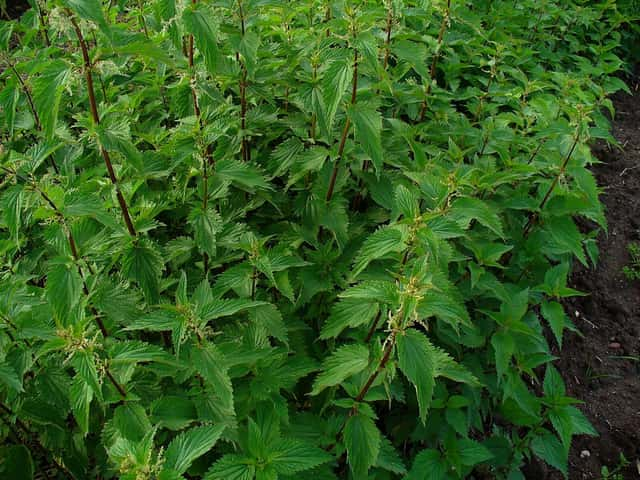
Urticaceae
Nettle (Urtica): genus guide
Urtica
Nettles grow on their own in rich, moist soil in sun or part shade and need almost no care. Keep the soil from drying out, harvest the young tops often and contain the roots if you do not want them to spread. Always wear gloves.
Every 7 days
Bright indirect
° - °C
% - %
Categories
What is Nettle?
Nettle (Urtica) is a easy-care plant from the Urticaceae family. Urtica is the nettle genus, in the family Urticaceae, with about 70 species of annual and perennial herbs, rarely shrubs, from 10 cm to 3 m tall. The genus began in Eurasia and has since spread to almost every continent. Most species have stinging hairs on the leaves and stems that break on contact...
Nettle grows up to 3.0m, watering every 7 days. It is not suitable for indoor environments and not safe for pets.
Unlike many tropical plants, Nettle tolerates watering mistakes. Best for beginners. Without precautions, ingestion can cause irritation in pets. Keep out of reach of cats and dogs.
How to Care for Nettle?
TLDR: Nettle needs Bright indirect, watering every 7 days, and temperatures between 15-30°C with 40-70% humidity.
How Often Should You Water Nettle?
Keep the soil moist, especially in dry spells, about once a week. Avoid waterlogged ground.
How Much Light Does Nettle Need?
Full sun to partial shade. In deep shade the plants get thin and leggy.
What Is the Best Soil for Nettle?
Rich, moist soil high in nitrogen and organic matter, with a pH of about 5.5 to 7.5. Nettles thrive where compost or manure has been added.
What Pot Should You Use for Nettle?
Grows best in the ground. In a pot, use a large, deep container with drainage holes, which also stops the roots from spreading.
What Is Nettle and Where Does It Come From?
Urtica is the nettle genus, in the family Urticaceae, with about 70 species of annual and perennial herbs, rarely shrubs, from 10 cm to 3 m tall. The genus began in Eurasia and has since spread to almost every continent. Most species have stinging hairs on the leaves and stems that break on contact and inject an irritant into the skin. The best known is the common stinging nettle, Urtica dioica, a perennial that spreads by rhizomes and grows in damp, rich soil near houses, rivers and farmland.
How to Propagate Nettle?
Division
Plant in a large pot or a bed with a root barrier if you want to stop it spreading through the garden.
- 1 Wear gloves
- 2 Dig up a piece of rhizome with roots and a few shoots
- 3 Replant at once in moist, rich soil
- 4 Water well until new growth appears
Materials needed:
Seed
Germination can be slow and uneven. A few weeks in the fridge before sowing can help.
- 1 Sow the tiny seeds on the surface of moist soil
- 2 Press them in lightly without covering, as they need light
- 3 Keep the soil moist until they sprout
- 4 Thin or transplant the seedlings
Materials needed:
How Big Does Nettle Grow?
TLDR: Nettle can reach up to 3.0m tall with Fast growth rate.
Max height
3.0m
Growth rate
Fast
Warning: Toxic Plant
This plant can be toxic if ingested. Keep out of reach of:
Plant Uses
Edible
Can be consumed
Medicinal
Medicinal properties
Medicinal Uses
- Traditional herbal tea made from the leaves
- Root extract of Urtica dioica used in herbal medicine for urinary symptoms of an enlarged prostate
Culinary Uses
- Young leaves cooked in soups, purées, pies and omelettes (cooking or drying removes the sting)
- Leaves used for tea and nettle beer
- Leaves wrapped around Cornish Yarg cheese
Is your plant showing symptoms?
Click on the symptom to discover possible causes:
What Diseases Commonly Affect Nettle?
TLDR: Nettle is susceptible to 6 known diseases. Monitor regularly for early detection.
Rust
Rust is a common fungal disease caused by fungi in the order Pucciniales that affects a wide variety of plants. The disease gets its name from the characteristic orange, yellow, or reddish-brown pustules that appear on leaves, resembling metal rust. This obligate fungal parasite requires living plants to survive and can cause significant economic losses in agricultural crops.
Aphids
Aphids are small, soft-bodied, pear-shaped insects (1/16 to 1/8 inch long) that feed by sucking nutrient-rich sap from plants. They reproduce rapidly and can quickly weaken plants, causing distorted growth and transmitting plant viruses. Aphids come in various colors including green, black, red, yellow, brown, and gray. They secrete honeydew, a sticky substance that attracts ants and encourages sooty mold growth.
Powdery Mildew
Powdery mildew is a common fungal disease caused by various fungi species including Erysiphe, Podosphaera, Oïdium, and Leveillula. It affects over 10,000 plant species worldwide. The disease thrives in warm, dry climates with high humidity and appears as a distinctive white powdery coating on plant surfaces.
Caterpillars
Caterpillars are the larval stage of moths and butterflies that feed voraciously on plant foliage, stems, flowers, and fruits. Common species include cabbage loopers, tomato hornworms, armyworms, and cutworms. These pests can cause extensive damage by consuming large amounts of plant tissue in a short time. They vary in size from small (1/4 inch) to large (5 inches), with colors ranging from green to brown, often featuring stripes or spots. Caterpillars are highly mobile and can quickly spread throughout gardens, making them one of the most destructive common pests.
Meaning & Symbolism
The idiom "grasp the nettle", meaning to face a problem head on, comes from the old belief that a firm grip stings less than a light touch.
Fun Facts
The name Urtica comes from the Latin urere, to burn
Nettle fabric has been found in Bronze Age graves in Denmark
Caterpillars of the red admiral butterfly feed on nettle leaves
A strong wind blowing for a day can make the stinging hairs harmless for about a week
Frequently asked questions
Why do nettles sting?
Can you eat nettles?
Are nettles dangerous for dogs and cats?
How do I stop nettles from spreading?
Compare with similar plants
| Attribute | Difficulty | Light | Watering | Pet Safe |
|---|---|---|---|---|
| Field Maple | Easy | Bright indirect | 14d | ✓ |
| Iberian Houseleek | Easy | Direct sun | 14d | ✓ |
| Silver Birch | Easy | Direct sun | 14d | ✓ |
| Common Blanketflower | Easy | Direct sun | 10d | ✓ |





