Cyperaceae
New Zealand hair sedge (Carex comans)
Carex comans
Low-maintenance sedge for sun or part shade in soil that drains well. The one thing it dislikes is sitting wet in winter.
Every 7 days
Bright indirect
-17° - °C
% - %
Categories
What is New Zealand hair sedge?
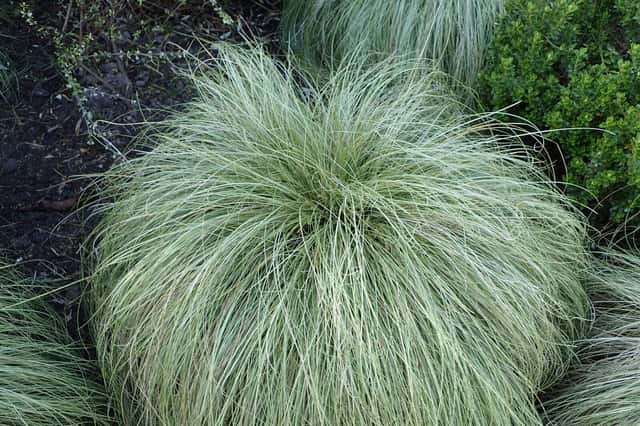
New Zealand hair sedge (Carex comans) is a easy-care plant from the Cyperaceae family. Carex comans is a perennial sedge from New Zealand that forms dense clumps of very fine, hair-like leaves that spill over like a mop. Depending on the form or cultivar, the color runs from silvery green to bronze and copper. It keeps its leaves all year. The flowers are small brown spikes, half hidd...
New Zealand hair sedge grows up to 50cm, spread of 60cm, watering every 7 days. It is not suitable for indoor environments and safe for pets.
Unlike many tropical plants, New Zealand hair sedge tolerates watering mistakes. Best for beginners. Unlike many popular species, New Zealand hair sedge is safe to keep around pets.
How to Care for New Zealand hair sedge?
TLDR: New Zealand hair sedge needs Bright indirect, watering every 7 days, and temperatures between -17-30°C with 40-70% humidity.
How Often Should You Water New Zealand hair sedge?
Water about once a week in the first year and in hot weather, keeping the soil lightly moist. Once established it takes dry spells. Do not let water sit around the crown in winter.
How Much Light Does New Zealand hair sedge Need?
Full sun to part shade. Bronze forms color up best in sun.
What Is the Best Soil for New Zealand hair sedge?
Fertile, humus-rich, well-drained soil; clay, loam or sand and any pH are fine as long as it does not stay waterlogged.
What Pot Should You Use for New Zealand hair sedge?
Medium 20-30 cm pot with drainage holes and a free-draining mix. In pots, take extra care not to overwater.
What Is New Zealand hair sedge and Where Does It Come From?
Carex comans is a perennial sedge from New Zealand that forms dense clumps of very fine, hair-like leaves that spill over like a mop. Depending on the form or cultivar, the color runs from silvery green to bronze and copper. It keeps its leaves all year. The flowers are small brown spikes, half hidden in the foliage, from late spring into summer. It grows 30 to 50 cm tall and about 60 cm wide and suits borders, containers, slopes and rock gardens.
How to Propagate New Zealand hair sedge?
Division
Divide when the clump is crowded or dying out in the center. Larger pieces establish faster.
- 1 Lift the clump in early spring
- 2 Pull or cut it into pieces that each have roots and leaves
- 3 Replant at the same depth in well-drained soil
- 4 Water well and keep moist until new growth shows
Materials needed:
Seed
It also self-seeds in the garden; volunteer seedlings can be moved.
- 1 Sow in a tray of light seed mix in spring
- 2 Cover the seeds lightly
- 3 Keep in a sheltered, moist spot
- 4 Pot up seedlings once they are sturdy
Materials needed:
How Big Does New Zealand hair sedge Grow?
TLDR: New Zealand hair sedge can reach up to 50cm tall with Medium growth rate.
Max height
50cm
Spread
60cm
Foliage
Evergreen
Plant Uses
Ornamental
Great for decoration
Ground Cover
Soil coverage
Is your plant showing symptoms?
Click on the symptom to discover possible causes:
What Diseases Commonly Affect New Zealand hair sedge?
TLDR: New Zealand hair sedge is susceptible to 2 known diseases. Monitor regularly for early detection.
Aphids
Aphids are small, soft-bodied, pear-shaped insects (1/16 to 1/8 inch long) that feed by sucking nutrient-rich sap from plants. They reproduce rapidly and can quickly weaken plants, causing distorted growth and transmitting plant viruses. Aphids come in various colors including green, black, red, yellow, brown, and gray. They secrete honeydew, a sticky substance that attracts ants and encourages sooty mold growth.
Root Rot
Root rot is a serious fungal disease that affects the root system of plants, causing them to decay and die. It is primarily caused by overwatering, poor drainage, or soil-borne fungi such as Pythium, Phytophthora, Rhizoctonia, and Fusarium. The disease thrives in waterlogged conditions where roots are deprived of oxygen, making them susceptible to fungal infection.
Fun Facts
The name comans is Latin for hairy, after its fine leaves
Its leaves feed the caterpillars of satyr butterflies
Bronze forms are often mistaken for a dead plant
Frequently asked questions
How do I trim Carex comans?
Why is my Carex comans brown?
Can Carex comans take full sun?
Can I grow it in a pot?
Compare with similar plants
| Attribute | Difficulty | Light | Watering | Pet Safe |
|---|---|---|---|---|
| Field Maple | Easy | Bright indirect | 14d | ✓ |
| Iberian Houseleek | Easy | Direct sun | 14d | ✓ |
| Silver Birch | Easy | Direct sun | 14d | ✓ |
| Common Blanketflower | Easy | Direct sun | 10d | ✓ |





