Scrophulariaceae
Ngaio: Ground Cover Plant
Myoporum laetum
A very hardy plant that requires full sun—it does not tolerate shade—and well-drained soil. It tolerates poor, sandy, and saline soils. Once established, it withstands drought and strong winds well, but requires regular pruning to prevent it from becoming leggy and brittle.
Every 12 days
Direct sun
2° - 35°C
30% - 70%
Categories
What is Ngaio?
Ngaio (Myoporum laetum) is a easy-care plant from the Scrophulariaceae family. Myoporum laetum, commonly known as ngaio or mousehole tree, is a fast-growing shrub or small tree endemic to New Zealand and the Chatham Islands. It reaches up to 10 meters in height, featuring bright green leaves dotted with translucent oil glands visible when held up to the light. In spring and su...
Ngaio grows up to 10.0m, spread of 500cm, watering every 12 days, 2°C – 35°C, 30–70% humidity. It is not suitable for indoor environments and not safe for pets.
Unlike many tropical plants, Ngaio tolerates watering mistakes. Best for beginners. Without precautions, ingestion can cause irritation in pets. Keep out of reach of cats and dogs.
How to Care for Ngaio?
TLDR: Ngaio needs Direct sun, watering every 12 days, and temperatures between 2-35°C with 30-70% humidity.
How Often Should You Water Ngaio?
Water regularly during the first year of establishment. Afterward, allow the substrate to dry almost completely between waterings: excess moisture promotes root rot.
How Much Light Does Ngaio Need?
Needs full, direct sun for most of the day; in shade, it weakens and loses foliage density.
What Is the Best Soil for Ngaio?
Thrives in sandy, loamy, or clay soils as long as they drain well; tolerates poor and saline soils, ideal for coastal gardens.
What Pot Should You Use for Ngaio?
Planting directly in the ground is recommended due to its vigorous root system and large adult size; it is not suitable for long-term container growth.
Care Schedule
Fertilize
Every 60 days
What Is Ngaio and Where Does It Come From?
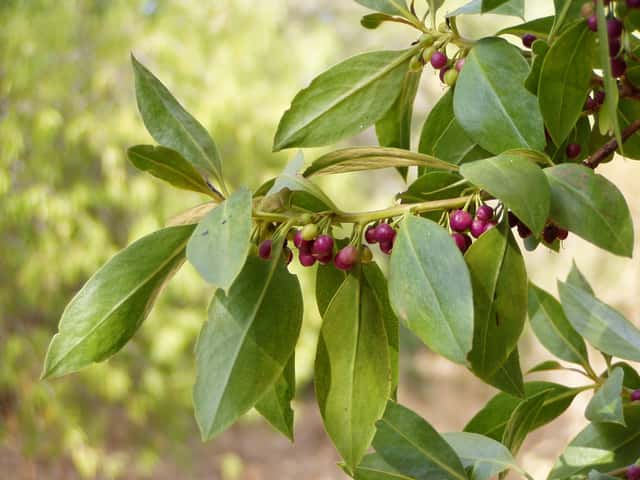
Myoporum laetum, commonly known as ngaio or mousehole tree, is a fast-growing shrub or small tree endemic to New Zealand and the Chatham Islands. It reaches up to 10 meters in height, featuring bright green leaves dotted with translucent oil glands visible when held up to the light. In spring and summer, it produces clusters of small white flowers speckled with purple, followed by reddish fruits. It is extremely salt and wind tolerant, making it widely used as a windbreak and coastal screen. All parts of the plant contain ngaione, a potent liver toxin: it is highly toxic to livestock, dogs, cats, and humans if ingested.
How to Propagate Ngaio?
Semi-hardwood cuttings
- Avoid waterlogging to prevent rot at the base.
- Transplant outdoors after the last risk of frost.
- 1 Taking the cutting
Cut a 10-15 cm section from a healthy semi-hardwood branch without flowers, preferably with a heel.
- 2 Preparation
Remove the leaves from the bottom half and dip the base in rooting hormone.
- 3 Planting
Insert the cutting into a light sandy substrate, maintain constant humidity without waterlogging, and place in a warm spot with indirect light until rooted.
Materials needed:
How Big Does Ngaio Grow?
TLDR: Ngaio can reach up to 10.0m tall with Fast growth rate.
Max height
10.0m
Spread
5.0m
Growth rate
Fast
Foliage
Evergreen
Warning: Toxic Plant
This plant can be toxic if ingested. Keep out of reach of:
Plant Uses
Ornamental
Great for decoration
Medicinal
Medicinal properties
Aromatic
Pleasant fragrance
Ground Cover
Soil coverage
Medicinal Uses
- Traditional Māori use of the bark and leaves for toothaches, gums, and wounds (external use only, as the plant is toxic if ingested)
Is your plant showing symptoms?
Click on the symptom to discover possible causes:
What Diseases Commonly Affect Ngaio?
TLDR: Ngaio is susceptible to 7 known diseases. Monitor regularly for early detection.
Thrips
Thrips are tiny cigar-shaped insects (1/25-inch long) that damage plants by sucking plant juices and scraping at fruits, flowers, and leaves. With over 6,000 species and rapid reproduction (lifecycle as short as 14 days), they can quickly infest plants and transmit viruses like tomato spotted wilt virus.
Root Rot
Root rot is a serious fungal disease that affects the root system of plants, causing them to decay and die. It is primarily caused by overwatering, poor drainage, or soil-borne fungi such as Pythium, Phytophthora, Rhizoctonia, and Fusarium. The disease thrives in waterlogged conditions where roots are deprived of oxygen, making them susceptible to fungal infection.
Aphids
Aphids are small, soft-bodied, pear-shaped insects (1/16 to 1/8 inch long) that feed by sucking nutrient-rich sap from plants. They reproduce rapidly and can quickly weaken plants, causing distorted growth and transmitting plant viruses. Aphids come in various colors including green, black, red, yellow, brown, and gray. They secrete honeydew, a sticky substance that attracts ants and encourages sooty mold growth.
Scale Insects
Scale insects are small sap-sucking pests that appear as brown, shell-like bumps on plant stems and leaves. There are over 25 species, divided into armored (hard) and unarmored (soft) scales. They feed by piercing plant tissue and extracting sap, which weakens the plant and can lead to yellowing, stunted growth, and even death if left untreated. They also excrete honeydew, which attracts ants and promotes sooty mold growth.
Meaning & Symbolism
In Māori culture, it symbolizes resilience and coastal protection; it appears in the legend of Rona, the 'woman in the moon,' who was pulled into the sky while clinging to a ngaio tree.
Compare with similar plants
| Attribute | Difficulty | Light | Watering | Pet Safe |
|---|---|---|---|---|
| Field Maple | Easy | Bright indirect | 14d | ✓ |
| Silver Birch | Easy | Direct sun | 14d | ✓ |
| Common Blanketflower | Easy | Direct sun | 10d | ✓ |
| Cushion Bush | Easy | Direct sun | 14d | ✓ |





