Araceae
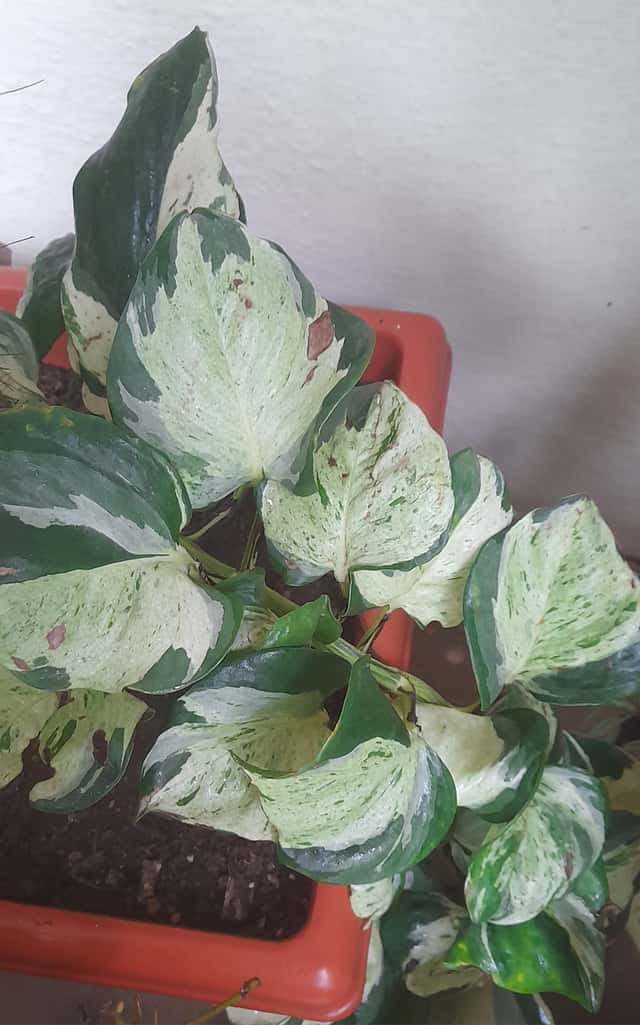
N'Joy Pothos (Epipremnum aureum 'N'Joy')
Epipremnum aureum 'N'Joy'
Easy-care trailing plant: medium-to-bright indirect light, water when the top layer of soil dries, well-draining soil, moderate humidity. Tolerates occasional neglect but dislikes soggy soil.
Every 7 days
Partial shade
18° - 29°C
40% - 60%
Categories
What is N'Joy Pothos?
N'Joy Pothos (Epipremnum aureum 'N'Joy') is a easy-care plant from the Araceae family. The N'Joy Pothos (Epipremnum aureum 'N'Joy') is a compact cultivar of the classic pothos, prized for its smaller, rounded leaves marked with crisp white-and-green variegation. Unlike some variegated pothos varieties, N'Joy holds its pattern fairly reliably even in average light, though brighter indi...
N'Joy Pothos grows up to 30cm, spread of 100cm, watering every 7 days, 18°C – 29°C, 40–60% humidity. It is suitable for indoor environments and not safe for pets.
Unlike many tropical plants, N'Joy Pothos tolerates watering mistakes. Best for beginners. Without precautions, ingestion can cause irritation in pets. Keep out of reach of cats and dogs. Without adequate drainage, root rot can develop within 14 days.
How to Care for N'Joy Pothos?
TLDR: N'Joy Pothos needs Partial shade, watering every 7 days, and temperatures between 18-29°C with 40-60% humidity.
How Often Should You Water N'Joy Pothos?
Water when the top 1-2 inches of soil feel dry, roughly once a week. Water thoroughly until it drains from the bottom, and never let the pot sit in standing water.
How Much Light Does N'Joy Pothos Need?
Prefers medium to bright indirect light. Low light causes the white variegation to fade to green; avoid direct sun, which scorches the leaves.
What Is the Best Soil for N'Joy Pothos?
Use a light, well-draining potting mix with added perlite (20-30%) to keep roots from sitting in excess moisture.
What Pot Should You Use for N'Joy Pothos?
Choose a pot with ample drainage holes; unglazed terracotta helps excess moisture evaporate.
Care Schedule
Fertilize
Every 60 days
Misting
Every 7 days
Rotate
Every 14 days
Repot
Every 730 days
What Is N'Joy Pothos and Where Does It Come From?
The N'Joy Pothos (Epipremnum aureum 'N'Joy') is a compact cultivar of the classic pothos, prized for its smaller, rounded leaves marked with crisp white-and-green variegation. Unlike some variegated pothos varieties, N'Joy holds its pattern fairly reliably even in average light, though brighter indirect light produces the whitest leaves. It's a slow-to-moderate grower, well suited to hanging baskets, shelves, or as a compact tabletop trailer.
How to Propagate N'Joy Pothos?
Stem cutting in water
Use a clean, sharp knife or scissors to avoid contamination; roots typically appear within 2-3 weeks in warm water and indirect light.
- 1 Cut a stem section with at least one node and one leaf
- 2 Remove any leaves near the node that will be submerged
- 3 Place the cutting in a jar of filtered water, keeping the node underwater
- 4 Change the water every 5-7 days and keep in bright indirect light
- 5 Transplant into potting mix once roots reach 1-2 inches
Materials needed:
How Big Does N'Joy Pothos Grow?
TLDR: N'Joy Pothos can reach up to 30cm tall with Slow growth rate.
Max height
30cm
Spread
1.0m
Growth rate
Slow
Foliage
Evergreen
Warning: Toxic Plant
This plant can be toxic if ingested. Keep out of reach of:
Plant Uses
Ornamental
Great for decoration
Air Purifying
Improves air quality
Is your plant showing symptoms?
Click on the symptom to discover possible causes:
What Diseases Commonly Affect N'Joy Pothos?
TLDR: N'Joy Pothos is susceptible to 8 known diseases. Monitor regularly for early detection.
Root Rot
Root rot is a serious fungal disease that affects the root system of plants, causing them to decay and die. It is primarily caused by overwatering, poor drainage, or soil-borne fungi such as Pythium, Phytophthora, Rhizoctonia, and Fusarium. The disease thrives in waterlogged conditions where roots are deprived of oxygen, making them susceptible to fungal infection.
Leaf Spot
Leaf spot is a common fungal disease caused by various pathogens including Alternaria, Ascochyta, Colletotrichum, Septoria, and Venturia. It primarily affects leaves, causing discolored spots that can lead to premature leaf drop if left untreated.
Bacterial Wilt
Bacterial wilt is a fatal vascular disease caused by bacteria (Erwinia tracheiphila, Ralstonia solanacearum, Xanthomonas spp.) that infects the water-conducting tissue of plants. The bacteria multiply and block the flow of water and nutrients, causing rapid wilting and plant death within 1-2 weeks.
Mealybugs
Mealybugs are small, soft-bodied insects covered with a white, waxy, cottony material. They are common pests of houseplants and outdoor plants in mild climates. These sap-sucking insects feed on plant tissue, causing damage, stunted growth, and can lead to plant death if left untreated. They produce sticky honeydew which attracts sooty mold.
Meaning & Symbolism
Represents resilient growth, renewal, and prosperity; its white variegation is often read as a symbol of purity and new beginnings.
Fun Facts
N'Joy Pothos originated as a spontaneous mutation discovered on a standard golden pothos in Florida, USA.
Unlike many variegated houseplants, N'Joy rarely reverts to solid green even in lower light.
The name "N'Joy" is a playful pun on the word "enjoy".
Frequently asked questions
Is N'Joy Pothos toxic to cats and dogs?
Why is my N'Joy Pothos losing its white variegation and turning green?
How often should I water N'Joy Pothos?
Does N'Joy Pothos grow fast?
Can I propagate N'Joy Pothos in water?
Compare with similar plants
| Attribute | Difficulty | Light | Watering | Pet Safe |
|---|---|---|---|---|
| Field Maple | Easy | Bright indirect | 14d | ✓ |
| Silver Birch | Easy | Direct sun | 14d | ✓ |
| Common Blanketflower | Easy | Direct sun | 10d | ✓ |
| Cushion Bush | Easy | Direct sun | 14d | ✓ |





