Araceae
Oersted's Dumb Cane (Dieffenbachia oerstedii)
Dieffenbachia oerstedii
Medium to bright indirect light, water when the top of the soil is dry, rich well-draining mix, high humidity and 18–29 °C. Keep away from cold drafts and direct sun. Wear gloves when handling.
Every 7 days
Partial shade
13° - 29°C
60% - 90%
Categories
What is Oersted's Dumb Cane?
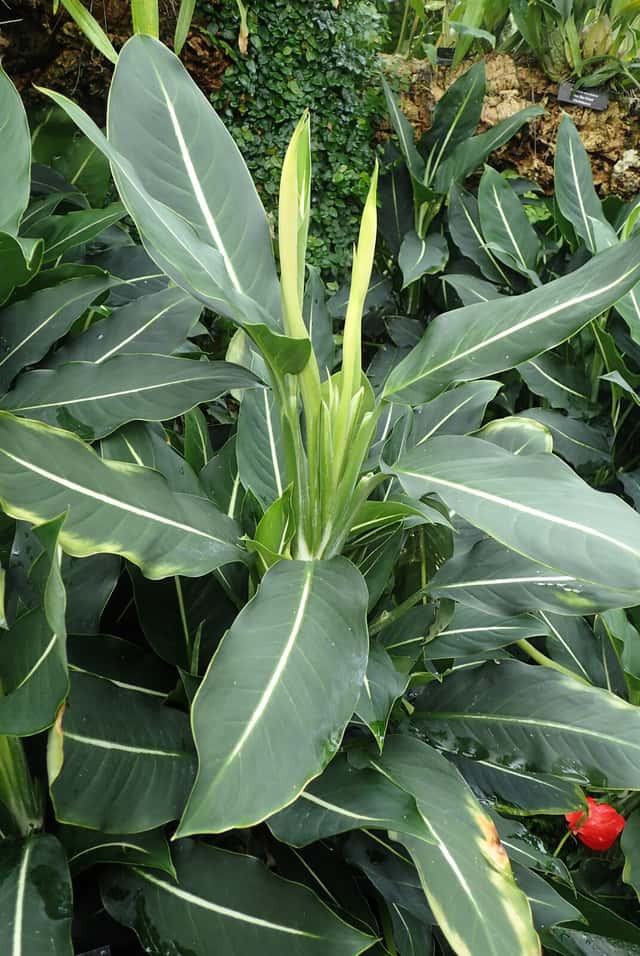
Oersted's Dumb Cane (Dieffenbachia oerstedii) is a easy-care plant from the Araceae family. Dieffenbachia oerstedii is an evergreen herbaceous aroid with upright, fleshy canes, native to humid forests from central and southern Mexico through Central America to Colombia and Ecuador. Its ovate-oblong leaves are a deep, glossy green with a prominent midrib that is paler in some forms. It is l...
Oersted's Dumb Cane grows up to 1.5m, watering every 7 days, 13°C – 29°C, 60–90% humidity. It is suitable for indoor environments and not safe for pets.
Unlike many tropical plants, Oersted's Dumb Cane tolerates watering mistakes. Best for beginners. Without precautions, ingestion can cause irritation in pets. Keep out of reach of cats and dogs. Without adequate drainage, root rot can develop within 14 days.
How to Care for Oersted's Dumb Cane?
TLDR: Oersted's Dumb Cane needs Partial shade, watering every 7 days, and temperatures between 13-29°C with 60-90% humidity.
How Often Should You Water Oersted's Dumb Cane?
Water when the top 2–3 cm of soil is dry, roughly weekly in the warm season and less in winter. Never let it sit in water: overwatering quickly rots the roots and the base of the canes.
How Much Light Does Oersted's Dumb Cane Need?
Prefers bright indirect light or partial shade. It tolerates low light but grows slowly and gets leggy. Direct sun bleaches and scorches the leaves. Give the pot a quarter turn each week for even growth.
What Is the Best Soil for Oersted's Dumb Cane?
Use a rich, well-draining mix of peat or coco coir, pine bark and perlite with a pH of 6.0–6.5, in a pot with drainage holes.
What Pot Should You Use for Oersted's Dumb Cane?
A heavy, fairly deep pot with good drainage (terracotta or ceramic) to keep tall canes stable.
Care Schedule
Fertilize
Every 30 days
Rotate
Every 7 days
Repot
Every 365 days
What Is Oersted's Dumb Cane and Where Does It Come From?
Dieffenbachia oerstedii is an evergreen herbaceous aroid with upright, fleshy canes, native to humid forests from central and southern Mexico through Central America to Colombia and Ecuador. Its ovate-oblong leaves are a deep, glossy green with a prominent midrib that is paler in some forms. It is less common in cultivation than D. seguine but grows the same way: a tough houseplant with moderate growth that rarely tops 1.5 m in a pot. All parts are toxic due to calcium oxalate crystals.
How to Propagate Oersted's Dumb Cane?
Cane cutting
Use clean, sharp tools and wash your hands afterwards: the sap irritates skin and eyes.
- 1 Wearing gloves, cut a 5-10 cm cane section with at least one node
- 2 Let the cut dry for a few hours
- 3 Lay the section horizontally, half buried in moist mix, or place it in water
- 4 Keep it warm (above 24 °C) in indirect light
Materials needed:
Air layering
Best for tall plants that have lost their lower leaves; keep the moss moist at all times.
- 1 Make a shallow cut in the cane below the top leaves
- 2 Wrap the wound with moist sphagnum moss
- 3 Cover with plastic and tie both ends
- 4 Once roots show, cut below them and pot up
Materials needed:
How Big Does Oersted's Dumb Cane Grow?
TLDR: Oersted's Dumb Cane can reach up to 1.5m tall with Medium growth rate.
Max height
1.5m
Growth rate
Medium
Foliage
Evergreen
Warning: Toxic Plant
This plant can be toxic if ingested. Keep out of reach of:
Plant Uses
Ornamental
Great for decoration
Is your plant showing symptoms?
Click on the symptom to discover possible causes:
What Diseases Commonly Affect Oersted's Dumb Cane?
TLDR: Oersted's Dumb Cane is susceptible to 10 known diseases. Monitor regularly for early detection.
Root Rot
Root rot is a serious fungal disease that affects the root system of plants, causing them to decay and die. It is primarily caused by overwatering, poor drainage, or soil-borne fungi such as Pythium, Phytophthora, Rhizoctonia, and Fusarium. The disease thrives in waterlogged conditions where roots are deprived of oxygen, making them susceptible to fungal infection.
Bacterial Soft Rot
Bacterial soft rot is a destructive plant disease caused primarily by bacteria from the genera Pectobacterium (formerly Erwinia) and Dickeya. These bacteria produce enzymes that break down plant cell walls, causing rapid and foul-smelling tissue decomposition. It mainly affects succulent tissues such as tubers, fruits, stems, and bulbs, being especially problematic in warm and humid conditions.
Bacterial Leaf Spot
Bacterial leaf spot is a plant disease caused by bacteria in the Xanthomonas and Pseudomonas genera that affects various ornamental and edible plants. The bacteria infect leaves through wounds or natural openings, causing characteristic lesions that can lead to premature leaf drop and plant weakening.
Leaf Spot
Leaf spot is a common fungal disease caused by various pathogens including Alternaria, Ascochyta, Colletotrichum, Septoria, and Venturia. It primarily affects leaves, causing discolored spots that can lead to premature leaf drop if left untreated.
Fun Facts
The genus is named after Joseph Dieffenbach, head gardener at Schönbrunn Palace in Vienna.
The species name honors Danish botanist Anders Sandøe Ørsted, who explored Central America in the mid-1800s.
The name "dumb cane" comes from the swelling of the mouth and tongue caused by chewing the canes.
Frequently asked questions
How often should I water Dieffenbachia oerstedii?
Is it toxic to cats and dogs?
Why are the lower leaves turning yellow?
Does it need a lot of light?
Compare with similar plants
| Attribute | Difficulty | Light | Watering | Pet Safe |
|---|---|---|---|---|
| Field Maple | Easy | Bright indirect | 14d | ✓ |
| Iberian Houseleek | Easy | Direct sun | 14d | ✓ |
| Silver Birch | Easy | Direct sun | 14d | ✓ |
| Common Blanketflower | Easy | Direct sun | 10d | ✓ |
Choose & Compare
Sources & References
- Dieffenbachia oerstedii Schott - Plants of the World Online (Kew)
- Dieffenbachia oerstedii Schott - GBIF Backbone Taxonomy
- Cultural Guidelines for Commercial Production of Interiorscape Dieffenbachia - UF/IFAS EDIS
- Dieffenbachia - UF/IFAS Gardening Solutions
- Dieffenbachia - University of Illinois Extension





