Cactaceae
Old Man of the Andes (Oreocereus trollii)
Oreocereus trollii
An easy cactus as long as it gets plenty of sun, fast drainage and a dry winter. Water freely in summer, letting the soil dry out completely each time, and keep it dry from autumn to spring. It handles cold well when dry, but cold combined with wet soil or high humidity rots the roots, so in rainy climates give it shelter in winter; in cultivation it is safest not to go below about -5 C. Give it good airflow; as a mountain plant it does not like extreme summer heat. Repot every other year in spring and wait a week before watering.
Every 14 days
Direct sun
-5° - °C
% - %
Categories
What is Old Man of the Andes?
Old Man of the Andes (Oreocereus trollii) is a easy-care plant from the Cactaceae family. Oreocereus trollii is a woolly cactus from the high Andes of southern Bolivia and northern Argentina, where it grows on dry mountain slopes between about 2,900 and 4,300 m. It branches from the base into small clumps of short, thick stems 6-10 cm across. Young stems are almost round; older ones beco...
Old Man of the Andes grows up to 50cm, watering every 14 days. It is suitable for indoor environments and safe for pets.
Unlike many tropical plants, Old Man of the Andes tolerates watering mistakes. Best for beginners. Unlike many popular species, Old Man of the Andes is safe to keep around pets. Without adequate drainage, root rot can develop within 28 days.
How to Care for Old Man of the Andes?
TLDR: Old Man of the Andes needs Direct sun, watering every 14 days, and temperatures between -5-30°C with 40-70% humidity.
How Often Should You Water Old Man of the Andes?
In spring and summer, water thoroughly and then wait until the mix is completely dry before watering again, roughly every two weeks in warm weather. From autumn to spring, keep it dry. Avoid watering on overcast, humid or cold days, and never let the pot stand in water. Pour water at the base so the wool stays clean and dry.
How Much Light Does Old Man of the Andes Need?
Full sun, with at least six hours of direct light a day, and good air circulation. Indoors, choose the sunniest window you have or move it outside for the summer. With too little light the stems stretch and the wool becomes thinner.
What Is the Best Soil for Old Man of the Andes?
Use a mineral, very free-draining cactus mix, for example cactus compost with plenty of grit, pumice or coarse sand. A neutral to slightly alkaline mix suits it; some growers add a little crushed limestone.
What Pot Should You Use for Old Man of the Andes?
A terracotta pot with a large drainage hole, only slightly wider than the clump. Terracotta lets the mix dry out faster, which helps prevent rot.
Care Schedule
Repot
Every 730 days
What Is Old Man of the Andes and Where Does It Come From?
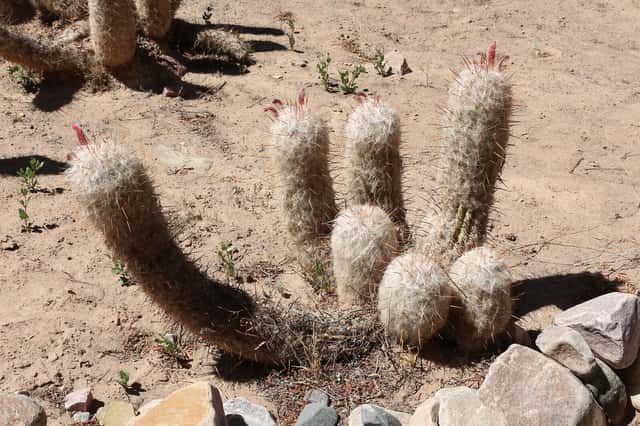
Oreocereus trollii is a woolly cactus from the high Andes of southern Bolivia and northern Argentina, where it grows on dry mountain slopes between about 2,900 and 4,300 m. It branches from the base into small clumps of short, thick stems 6-10 cm across. Young stems are almost round; older ones become columnar and can reach 1 m in the wild, though in pots they usually stay under 50 cm. Each stem has 15-25 low, knobbly ribs and is wrapped in dense white wool, which is really a mass of fine, hair-like radial spines up to 7 cm long. Through this wool push 3-5 stout central spines up to 5 cm long, in yellow, orange, red or brown with darker tips. The wool shields the plant from strong mountain sun and light night frosts. Mature plants produce pink to crimson, tube-shaped flowers up to 4 cm long in summer, followed by round fruits. It grows slowly and takes 5-10 years to reach full size.
How to Propagate Old Man of the Andes?
Seed
Seedlings grow slowly and need a year or two before they look woolly. Give good ventilation to prevent damping-off.
- 1 Sow seed on the surface of a fine, sterile cactus mix
- 2 Cover very lightly with fine grit
- 3 Keep at about 21 C in bright, indirect light and keep the surface slightly moist
- 4 Move seedlings to individual pots once they are large enough to handle
Materials needed:
Stem cuttings
Let the cut dry very well before planting: wet cuttings rot easily. Take cuttings in summer, when the plant is growing.
- 1 Wearing gloves, cut a side stem off at its base with a clean knife
- 2 Leave it in a dry, shaded place until the cut surface has dried and calloused, one to two weeks or more
- 3 Set the cutting upright on dry, gritty cactus mix
- 4 Water lightly after about a week and keep it barely moist until roots form
Materials needed:
How Big Does Old Man of the Andes Grow?
TLDR: Old Man of the Andes can reach up to 50cm tall with Slow growth rate.
Max height
50cm
Growth rate
Slow
Foliage
Evergreen
Plant Uses
Ornamental
Great for decoration
Is your plant showing symptoms?
Click on the symptom to discover possible causes:
What Diseases Commonly Affect Old Man of the Andes?
TLDR: Old Man of the Andes is susceptible to 4 known diseases. Monitor regularly for early detection.
Root Rot
Root rot is a serious fungal disease that affects the root system of plants, causing them to decay and die. It is primarily caused by overwatering, poor drainage, or soil-borne fungi such as Pythium, Phytophthora, Rhizoctonia, and Fusarium. The disease thrives in waterlogged conditions where roots are deprived of oxygen, making them susceptible to fungal infection.
Overwatering
Overwatering occurs when plants receive too much water, depriving roots of oxygen and causing root rot. This environmental stress is one of the most common causes of houseplant death, as waterlogged soil prevents roots from breathing and functioning properly.
Mealybugs
Mealybugs are small, soft-bodied insects covered with a white, waxy, cottony material. They are common pests of houseplants and outdoor plants in mild climates. These sap-sucking insects feed on plant tissue, causing damage, stunted growth, and can lead to plant death if left untreated. They produce sticky honeydew which attracts sooty mold.
Cold Damage
Cold damage, also known as frost injury, occurs when plants are exposed to freezing or near-freezing temperatures. This environmental stress can cause cellular damage as ice crystals form within plant tissues, rupturing cells and disrupting normal plant functions. Chilling injury can also occur in sensitive species at temperatures between 32-55°F (0-10°C), even without actual freezing.
Fun Facts
The white wool is actually made of fine, hair-like spines that protect the stems from strong sun and night frost.
In the wild it grows at up to about 4,300 m in the Andes.
The species name honours the German botanist Wilhelm Troll.
Young plants are almost spherical and only become columnar with age.
Frequently asked questions
How often should I water Oreocereus trollii?
How cold can Oreocereus trollii get?
Can I grow Oreocereus trollii indoors?
Why is my Old Man of the Andes rotting?
When does Oreocereus trollii flower?
Compare with similar plants
| Attribute | Difficulty | Light | Watering | Pet Safe |
|---|---|---|---|---|
| Field Maple | Easy | Bright indirect | 14d | ✓ |
| Iberian Houseleek | Easy | Direct sun | 14d | ✓ |
| Silver Birch | Easy | Direct sun | 14d | ✓ |
| Common Blanketflower | Easy | Direct sun | 10d | ✓ |