Orchidaceae
Orchid: Pet-Safe Plant
Orchidaceae
Give bright, indirect light, water only once the roots turn silvery-grey and the bark medium is nearly dry, and keep humidity above 50 percent with good air movement. Grow in a coarse, well-draining bark mix rather than potting soil, feed lightly during active growth, and never let water sit in the crown or roots to avoid rot.
Every 7 days
Partial shade
16° - 30°C
50% - 80%
Categories
What is Orchid?
Orchid (Orchidaceae) is a medium-care plant from the Orchidaceae family. Orchidaceae is one of the largest families of flowering plants, with over 25,000 species of mostly epiphytic and terrestrial perennials prized for their intricate, long-lasting blooms. The Phalaenopsis, or moth orchid, is the most widely grown houseplant representative of the family, valued for its...
Orchid grows up to 50cm, spread of 30cm, watering every 7 days, 16°C – 30°C, 50–80% humidity. It is suitable for indoor environments and safe for pets.
Unlike many popular species, Orchid is safe to keep around pets. Without adequate drainage, root rot can develop within 14 days.
How to Care for Orchid?
TLDR: Orchid needs Partial shade, watering every 7 days, and temperatures between 16-30°C with 50-80% humidity.
How Often Should You Water Orchid?
Water about once a week by soaking the bark medium thoroughly, then let it drain completely. Plump, green or silvery roots are well hydrated; wrinkled, grey roots mean it is time to water again. Avoid letting water pool in the crown.
How Much Light Does Orchid Need?
Place in bright, indirect light such as an east-facing window, out of direct midday sun. Medium green leaves indicate good light; dark green leaves mean too little light, while reddish or yellowish leaves signal too much direct sun.
What Is the Best Soil for Orchid?
Pot in a coarse, bark-based orchid mix, never regular potting soil, inside a container with excellent drainage or a slotted orchid pot so roots can breathe. Refresh the medium every one to two years as it breaks down and becomes compact.
What Pot Should You Use for Orchid?
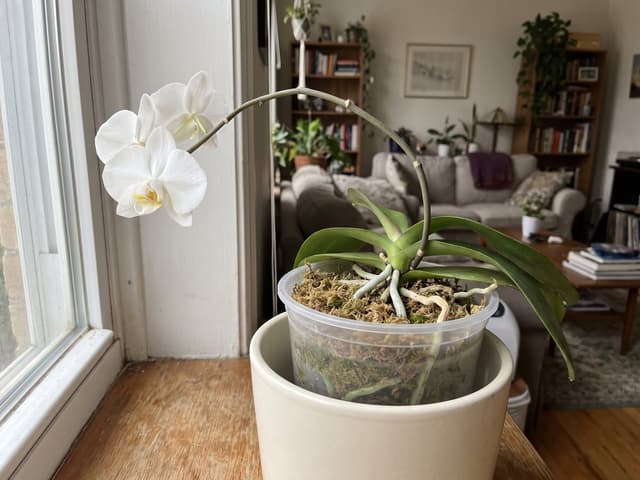
A clear plastic pot with generous drainage and side holes, so roots can photosynthesize and excess moisture escapes easily; slip it inside a decorative cachepot for display, but remove it before watering.
Care Schedule
Fertilize
Every 14 days
Rotate
Every 14 days
Repot
Every 730 days
What Is Orchid and Where Does It Come From?
Orchidaceae is one of the largest families of flowering plants, with over 25,000 species of mostly epiphytic and terrestrial perennials prized for their intricate, long-lasting blooms. The Phalaenopsis, or moth orchid, is the most widely grown houseplant representative of the family, valued for its arching sprays of waxy flowers that can stay open for months. Most cultivated orchids are epiphytes native to tropical and subtropical forests, where they cling to tree bark and absorb moisture and nutrients through thick, exposed aerial roots rather than soil.
How Big Does Orchid Grow?
TLDR: Orchid can reach up to 50cm tall with Slow growth rate.
Max height
50cm
Spread
30cm
Growth rate
Slow
Foliage
Evergreen
Plant Uses
Ornamental
Great for decoration
Air Purifying
Improves air quality
Medicinal Uses
- Certain genera such as Dendrobium and Gastrodia are used in traditional Chinese medicine to support immune function and digestion
- Not typical of common houseplant Phalaenopsis orchids, whose medicinal use is minimal
Culinary Uses
- Vanilla pods, harvested from the orchid Vanilla planifolia, are a major culinary flavoring and spice
- Some Dendrobium orchid flowers are used as edible garnishes in Asian cuisine
Is your plant showing symptoms?
Click on the symptom to discover possible causes:
What Diseases Commonly Affect Orchid?
TLDR: Orchid is susceptible to 8 known diseases. Monitor regularly for early detection.
Root Rot
Root rot is a serious fungal disease that affects the root system of plants, causing them to decay and die. It is primarily caused by overwatering, poor drainage, or soil-borne fungi such as Pythium, Phytophthora, Rhizoctonia, and Fusarium. The disease thrives in waterlogged conditions where roots are deprived of oxygen, making them susceptible to fungal infection.
Crown Rot
Crown rot is a serious fungal disease that attacks the crown (base) of the plant where the stem meets the soil. It is caused by various fungal pathogens including Phytophthora, Fusarium, and Rhizoctonia. The disease thrives in waterlogged conditions and can quickly spread to kill the entire plant if not addressed promptly.
Bacterial Soft Rot
Bacterial soft rot is a destructive plant disease caused primarily by bacteria from the genera Pectobacterium (formerly Erwinia) and Dickeya. These bacteria produce enzymes that break down plant cell walls, causing rapid and foul-smelling tissue decomposition. It mainly affects succulent tissues such as tubers, fruits, stems, and bulbs, being especially problematic in warm and humid conditions.
Gray Mold (Botrytis Blight)
Gray mold, caused by the fungus Botrytis cinerea, is one of the most common fungal diseases in plants. It affects over 200 plant species, including ornamentals, vegetables, fruits, and houseplants. The disease thrives in cool, humid conditions with poor air circulation, causing grayish spots and soft rot on infected tissues.
Articles about Orchid
Meaning & Symbolism
Orchids have long symbolized love, luxury, and refined beauty. In Victorian flower language they represented rare elegance and strength, and in many Asian cultures they signify fertility, prosperity, and integrity.
Compare with similar plants
| Attribute | Difficulty | Light | Watering | Pet Safe |
|---|---|---|---|---|
| Dark Fieldcap | Medium | Low light | 2d | ⚠️ |
| Azalea | Medium | Partial shade | 3d | ⚠️ |
| Muriel's Bamboo | Medium | Partial shade | 3d | ✓ |
| Bougainvillea | Medium | Direct sun | 7d | ⚠️ |