Araceae
Paddle Leaf Anthurium (Anthurium coriaceum)
Anthurium coriaceum
A tough anthurium for warm-climate gardens or large pots: filtered sun to part shade, free-draining mix, weekly water once the surface dries, and protection from cold below 5 °C. Toxic to cats, dogs and people if eaten.
Every 7 days
Partial shade
5° - 32°C
% - %
Categories
What is Paddle leaf anthurium?
Paddle leaf anthurium (Anthurium coriaceum) is a easy-care plant from the Araceae family. Anthurium coriaceum is an anthurium endemic to the Atlantic Forest of southeastern and southern Brazil, from Espírito Santo to Paraná and Santa Catarina. It grows on the ground, on rocks or sometimes on trees, in coastal restinga and lowland forest, including sunny rock outcrops. It has a short stem...
Paddle leaf anthurium grows up to 1.3m, spread of 90cm, watering every 7 days, 5°C – 32°C. It is suitable for indoor environments and not safe for pets.
Unlike many tropical plants, Paddle leaf anthurium tolerates watering mistakes. Best for beginners. Without precautions, ingestion can cause irritation in pets. Keep out of reach of cats and dogs. Without adequate drainage, root rot can develop within 14 days.
How to Care for Paddle leaf anthurium?
TLDR: Paddle leaf anthurium needs Partial shade, watering every 7 days, and temperatures between 5-32°C with 40-70% humidity.
How Often Should You Water Paddle leaf anthurium?
Water about once a week, when the top few centimetres of mix are dry. It tolerates a few dry days but not soggy soil: let water drain away and do not leave it in the saucer. Water less in winter.
How Much Light Does Paddle leaf anthurium Need?
Morning sun to bright part shade. In the wild it even grows on sunny rocks, but it grows larger with better leaves in some shade and shelter from strong wind. Indoors, place it by a bright window.
What Is the Best Soil for Paddle leaf anthurium?
A loose, free-draining, slightly acidic mix: potting soil with orchid bark, coir and some coarse sand or charcoal. In the garden, ordinary soil is fine as long as it never waterlogs.
What Pot Should You Use for Paddle leaf anthurium?
A wide, heavy terracotta or ceramic pot with drainage, since the big leaf rosette tips light pots over. Repot every 2 years in spring.
Care Schedule
Fertilize
Every 30 days
Repot
Every 730 days
What Is Paddle leaf anthurium and Where Does It Come From?
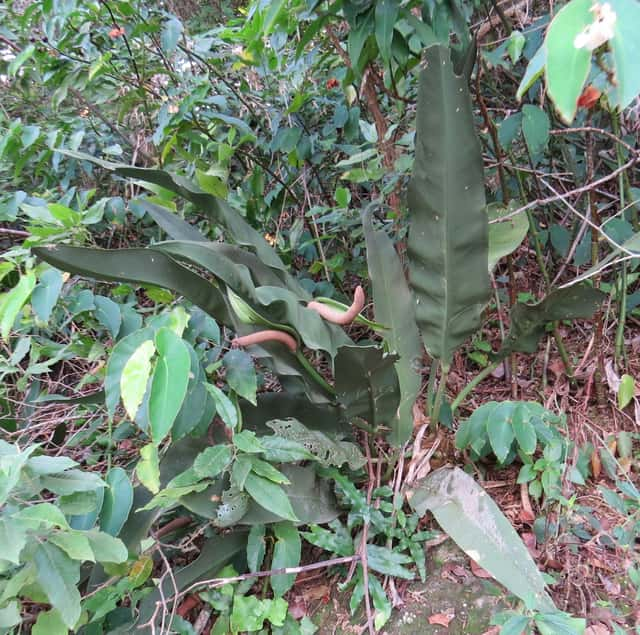
Anthurium coriaceum is an anthurium endemic to the Atlantic Forest of southeastern and southern Brazil, from Espírito Santo to Paraná and Santa Catarina. It grows on the ground, on rocks or sometimes on trees, in coastal restinga and lowland forest, including sunny rock outcrops. It has a short stem and forms a bird's-nest rosette of upright, thick, leathery paddle-shaped leaves, 35 to 110 cm long and 15 to 28 cm wide, with a strong midrib. The plant reaches 0.6-1.3 m tall and about 90 cm across. In spring and summer it bears inflorescences with a green spathe and brown spadix. It is a tough anthurium that handles wind, short dry spells and heat, and all parts contain calcium oxalate crystals.
How to Propagate Paddle leaf anthurium?
Offsets
Wear gloves, as the sap irritates skin. Water lightly for the first weeks so the base does not rot.
- 1 Wait until the side shoot has its own roots and at least two leaves
- 2 Lift the plant and clear the mix from the base
- 3 Cut the offset free with a clean knife, keeping its roots
- 4 Pot it in a small, free-draining pot and keep it in part shade until established
Materials needed:
Seed
Anthurium seed loses viability quickly; sow on the day you collect it.
- 1 Pick fully ripe berries and remove the pulp
- 2 Rinse the seeds and sow at once, without letting them dry
- 3 Press them onto moist sphagnum or fine mix without burying
- 4 Keep warm, in bright indirect light and high humidity
Materials needed:
How Big Does Paddle leaf anthurium Grow?
TLDR: Paddle leaf anthurium can reach up to 1.3m tall with Medium growth rate.
Max height
1.3m
Spread
90cm
Foliage
Evergreen
Warning: Toxic Plant
This plant can be toxic if ingested. Keep out of reach of:
Plant Uses
Ornamental
Great for decoration
Is your plant showing symptoms?
Click on the symptom to discover possible causes:
What Diseases Commonly Affect Paddle leaf anthurium?
TLDR: Paddle leaf anthurium is susceptible to 8 known diseases. Monitor regularly for early detection.
Root Rot
Root rot is a serious fungal disease that affects the root system of plants, causing them to decay and die. It is primarily caused by overwatering, poor drainage, or soil-borne fungi such as Pythium, Phytophthora, Rhizoctonia, and Fusarium. The disease thrives in waterlogged conditions where roots are deprived of oxygen, making them susceptible to fungal infection.
Bacterial Blight
Bacterial blight is a serious plant disease caused by pathogenic bacteria that enters plants through wounds or natural openings. It spreads rapidly in warm, wet conditions and can cause significant damage to leaves, stems, and flowers. The bacteria are transmitted by water splash, contaminated tools, and insects.
Mealybugs
Mealybugs are small, soft-bodied insects covered with a white, waxy, cottony material. They are common pests of houseplants and outdoor plants in mild climates. These sap-sucking insects feed on plant tissue, causing damage, stunted growth, and can lead to plant death if left untreated. They produce sticky honeydew which attracts sooty mold.
Scale Insects
Scale insects are small sap-sucking pests that appear as brown, shell-like bumps on plant stems and leaves. There are over 25 species, divided into armored (hard) and unarmored (soft) scales. They feed by piercing plant tissue and extracting sap, which weakens the plant and can lead to yellowing, stunted growth, and even death if left untreated. They also excrete honeydew, which attracts ants and promotes sooty mold growth.
Fun Facts
It is endemic to the Atlantic Forest and grows in the restingas of Rio de Janeiro, such as Grumari.
The nest of leaves traps dead leaves and rainwater, which become food for the plant.
Its flower is nothing like the red potted anthurium: the spathe is green and the spadix brown.
Frequently asked questions
Can paddle leaf anthurium take sun?
Is it toxic to cats and dogs?
Why is the base rotting?
Can I grow it indoors?
Compare with similar plants
| Attribute | Difficulty | Light | Watering | Pet Safe |
|---|---|---|---|---|
| Field Maple | Easy | Bright indirect | 14d | ✓ |
| Iberian Houseleek | Easy | Direct sun | 14d | ✓ |
| Silver Birch | Easy | Direct sun | 14d | ✓ |
| Common Blanketflower | Easy | Direct sun | 10d | ✓ |





