Asteraceae
Pale Purple Coneflower (Echinacea pallida)
Echinacea pallida
An easy prairie plant. Grow in full sun or light part shade in well-drained soil; it accepts sandy, clay or poor ground. Water until established; after that its deep root lets it ride out drought, and occasional watering is enough. Avoid wetting the leaves. A light feed in early spring is plenty. Leave seed heads for birds over winter and cut old stems in late winter. Divide clumps every 3 or 4 years.
Every 10 days
Bright indirect
° - °C
% - %
Categories
What is Pale Purple Coneflower?
Pale Purple Coneflower (Echinacea pallida) is a easy-care plant from the Asteraceae family. Echinacea pallida is a herbaceous perennial in the daisy family (Asteraceae), native to the prairies of central and eastern North America. It forms clumps 45 to 90 cm tall, with narrow, lance-shaped leaves mostly at the base and a long, deep taproot. The flowers have thin, drooping petals, pale pink...
Pale Purple Coneflower grows up to 90cm, spread of 45cm, watering every 10 days. It is not suitable for indoor environments and safe for pets.
Unlike many tropical plants, Pale Purple Coneflower tolerates watering mistakes. Best for beginners. Unlike many popular species, Pale Purple Coneflower is safe to keep around pets.
How to Care for Pale Purple Coneflower?
TLDR: Pale Purple Coneflower needs Bright indirect, watering every 10 days, and temperatures between 15-30°C with 40-70% humidity.
How Often Should You Water Pale Purple Coneflower?
Water regularly the first year. After that, only when the soil is dry a few centimeters down. Water at the base, keeping leaves dry.
How Much Light Does Pale Purple Coneflower Need?
Full sun, or part shade with at least a few hours of direct sun. In shade the stems flop and it flowers poorly.
What Is the Best Soil for Pale Purple Coneflower?
Well-drained soil, from sandy to clay, with a pH of 4.5 to 7.5. It does not need rich soil. It dislikes salt spray and soggy ground.
What Pot Should You Use for Pale Purple Coneflower?
A deep pot, for the taproot, with drainage holes and free-draining mix; it does best in the ground.
Care Schedule
Fertilize
Every 365 days
What Is Pale Purple Coneflower and Where Does It Come From?
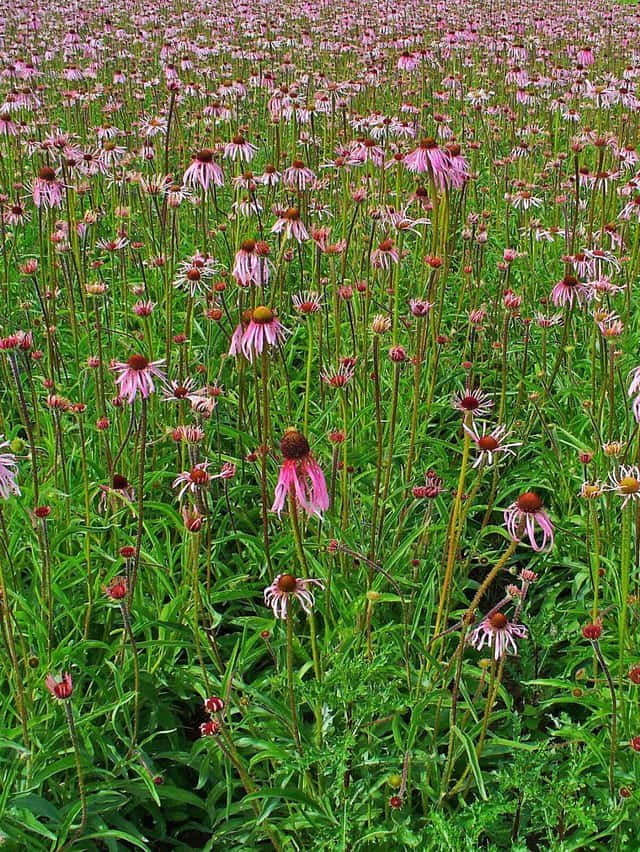
Echinacea pallida is a herbaceous perennial in the daisy family (Asteraceae), native to the prairies of central and eastern North America. It forms clumps 45 to 90 cm tall, with narrow, lance-shaped leaves mostly at the base and a long, deep taproot. The flowers have thin, drooping petals, pale pink to almost white, around a reddish-brown central cone, and open from late spring to midsummer. It draws bees, butterflies and hummingbirds, and its seed feeds birds in winter. In gardens each plant usually lives 2 to 3 years.
How to Propagate Pale Purple Coneflower?
Division
Divide every 3 or 4 years to keep clumps from crowding. Take care with the taproot.
- 1 In spring or fall, dig around the clump
- 2 Split it into pieces with roots and shoots
- 3 Replant at the same depth and water well
Materials needed:
Sowing
Seed-grown plants may take 2 years or more to bloom well.
- 1 Sow directly outdoors in fall so winter cold breaks dormancy
- 2 Or chill the seed and sow indoors in spring at 18-21 °C
- 3 Cover lightly and keep moist
- 4 Transplant seedlings 3 to 4 weeks later
Materials needed:
How Big Does Pale Purple Coneflower Grow?
TLDR: Pale Purple Coneflower can reach up to 90cm tall with Medium growth rate.
Max height
90cm
Spread
45cm
Growth rate
Medium
Plant Uses
Ornamental
Great for decoration
Medicinal
Medicinal properties
Medicinal Uses
- Root traditionally used in preparations for colds and respiratory infections; no proven benefit.
Is your plant showing symptoms?
Click on the symptom to discover possible causes:
What Diseases Commonly Affect Pale Purple Coneflower?
TLDR: Pale Purple Coneflower is susceptible to 7 known diseases. Monitor regularly for early detection.
Phytoplasma
Powdery Mildew
Powdery mildew is a common fungal disease caused by various fungi species including Erysiphe, Podosphaera, Oïdium, and Leveillula. It affects over 10,000 plant species worldwide. The disease thrives in warm, dry climates with high humidity and appears as a distinctive white powdery coating on plant surfaces.
Anthracnose
Anthracnose is a fungal disease caused by fungi in the genus Colletotrichum that affects many plants, including vegetables, fruits, and trees. The disease thrives in cool, wet conditions, causing dark, sunken lesions on leaves, stems, flowers, and fruits.
Leaf Spot
Leaf spot is a common fungal disease caused by various pathogens including Alternaria, Ascochyta, Colletotrichum, Septoria, and Venturia. It primarily affects leaves, causing discolored spots that can lead to premature leaf drop if left untreated.
Fun Facts
Its taproot runs deep into the soil, letting it survive long droughts.
It is a caterpillar host plant for the silvery checkerspot butterfly.
Its pollen is white, unlike that of other coneflowers.
Frequently asked questions
How is pale purple coneflower different from purple coneflower?
Is pale purple coneflower toxic to cats and dogs?
Why are the flowers green and distorted?
Should I deadhead it?
Compare with similar plants
| Attribute | Difficulty | Light | Watering | Pet Safe |
|---|---|---|---|---|
| Field Maple | Easy | Bright indirect | 14d | ✓ |
| Iberian Houseleek | Easy | Direct sun | 14d | ✓ |
| Silver Birch | Easy | Direct sun | 14d | ✓ |
| Common Blanketflower | Easy | Direct sun | 10d | ✓ |





