Fabaceae
Panicledleaf ticktrefoil: Ground Cover Plant
Desmodium paniculatum
A low-maintenance native wildflower that thrives in full sun to partial shade and tolerates poor, dry, or sandy soils once established. It needs little supplemental care beyond occasional watering during extended dry spells and an annual tidy-up in late winter.
Every 10 days
Bright indirect
10° - 29°C
40% - 60%
Categories
What is Panicledleaf ticktrefoil?
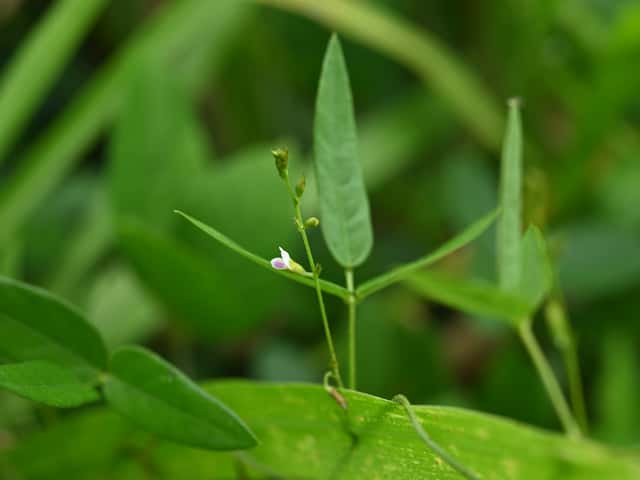
Panicledleaf ticktrefoil (Desmodium paniculatum) is a easy-care plant from the Fabaceae family. Panicledleaf ticktrefoil is an erect, spreading perennial herb in the pea family (Fabaceae), native to eastern North America from Quebec to Florida and west to Texas, Nebraska, and Ontario. Its alternate, trifoliate leaves have lance-to-oblong leaflets, and loose panicles of light pink to lavender f...
Panicledleaf ticktrefoil grows up to 1.2m, watering every 10 days, 10°C – 29°C, 40–60% humidity. It is not suitable for indoor environments and safe for pets.
Unlike many tropical plants, Panicledleaf ticktrefoil tolerates watering mistakes. Best for beginners. Unlike many popular species, Panicledleaf ticktrefoil is safe to keep around pets.
How to Care for Panicledleaf ticktrefoil?
TLDR: Panicledleaf ticktrefoil needs Bright indirect, watering every 10 days, and temperatures between 10-29°C with 40-60% humidity.
How Often Should You Water Panicledleaf ticktrefoil?
Let the soil dry out between waterings - this plant is drought-tolerant and prefers conditions on the dry side. Overwatering or poorly drained soil is the main cause of root rot.
How Much Light Does Panicledleaf ticktrefoil Need?
Give it full sun (6+ hours of direct light) for the best flowering and bushiest growth, though it will still perform in partial shade (2-6 hours of direct light).
What Is the Best Soil for Panicledleaf ticktrefoil?
Plant in well-drained, loamy soil with a neutral to slightly acidic pH (about 5.5-7.5). It adapts to sandy or clay soils as long as drainage is good, and even tolerates nutritionally poor ground.
What Pot Should You Use for Panicledleaf ticktrefoil?
Best grown directly in garden beds or naturalized borders rather than containers; if potting is unavoidable, choose a wide, well-draining pot to accommodate its spreading habit.
Care Schedule
Fertilize
Every 90 days
What Is Panicledleaf ticktrefoil and Where Does It Come From?
Panicledleaf ticktrefoil is an erect, spreading perennial herb in the pea family (Fabaceae), native to eastern North America from Quebec to Florida and west to Texas, Nebraska, and Ontario. Its alternate, trifoliate leaves have lance-to-oblong leaflets, and loose panicles of light pink to lavender flowers appear from June through September. These give way, from August to October, to distinctive segmented seed pods called loments that are covered in tiny hooked hairs and cling readily to clothing and animal fur for seed dispersal. As a legume, it fixes nitrogen in the soil and typically colonizes sunny disturbed ground such as roadsides, meadow edges, and abandoned fields.
How Big Does Panicledleaf ticktrefoil Grow?
TLDR: Panicledleaf ticktrefoil can reach up to 1.2m tall with Medium growth rate.
Max height
1.2m
Foliage
Deciduous
Plant Uses
Ornamental
Great for decoration
Ground Cover
Soil coverage
Is your plant showing symptoms?
Click on the symptom to discover possible causes:
What Diseases Commonly Affect Panicledleaf ticktrefoil?
TLDR: Panicledleaf ticktrefoil is susceptible to 4 known diseases. Monitor regularly for early detection.
Root Rot
Root rot is a serious fungal disease that affects the root system of plants, causing them to decay and die. It is primarily caused by overwatering, poor drainage, or soil-borne fungi such as Pythium, Phytophthora, Rhizoctonia, and Fusarium. The disease thrives in waterlogged conditions where roots are deprived of oxygen, making them susceptible to fungal infection.
Aphids
Aphids are small, soft-bodied, pear-shaped insects (1/16 to 1/8 inch long) that feed by sucking nutrient-rich sap from plants. They reproduce rapidly and can quickly weaken plants, causing distorted growth and transmitting plant viruses. Aphids come in various colors including green, black, red, yellow, brown, and gray. They secrete honeydew, a sticky substance that attracts ants and encourages sooty mold growth.
Spider Mites
Spider mites are tiny arachnids (less than 1/20 inch long) related to spiders and ticks that feed on plant sap. They thrive in hot, dry conditions and can cause significant damage to ornamental and vegetable plants. During severe infestations, crop losses can reach 14% or higher as these pests disrupt vital plant processes including photosynthesis, carbon dioxide absorption, and transpiration.
Whiteflies
Whiteflies are small, soft-bodied, winged insects closely related to aphids and mealybugs. They are moth-like in appearance, about 1/16 inch long, triangular in shape, and gray-white in color. These sap-sucking pests feed on plant tissue, causing yellowing, stunted growth, and wilting. They also excrete honeydew, which attracts ants and promotes sooty mold growth. Whiteflies can transmit serious plant viruses.
Meaning & Symbolism
Its hooked seed pods, which hitch a ride on anyone who brushes past, have made this plant an emblem of tenacity and connection - a quiet reminder that small, persistent efforts travel far. As a nitrogen-fixer, it is also associated with unseen generosity toward the soil it grows in.
Compare with similar plants
| Attribute | Difficulty | Light | Watering | Pet Safe |
|---|---|---|---|---|
| Field Maple | Easy | Bright indirect | 14d | ✓ |
| Silver Birch | Easy | Direct sun | 14d | ✓ |
| Common Blanketflower | Easy | Direct sun | 10d | ✓ |
| Cushion Bush | Easy | Direct sun | 14d | ✓ |





