Boraginaceae
Purple Viper's Bugloss: Medicinal Uses & Care Tips
Echium plantagineum
Purple Viper's Bugloss is an easy-to-care-for, sun-loving plant that thrives best in nutrient-poor, well-drained soil with plenty of sunlight. It requires little maintenance beyond sparse watering and needs no fertilization to bloom profusely.
Every 14 days
Bright indirect
-10° - 35°C
30% - 60%
Categories
What is Purple Viper's Bugloss?
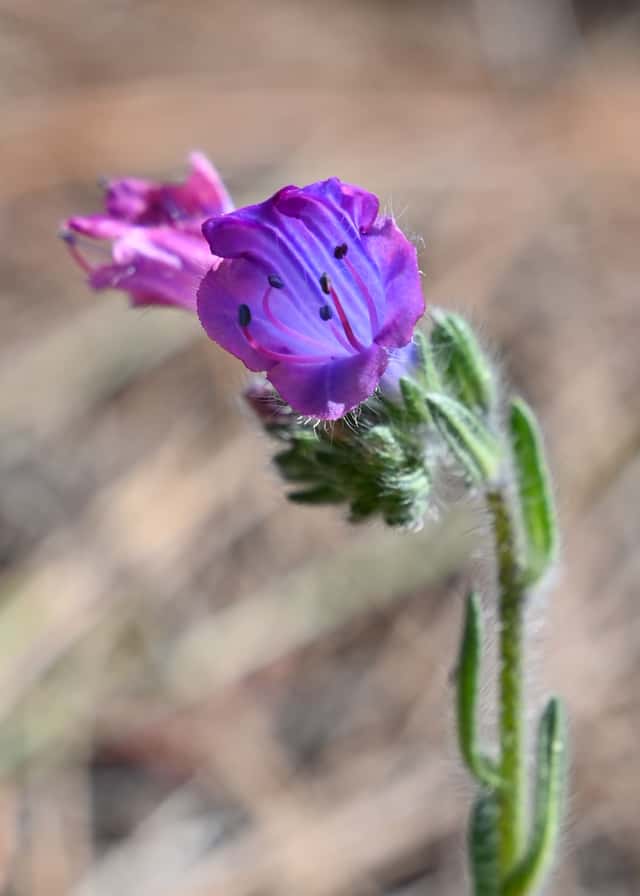
Purple Viper's Bugloss (Echium plantagineum) is a easy-care plant from the Boraginaceae family. Purple Viper's Bugloss (Echium plantagineum) is an annual to biennial plant in the borage family (Boraginaceae), native to the Mediterranean region, North Africa, and Southwest Asia. It forms a coarse, hairy basal rosette before sending up a branched stem with funnel-shaped flowers that change color...
Purple Viper's Bugloss grows up to 90cm, spread of 40cm, watering every 14 days, -10°C – 35°C, 30–60% humidity. It is not suitable for indoor environments and not safe for pets.
Unlike many tropical plants, Purple Viper's Bugloss tolerates watering mistakes. Best for beginners. Without precautions, ingestion can cause irritation in pets. Keep out of reach of cats and dogs.
How to Care for Purple Viper's Bugloss?
TLDR: Purple Viper's Bugloss needs Bright indirect, watering every 14 days, and temperatures between -10-35°C with 30-60% humidity.
How Often Should You Water Purple Viper's Bugloss?
Water sparingly—the plant is drought-tolerant and thrives best when the soil is allowed to dry out thoroughly between waterings. Avoid standing water and soggy soil, as this quickly leads to root rot.
How Much Light Does Purple Viper's Bugloss Need?
Provide the plant with full sun for at least 6-8 hours daily. In very hot climates with intense afternoon sun, a little midday shade can prevent the leaves from scorching.
What Is the Best Soil for Purple Viper's Bugloss?
Prefers sandy or light, well-drained soil with a pH ranging from 4.5 to 8. The plant also manages well in lean, nutrient-poor soil and tolerates both acidic and alkaline ground, provided the drainage is good.
What Pot Should You Use for Purple Viper's Bugloss?
Best suited for open ground in flower beds or rock gardens with full sun. If grown in a container, it should have a wide pot with excellent drainage and holes in the bottom, as its taproot makes it sensitive to transplanting.
What Is Purple Viper's Bugloss and Where Does It Come From?
Purple Viper's Bugloss (Echium plantagineum) is an annual to biennial plant in the borage family (Boraginaceae), native to the Mediterranean region, North Africa, and Southwest Asia. It forms a coarse, hairy basal rosette before sending up a branched stem with funnel-shaped flowers that change color from pink to deep blue-violet as they open. The species grows 20-90 cm tall, blooms from spring to summer, and is highly popular with bees and bumblebees due to its abundant nectar production. While it tolerates drought and poor soil well, it is considered weedy and invasive outside its native range, particularly in Australia and California. The plant contains pyrrolizidine alkaloids, making it toxic to livestock and a potential skin irritant upon contact.
How to Propagate Purple Viper's Bugloss?
Seed Propagation
Requires little care after establishment. Remove spent flower stalks regularly to limit unwanted self-seeding, as the species can behave invasively.
- 1 Sow seeds directly at the growing site from mid-April to May, once the danger of frost has passed.
- 2 Alternatively, seeds can be started indoors 6-8 weeks before transplanting for earlier blooming.
- 3 Cover seeds lightly with soil and maintain consistent moisture until germination.
- 4 Thin out the seedlings so they are spaced 20-30 cm apart.
- 5 The plant blooms 8-12 weeks after sowing and often self-seeds in subsequent seasons.
Materials needed:
How Big Does Purple Viper's Bugloss Grow?
TLDR: Purple Viper's Bugloss can reach up to 90cm tall with Fast growth rate.
Max height
90cm
Spread
40cm
Growth rate
Fast
Foliage
Deciduous
Warning: Toxic Plant
This plant can be toxic if ingested. Keep out of reach of:
Plant Uses
Ornamental
Great for decoration
Medicinal
Medicinal properties
Medicinal Uses
- Historically used in folk medicine: the root was chewed with wine as a supposed remedy for snakebites—lacking scientific documentation, and the plant is currently considered toxic if ingested.
Is your plant showing symptoms?
Click on the symptom to discover possible causes:
What Diseases Commonly Affect Purple Viper's Bugloss?
TLDR: Purple Viper's Bugloss is susceptible to 6 known diseases. Monitor regularly for early detection.
Slugs and Snails
Slugs and snails are mollusks that feed on plant tissue, causing irregular holes in leaves and damage to young seedlings. They are most active at night and in moist conditions, leaving characteristic silvery slime trails. These pests can quickly devastate gardens, especially during wet seasons.
Aphids
Aphids are small, soft-bodied, pear-shaped insects (1/16 to 1/8 inch long) that feed by sucking nutrient-rich sap from plants. They reproduce rapidly and can quickly weaken plants, causing distorted growth and transmitting plant viruses. Aphids come in various colors including green, black, red, yellow, brown, and gray. They secrete honeydew, a sticky substance that attracts ants and encourages sooty mold growth.
Spider Mites
Spider mites are tiny arachnids (less than 1/20 inch long) related to spiders and ticks that feed on plant sap. They thrive in hot, dry conditions and can cause significant damage to ornamental and vegetable plants. During severe infestations, crop losses can reach 14% or higher as these pests disrupt vital plant processes including photosynthesis, carbon dioxide absorption, and transpiration.
Grey Mould
Meaning & Symbolism
The genus name Echium comes from the Greek 'echis' (viper), and both the name Viper's Bugloss and folklore link the plant to snakes—the root was traditionally chewed with wine as a folk remedy for snakebites. Consequently, it has become a symbol of protection and resilience, a plant that thrives even in the most barren and dry soils.
Compare with similar plants
| Attribute | Difficulty | Light | Watering | Pet Safe |
|---|---|---|---|---|
| Field Maple | Easy | Bright indirect | 14d | ✓ |
| Silver Birch | Easy | Direct sun | 14d | ✓ |
| Common Blanketflower | Easy | Direct sun | 10d | ✓ |
| Cushion Bush | Easy | Direct sun | 14d | ✓ |





