Solanaceae
Petunia: Ground Cover Plant
Petunia × atkinsiana
Requires full sun to bloom well and frequent watering, keeping the soil moist but never waterlogged.
Every 6 days
Direct sun
2° - 38°C
40% - 60%
Categories
What is Petunia?
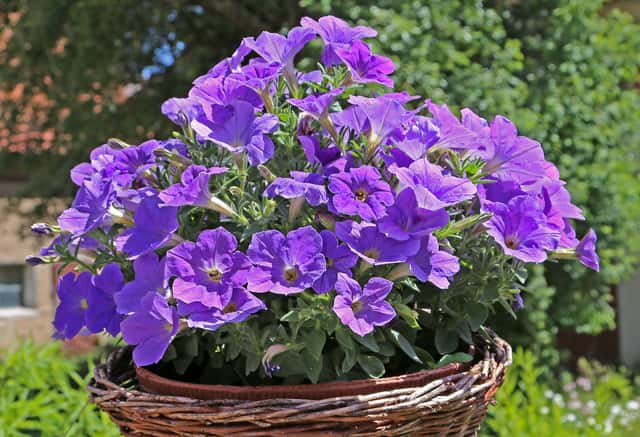
Petunia (Petunia × atkinsiana) is a easy-care plant from the Solanaceae family. Petunia × atkinsiana is one of the most popular garden flowers in the world, valued for its trumpet-shaped blooms and vibrant colors. This hybrid is extremely versatile, adapting well to flower beds, borders, and hanging baskets. They bloom profusely from early spring until the first frosts of autum...
Petunia grows up to 45cm, spread of 120cm, watering every 6 days, 2°C – 38°C, 40–60% humidity. It is suitable for indoor environments and safe for pets.
Unlike many tropical plants, Petunia tolerates watering mistakes. Best for beginners. Unlike many popular species, Petunia is safe to keep around pets. Without adequate drainage, root rot can develop within 12 days.
How to Care for Petunia?
TLDR: Petunia needs Direct sun, watering every 6 days, and temperatures between 2-38°C with 40-60% humidity.
How Often Should You Water Petunia?
Avoid wetting the flowers and foliage to prevent the emergence of fungi and spots.
How Much Light Does Petunia Need?
For intense flowering, petunias need at least 6 hours of direct sunlight per day.
What Is the Best Soil for Petunia?
Prefer soils rich in organic matter with a slightly acidic pH.
What Pot Should You Use for Petunia?
Pots with excellent drainage or hanging baskets for trailing varieties.
Care Schedule
Fertilize
Every 30 days
Repot
Every 365 days
What Is Petunia and Where Does It Come From?
Petunia × atkinsiana is one of the most popular garden flowers in the world, valued for its trumpet-shaped blooms and vibrant colors. This hybrid is extremely versatile, adapting well to flower beds, borders, and hanging baskets. They bloom profusely from early spring until the first frosts of autumn, offering a continuous visual spectacle.
How to Propagate Petunia?
Sowing
- Use a spray bottle to avoid accidentally burying the seeds.
- 1 Preparation
Spread the tiny seeds over a fine, moist substrate.
- 2 Light
Do not cover the seeds with soil, as they need light to germinate.
- 3 Moisture
Keep the substrate moist and in a warm place until germination.
Materials needed:
Stem Cuttings
- Maintain high humidity by covering the pot with clear plastic.
- 1 Cutting
Cut a healthy stem about 4 inches (10cm) long without flowers.
- 2 Preparation
Remove the lower leaves and dip the base in rooting hormone.
- 3 Planting
Insert into a light substrate and keep in a bright spot, but without direct sunlight.
Materials needed:
How Big Does Petunia Grow?
TLDR: Petunia can reach up to 45cm tall with Fast growth rate.
Max height
45cm
Spread
1.2m
Growth rate
Fast
Foliage
Deciduous
Plant Uses
Ornamental
Great for decoration
Ground Cover
Soil coverage
Is your plant showing symptoms?
Click on the symptom to discover possible causes:
What Diseases Commonly Affect Petunia?
TLDR: Petunia is susceptible to 12 known diseases. Monitor regularly for early detection.
Powdery Mildew
Powdery mildew is a common fungal disease caused by various fungi species including Erysiphe, Podosphaera, Oïdium, and Leveillula. It affects over 10,000 plant species worldwide. The disease thrives in warm, dry climates with high humidity and appears as a distinctive white powdery coating on plant surfaces.
Gray Mold (Botrytis Blight)
Gray mold, caused by the fungus Botrytis cinerea, is one of the most common fungal diseases in plants. It affects over 200 plant species, including ornamentals, vegetables, fruits, and houseplants. The disease thrives in cool, humid conditions with poor air circulation, causing grayish spots and soft rot on infected tissues.
Aphids
Aphids are small, soft-bodied, pear-shaped insects (1/16 to 1/8 inch long) that feed by sucking nutrient-rich sap from plants. They reproduce rapidly and can quickly weaken plants, causing distorted growth and transmitting plant viruses. Aphids come in various colors including green, black, red, yellow, brown, and gray. They secrete honeydew, a sticky substance that attracts ants and encourages sooty mold growth.
Spider Mites
Spider mites are tiny arachnids (less than 1/20 inch long) related to spiders and ticks that feed on plant sap. They thrive in hot, dry conditions and can cause significant damage to ornamental and vegetable plants. During severe infestations, crop losses can reach 14% or higher as these pests disrupt vital plant processes including photosynthesis, carbon dioxide absorption, and transpiration.
Meaning & Symbolism
Represents the desire to be close to someone and emotional comfort.
Compare with similar plants
| Attribute | Difficulty | Light | Watering | Pet Safe |
|---|---|---|---|---|
| Field Maple | Easy | Bright indirect | 14d | ✓ |
| Silver Birch | Easy | Direct sun | 14d | ✓ |
| Common Blanketflower | Easy | Direct sun | 10d | ✓ |
| Cushion Bush | Easy | Direct sun | 14d | ✓ |





