Ranunculaceae
Pheasant's eye: Full Sun Plant
Adonis vernalis
A hardy rock garden or meadow plant that is difficult to cultivate: it requires calcareous, very well-drained soil, a sunny or semi-shaded position, and patience, as seed germination is slow and plants only reach flowering maturity after 3-4 years. It does not tolerate excess water at the roots.
Every 10 days
Direct sun
-25° - 30°C
40% - 60%
Categories
What is Pheasant's eye?
Pheasant's eye (Adonis vernalis) is a hard-care plant from the Ranunculaceae family. The Spring pheasant's eye (Adonis vernalis) is a perennial herbaceous plant in the Ranunculaceae family, native to the calcareous meadows and steppes of Central and Eastern Europe and Western Asia. It grows up to 40 cm in height, featuring fine, dill-like foliage and solitary, golden-yellow flowers,...
Pheasant's eye grows up to 40cm, spread of 30cm, watering every 10 days, -25°C – 30°C, 40–60% humidity. It is not suitable for indoor environments and not safe for pets.
Unlike easy-care plants, Pheasant's eye demands constant attention to humidity and light. Not recommended for beginners. Without precautions, ingestion can cause irritation in pets. Keep out of reach of cats and dogs.
How to Care for Pheasant's eye?
TLDR: Pheasant's eye needs Direct sun, watering every 10 days, and temperatures between -25-30°C with 40-60% humidity.
How Often Should You Water Pheasant's eye?
Water moderately, only when the surface soil has dried; excess water quickly leads to root rot, as the plant is adapted to well-drained, calcareous soils.
How Much Light Does Pheasant's eye Need?
Prefers direct sun or bright semi-shade, with at least 5-6 hours of light per day; it blooms more abundantly in full sun.
What Is the Best Soil for Pheasant's eye?
The soil must be calcareous or neutral-alkaline (pH 6.5-8), loose, and very well-drained; it tolerates sandy, loamy, or clay soils as long as they do not retain water.
What Pot Should You Use for Pheasant's eye?
Recommended for gardens, rockeries, or beds with calcareous soil rather than pots; if grown in a container, choose a wide one with excellent drainage (GROUND or TERRACOTTA type with many drainage holes).
Care Schedule
Fertilize
Every 365 days
What Is Pheasant's eye and Where Does It Come From?
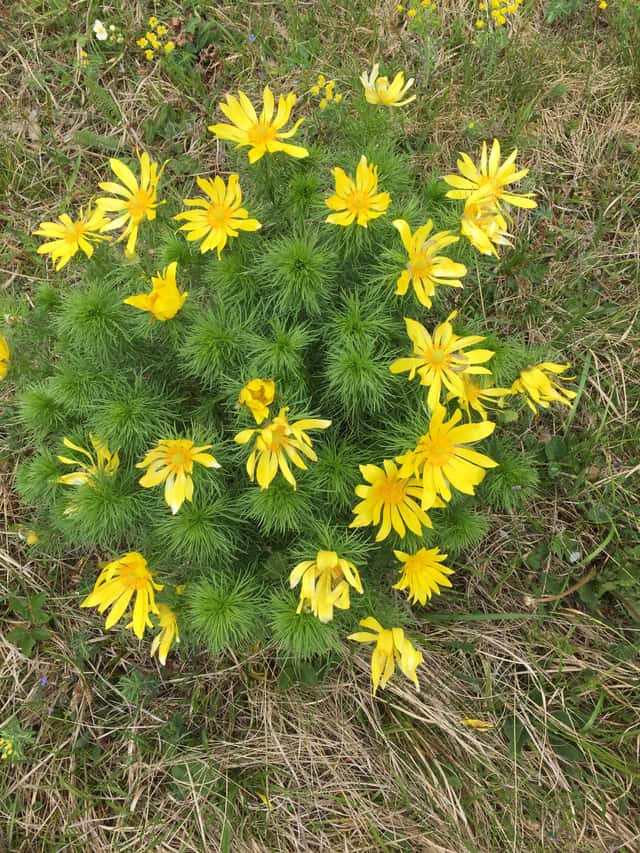
The Spring pheasant's eye (Adonis vernalis) is a perennial herbaceous plant in the Ranunculaceae family, native to the calcareous meadows and steppes of Central and Eastern Europe and Western Asia. It grows up to 40 cm in height, featuring fine, dill-like foliage and solitary, golden-yellow flowers, 6-8 cm in diameter, which appear in early spring between April and May. All parts of the plant contain potent cardiotonic glycosides (cymarin, adonitoxin) and are severely toxic if ingested.
How to Propagate Pheasant's eye?
How Big Does Pheasant's eye Grow?
TLDR: Pheasant's eye can reach up to 40cm tall with Slow growth rate.
Max height
40cm
Spread
30cm
Growth rate
Slow
Foliage
Deciduous
Warning: Toxic Plant
This plant can be toxic if ingested. Keep out of reach of:
Plant Uses
Ornamental
Great for decoration
Medicinal
Medicinal properties
Medicinal Uses
- Traditionally used as a cardiac tonic (cardiotonic glycosides similar to digitalis) for tachycardia, mild heart failure, and associated nervous disorders; used in the form of tincture or standardized extract only under medical supervision due to its narrow therapeutic index.
Is your plant showing symptoms?
Click on the symptom to discover possible causes:
What Diseases Commonly Affect Pheasant's eye?
TLDR: Pheasant's eye is susceptible to 2 known diseases. Monitor regularly for early detection.
Root Rot
Root rot is a serious fungal disease that affects the root system of plants, causing them to decay and die. It is primarily caused by overwatering, poor drainage, or soil-borne fungi such as Pythium, Phytophthora, Rhizoctonia, and Fusarium. The disease thrives in waterlogged conditions where roots are deprived of oxygen, making them susceptible to fungal infection.
Slugs and Snails
Slugs and snails are mollusks that feed on plant tissue, causing irregular holes in leaves and damage to young seedlings. They are most active at night and in moist conditions, leaving characteristic silvery slime trails. These pests can quickly devastate gardens, especially during wet seasons.
Meaning & Symbolism
Painful memory and eternal love, linked to the legend of the death of Adonis, from whose blood, according to Greek mythology, the flower was born; it symbolizes fleeting beauty and longing.
Compare with similar plants
| Attribute | Difficulty | Light | Watering | Pet Safe |
|---|---|---|---|---|
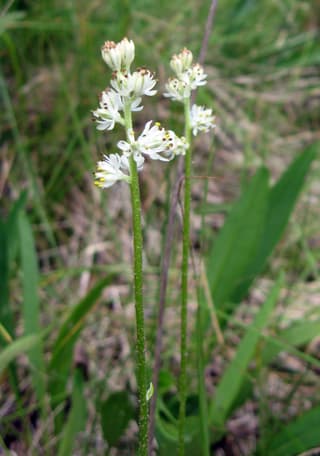
| Sticky false asphodel | Hard | Bright indirect | 1d | ✓ |
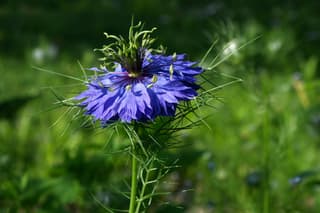
| Love-in-a-mist | Easy | Bright indirect | 10d | ⚠️ |
| Creeping bentgrass | Hard | Direct sun | 3d | ✓ |
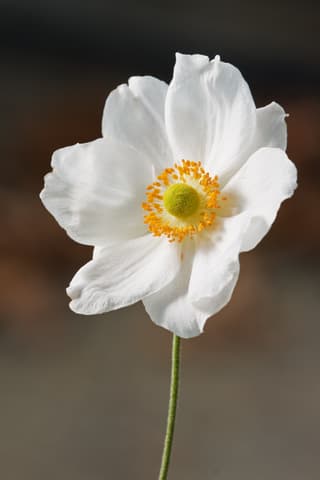
| Japanese Anemone | Easy | Partial shade | 7d | ⚠️ |