Cupressaceae
Phoenician Juniper (Juniperus phoenicea)
Juniperus phoenicea
A tough, low-maintenance Mediterranean plant: sun, free-draining soil and hardly any watering once established. It needs no pruning or feeding. What it cannot stand is waterlogging and stagnant damp.
Every 14 days
Direct sun
° - °C
% - %
Categories
What is Phoenician Juniper?
Phoenician Juniper (Juniperus phoenicea) is a easy-care plant from the Cupressaceae family. Juniperus phoenicea is an evergreen conifer in the cypress family (Cupressaceae), native to south-western Europe: the Iberian Peninsula, southern France and north-western Italy. The populations of the Mediterranean coasts and North Africa are now often split off as Juniperus turbinata. It is a shrub...
Phoenician Juniper grows up to 6.0m, watering every 14 days. It is not suitable for indoor environments and safe for pets.
Unlike many tropical plants, Phoenician Juniper tolerates watering mistakes. Best for beginners. Unlike many popular species, Phoenician Juniper is safe to keep around pets.
How to Care for Phoenician Juniper?
TLDR: Phoenician Juniper needs Direct sun, watering every 14 days, and temperatures between 15-30°C with 40-70% humidity.
How Often Should You Water Phoenician Juniper?
In the first year, water every 1 to 2 weeks in summer. Once established it lives on rainfall and copes with long droughts. In pots, let the mix dry out completely between waterings.
How Much Light Does Phoenician Juniper Need?
Full sun. It tolerates light shade but grows sparser.
What Is the Best Soil for Phoenician Juniper?
Any well-drained soil: sandy, chalky, stony, poor or even saline. Avoid heavy soil that holds water.
What Pot Should You Use for Phoenician Juniper?
A large, deep terracotta pot with good drainage on a sunny patio or terrace. Also used for bonsai.
What Is Phoenician Juniper and Where Does It Come From?
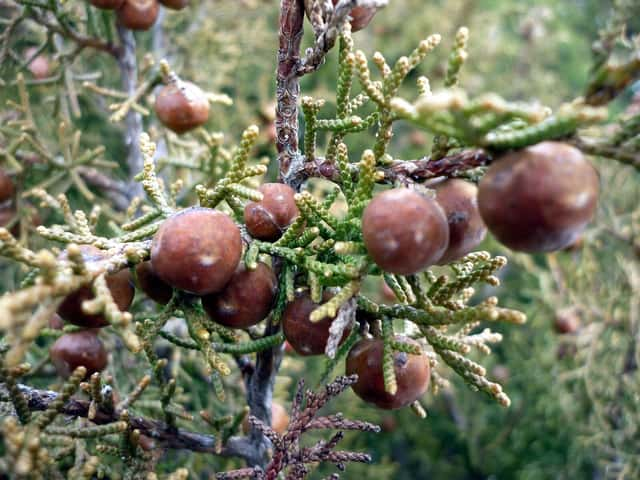
Juniperus phoenicea is an evergreen conifer in the cypress family (Cupressaceae), native to south-western Europe: the Iberian Peninsula, southern France and north-western Italy. The populations of the Mediterranean coasts and North Africa are now often split off as Juniperus turbinata. It is a shrub or small tree with a dense conical crown, usually up to 6 m, slow-growing, with tiny scale leaves and round berry-like cones that turn from green to reddish brown and take two years to ripen. It grows in scrub, on stable dunes and on dry mountains.
How to Propagate Phoenician Juniper?
Hardwood cutting
Rooting is slow and unreliable, so take plenty of cuttings. That is why most people buy nursery plants.
- 1 In early autumn, take 5-10 cm cuttings of mature wood with a heel
- 2 Strip the scale leaves from the lower part
- 3 Insert in gritty mix in a cold frame or sheltered spot
- 4 Keep barely moist, never waterlogged, until spring
Materials needed:
Seed
The seed coat is very hard. Alternating 2-3 month cold and warm periods helps germination.
- 1 Remove seeds from ripe cones and clean off the pulp
- 2 Dip them in boiling water for a few seconds to soften the coat
- 3 Sow in a pot and leave outdoors to go through alternating cold and warm spells
- 4 Be patient: germination can take more than a year
Materials needed:
Layering
The most reliable home method, if slow.
- 1 Choose a low, flexible branch
- 2 Lightly wound the bark where it will touch the soil
- 3 Bury that section and pin it down
- 4 Cut it from the parent once rooted, about a year later
Materials needed:
How Big Does Phoenician Juniper Grow?
TLDR: Phoenician Juniper can reach up to 6.0m tall with Slow growth rate.
Max height
6.0m
Growth rate
Slow
Foliage
Evergreen
Warning: Toxic Plant
This plant can be toxic if ingested. Keep out of reach of:
Plant Uses
Ornamental
Great for decoration
Is your plant showing symptoms?
Click on the symptom to discover possible causes:
What Diseases Commonly Affect Phoenician Juniper?
TLDR: Phoenician Juniper is susceptible to 5 known diseases. Monitor regularly for early detection.
Root Rot
Root rot is a serious fungal disease that affects the root system of plants, causing them to decay and die. It is primarily caused by overwatering, poor drainage, or soil-borne fungi such as Pythium, Phytophthora, Rhizoctonia, and Fusarium. The disease thrives in waterlogged conditions where roots are deprived of oxygen, making them susceptible to fungal infection.
Scale Insects
Scale insects are small sap-sucking pests that appear as brown, shell-like bumps on plant stems and leaves. There are over 25 species, divided into armored (hard) and unarmored (soft) scales. They feed by piercing plant tissue and extracting sap, which weakens the plant and can lead to yellowing, stunted growth, and even death if left untreated. They also excrete honeydew, which attracts ants and promotes sooty mold growth.
Aphids
Aphids are small, soft-bodied, pear-shaped insects (1/16 to 1/8 inch long) that feed by sucking nutrient-rich sap from plants. They reproduce rapidly and can quickly weaken plants, causing distorted growth and transmitting plant viruses. Aphids come in various colors including green, black, red, yellow, brown, and gray. They secrete honeydew, a sticky substance that attracts ants and encourages sooty mold growth.
Phytophthora Root Rot
The Phytophthora genus consists of soil-borne oomycetes (water molds) that act as plant pathogens, primarily affecting trees and woody plants. It typically spreads through the root system, leading to systemic decline and eventual plant collapse.
Fun Facts
Its cones take two years to ripen
It survives where only 200 mm of rain falls in a year
Some old trunks reach 1 to 2 m across
Frequently asked questions
Is Phoenician juniper toxic?
What is the difference between Juniperus phoenicea and Juniperus turbinata?
Does it need pruning?
Is it good for seaside gardens?
Compare with similar plants
| Attribute | Difficulty | Light | Watering | Pet Safe |
|---|---|---|---|---|
| Field Maple | Easy | Bright indirect | 14d | ✓ |
| Iberian Houseleek | Easy | Direct sun | 14d | ✓ |
| Silver Birch | Easy | Direct sun | 14d | ✓ |
| Common Blanketflower | Easy | Direct sun | 10d | ✓ |





