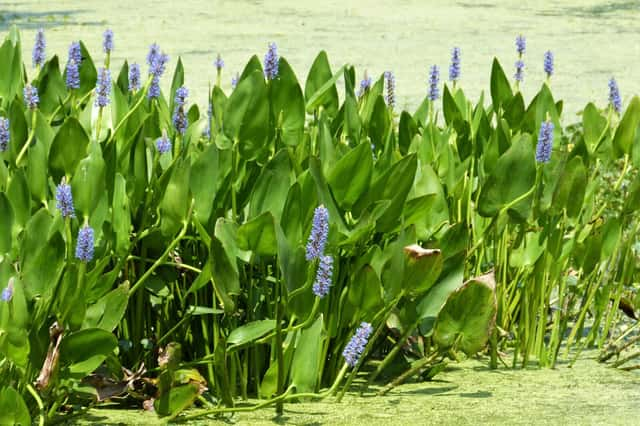
Pontederiaceae
Pickerelweed (Pontederia)
Pontederia
A shallow-water plant: full sun, roots always wet or submerged and rich soil at the bottom. It grows fast and needs little care.
Every 1 days
Direct sun
° - °C
% - %
Categories
What is Pickerelweed?
Pickerelweed (Pontederia) is a easy-care plant from the Pontederiaceae family. Pontederia is a genus of aquatic plants from the Americas, from Canada to Argentina, that grow at the edges of ponds, marshes and rivers, rooted in mud or shallow water. They have large, smooth, glossy leaves shaped like a heart or a lance, and in summer they send up spikes of blue or lilac flowers....
Pickerelweed grows up to 1.2m, watering every 1 days. It is not suitable for indoor environments and safe for pets.
Unlike many tropical plants, Pickerelweed tolerates watering mistakes. Best for beginners. Unlike many popular species, Pickerelweed is safe to keep around pets.
How to Care for Pickerelweed?
TLDR: Pickerelweed needs Direct sun, watering every 1 days, and temperatures between 15-30°C with 40-70% humidity.
How Often Should You Water Pickerelweed?
Never let it dry out. Plant at the pond edge with 5-30 cm of water over the pot, or keep the soil permanently soggy. The water should stay below the leaves.
How Much Light Does Pickerelweed Need?
Full sun, at least 6 hours a day. It tolerates part shade but flowers less.
What Is the Best Soil for Pickerelweed?
Heavy, rich soil, clay or riverbank loam. Avoid light potting mix, which floats and clouds the water.
What Pot Should You Use for Pickerelweed?
Use an aquatic planting basket with clay soil and a layer of gravel on top, sunk in the pond. The basket also keeps the rhizomes in check.
What Is Pickerelweed and Where Does It Come From?
Pontederia is a genus of aquatic plants from the Americas, from Canada to Argentina, that grow at the edges of ponds, marshes and rivers, rooted in mud or shallow water. They have large, smooth, glossy leaves shaped like a heart or a lance, and in summer they send up spikes of blue or lilac flowers. They spread by rhizomes and form big clumps. The species most planted in garden ponds is Pontederia cordata, which reaches 1.2 m. Since 2018 the genus also includes the water hyacinths, formerly Eichhornia, such as common water hyacinth (P. crassipes), which floats and can become invasive. Some species have their own entries.
How to Propagate Pickerelweed?
Division
Divide every 2-3 years so the clump doesn't take over the pond.
- 1 Lift the plant out of the water in early spring
- 2 Cut the rhizome into pieces, each with leaves and roots
- 3 Plant each piece in a pot of clay soil and top with a layer of gravel
- 4 Put the pot back in shallow water
Materials needed:
Seed
Seeds must not dry out. Seedlings take longer to flower than divisions.
- 1 Collect ripe seed in late summer
- 2 Store it in water in the fridge until spring
- 3 Sow on waterlogged clay soil, barely covered
- 4 Keep warm and bright, with water level with the soil
Materials needed:
How Big Does Pickerelweed Grow?
TLDR: Pickerelweed can reach up to 1.2m tall with Fast growth rate.
Max height
1.2m
Growth rate
Fast
Plant Uses
Ornamental
Great for decoration
Edible
Can be consumed
Culinary Uses
- The seeds and young leaves of Pontederia cordata are eaten raw or cooked in North America
Is your plant showing symptoms?
Click on the symptom to discover possible causes:
What Diseases Commonly Affect Pickerelweed?
TLDR: Pickerelweed is susceptible to 1 known diseases. Monitor regularly for early detection.
Fun Facts
The name honours the Italian botanist Giulio Pontedera
One North American bee visits only Pontederia cordata flowers
The water hyacinths, formerly Eichhornia, joined Pontederia in 2018
Frequently asked questions
Does pickerelweed need to sit in water?
Is pickerelweed cold-hardy?
Is pickerelweed invasive?
Is pickerelweed edible?
Compare with similar plants
| Attribute | Difficulty | Light | Watering | Pet Safe |
|---|---|---|---|---|
| Field Maple | Easy | Bright indirect | 14d | ✓ |
| Iberian Houseleek | Easy | Direct sun | 14d | ✓ |
| Silver Birch | Easy | Direct sun | 14d | ✓ |
| Common Blanketflower | Easy | Direct sun | 10d | ✓ |





