Lamiaceae
Pignut: Aromatic Plant
Hyptis suaveolens
A hardy, low-maintenance plant: it prefers full sun, well-drained soil, and infrequent watering, as it tolerates drought well and dislikes waterlogging. It grows quickly, flowers continuously in warm climates, and does not require frequent fertilization.
Every 10 days
Direct sun
15° - 35°C
30% - 60%
Categories
What is Pignut?
Pignut (Hyptis suaveolens) is a easy-care plant from the Lamiaceae family. Pignut (Hyptis suaveolens) is an aromatic annual to short-lived perennial herb belonging to the Lamiaceae family (the same family as mint and basil). Native to the tropical regions of Mexico, the Caribbean, and South America, it is now naturalized throughout almost the entire tropical belt of the pl...
Pignut grows up to 2.5m, watering every 10 days, 15°C – 35°C, 30–60% humidity. It is not suitable for indoor environments and safe for pets.
Unlike many tropical plants, Pignut tolerates watering mistakes. Best for beginners. Unlike many popular species, Pignut is safe to keep around pets.
How to Care for Pignut?
TLDR: Pignut needs Direct sun, watering every 10 days, and temperatures between 15-35°C with 30-60% humidity.
How Often Should You Water Pignut?
Water only when the top few inches of soil are dry. It is a drought-tolerant plant and sensitive to waterlogging—excessive watering promotes root rot.
How Much Light Does Pignut Need?
Prefers full sun to partial shade, with at least 6 hours of direct light per day. In low-light environments, growth becomes leggy and flowering is reduced.
What Is the Best Soil for Pignut?
Adapts to poor and sandy soils but develops best in a light, well-drained substrate. Avoid compacted soils or those that retain water.
What Pot Should You Use for Pignut?
If grown in a container, prefer a terracotta or unglazed ceramic pot with good drainage, which helps prevent the substrate from becoming waterlogged—a condition this plant does not tolerate well.
Care Schedule
Fertilize
Every 60 days
Repot
Every 365 days
What Is Pignut and Where Does It Come From?
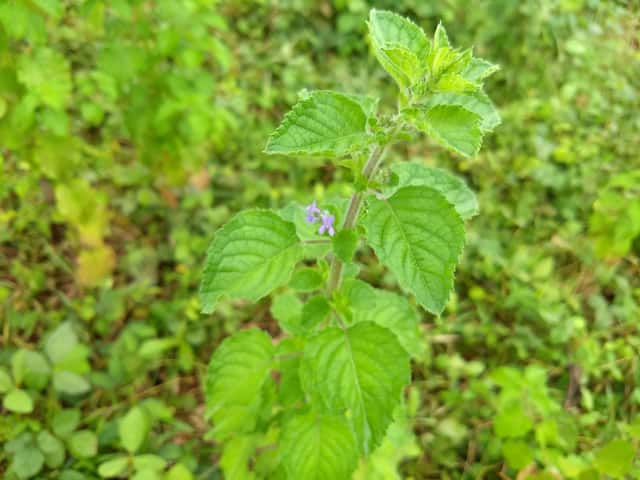
Pignut (Hyptis suaveolens) is an aromatic annual to short-lived perennial herb belonging to the Lamiaceae family (the same family as mint and basil). Native to the tropical regions of Mexico, the Caribbean, and South America, it is now naturalized throughout almost the entire tropical belt of the planet. It grows as a robust pioneer plant with a quadrangular stem, reaching up to 2.5 m in height, featuring ovate, aromatic, and serrated leaves, and small blue flowers in spikes. It is extremely resilient, spontaneously colonizing roadsides, pastures, and degraded lands, and blooms almost year-round in the tropics.
How to Propagate Pignut?
Seed Propagation
- The plant self-seeds easily in warm climates.
- Avoid overwatering the substrate to prevent the seeds from rotting.
- 1 Collection
Harvest seeds from the dry spikes at the end of flowering or obtain seeds from reliable sources.
- 2 Sowing
Sow in a light, well-drained substrate, lightly covering the seeds with a thin layer of soil.
- 3 Germination
Keep the substrate slightly moist and in a bright location until germination, which usually occurs in 1-2 weeks.
Materials needed:
How Big Does Pignut Grow?
TLDR: Pignut can reach up to 2.5m tall with Fast growth rate.
Max height
2.5m
Growth rate
Fast
Foliage
Deciduous
Plant Uses
Medicinal
Medicinal properties
Aromatic
Pleasant fragrance
Edible
Can be consumed
Medicinal Uses
- Infusion of flowers and leaves traditionally used for menstrual cramps
- Relief of digestive problems and gas
- Folk use against fevers and respiratory symptoms (flu, coughs)
- Essential oil with antifungal and anti-inflammatory activity reported in studies
- Root decoction used as an appetite stimulant
Culinary Uses
- Seeds macerated in water form a mucilaginous drink similar to chia
- Young shoots used as seasoning
- Aromatic leaves prepared as a tea substitute
Is your plant showing symptoms?
Click on the symptom to discover possible causes:
What Diseases Commonly Affect Pignut?
TLDR: Pignut is susceptible to 3 known diseases. Monitor regularly for early detection.
Root Rot
Root rot is a serious fungal disease that affects the root system of plants, causing them to decay and die. It is primarily caused by overwatering, poor drainage, or soil-borne fungi such as Pythium, Phytophthora, Rhizoctonia, and Fusarium. The disease thrives in waterlogged conditions where roots are deprived of oxygen, making them susceptible to fungal infection.
Spider Mites
Spider mites are tiny arachnids (less than 1/20 inch long) related to spiders and ticks that feed on plant sap. They thrive in hot, dry conditions and can cause significant damage to ornamental and vegetable plants. During severe infestations, crop losses can reach 14% or higher as these pests disrupt vital plant processes including photosynthesis, carbon dioxide absorption, and transpiration.
Powdery Mildew
Powdery mildew is a common fungal disease caused by various fungi species including Erysiphe, Podosphaera, Oïdium, and Leveillula. It affects over 10,000 plant species worldwide. The disease thrives in warm, dry climates with high humidity and appears as a distinctive white powdery coating on plant surfaces.
Meaning & Symbolism
In the folk culture of Northeastern Brazil, Pignut symbolizes resilience and healing—it is a plant that grows where little else survives, thus associated with strength and adaptability. It is traditionally grown in backyards and used in homemade teas for respiratory and digestive ailments, passed down through generations as a folk remedy.
Compare with similar plants
| Attribute | Difficulty | Light | Watering | Pet Safe |
|---|---|---|---|---|
| Field Maple | Easy | Bright indirect | 14d | ✓ |
| Silver Birch | Easy | Direct sun | 14d | ✓ |
| Common Blanketflower | Easy | Direct sun | 10d | ✓ |
| Cushion Bush | Easy | Direct sun | 14d | ✓ |
Choose & Compare
Sources & References
- Hyptis suaveolens - Useful Tropical Plants
- Hyptis suaveolens: Systematics, Etymology, Habitat, Cultivation - Antropocene.it
- Cheirosa (Hyptis suaveolens) - Agrolink
- Revista Caatinga - Hyptis suaveolens
- Biological Activities and Traditional Use of Hyptis suaveolens in Human and Veterinary Medicine: A Review





