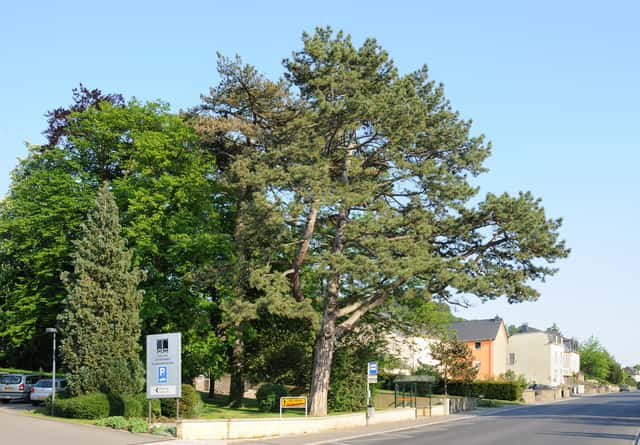
Pinaceae
Pine (Pinus)
Pinus
Full sun, free-draining soil and room to grow. Once established, it handles drought and needs very little care.
Every 14 days
Direct sun
° - °C
% - %
Categories
What is Pine?
Pine (Pinus) is a easy-care plant from the Pinaceae family. Pinus is the pine genus, with more than 100 species of evergreen trees and shrubs. Nearly all come from the Northern Hemisphere, from North and Central America to Europe, North Africa and Asia. The leaves are slender needles held in bundles of 2, 3 or 5, and the seeds sit inside cones that take 2 or...
Pine grows up to 80.0m, watering every 14 days. It is not suitable for indoor environments and not safe for pets.
Unlike many tropical plants, Pine tolerates watering mistakes. Best for beginners. Without precautions, ingestion can cause irritation in pets. Keep out of reach of cats and dogs.
How to Care for Pine?
TLDR: Pine needs Direct sun, watering every 14 days, and temperatures between 15-30°C with 40-70% humidity.
How Often Should You Water Pine?
In the first year, water deeply every 1-2 weeks without rain. Once established, most pines get by on rainfall and only need water in long droughts. Waterlogged soil does more harm than dry soil.
How Much Light Does Pine Need?
Direct sun all day. In shade the lower branches die off and the tree gets thin.
What Is the Best Soil for Pine?
Sandy or free-draining soil. Most prefer slightly acidic ground; a few, such as Austrian pine and Aleppo pine, tolerate chalk. Rich soil isn't needed.
What Pot Should You Use for Pine?
Best in the ground. Dwarf pines and bonsai do well in deep pots with good drainage and gritty compost; repot every 2-3 years.
What Is Pine and Where Does It Come From?
Pinus is the pine genus, with more than 100 species of evergreen trees and shrubs. Nearly all come from the Northern Hemisphere, from North and Central America to Europe, North Africa and Asia. The leaves are slender needles held in bundles of 2, 3 or 5, and the seeds sit inside cones that take 2 or 3 years to ripen. Pines don't flower: instead they shed clouds of yellow pollen in spring. Size varies hugely, from dwarf garden shrubs to trees 80 metres tall. Pines are important for wildlife, which shelter in them and eat the seeds, and for timber and resin. Several species, such as the stone pine and Scots pine, have their own entries.
How to Propagate Pine?
Seed
Pine seedlings hate root disturbance. Use deep pots and plant them in their final spot while young.
- 1 Collect seeds from ripe cones that are starting to open
- 2 For cold-climate species, keep the seeds in damp sand in the fridge for 4-8 weeks
- 3 Sow 1 cm deep in light, sandy compost
- 4 Keep in sun with the compost moist but not soggy
- 5 Move to individual pots once the seedlings are a few centimetres tall
Materials needed:
Grafting
This is how dwarf and coloured-foliage pines are propagated, since they don't come true from seed. It takes practice.
- 1 Pick a young, healthy rootstock of the same or a related species
- 2 Cut a shoot tip from the variety you want to copy
- 3 Make a side graft and tie it firmly
- 4 Keep in a sheltered, humid spot until the graft takes
Materials needed:
How Big Does Pine Grow?
TLDR: Pine can reach up to 80.0m tall with Medium growth rate.
Max height
80.0m
Foliage
Evergreen
Warning: Toxic Plant
This plant can be toxic if ingested. Keep out of reach of:
Plant Uses
Ornamental
Great for decoration
Edible
Can be consumed
Culinary Uses
- Pine nuts from stone pine and other species are eaten raw or toasted and used in pesto
Is your plant showing symptoms?
Click on the symptom to discover possible causes:
What Diseases Commonly Affect Pine?
TLDR: Pine is susceptible to 6 known diseases. Monitor regularly for early detection.
Aphids
Aphids are small, soft-bodied, pear-shaped insects (1/16 to 1/8 inch long) that feed by sucking nutrient-rich sap from plants. They reproduce rapidly and can quickly weaken plants, causing distorted growth and transmitting plant viruses. Aphids come in various colors including green, black, red, yellow, brown, and gray. They secrete honeydew, a sticky substance that attracts ants and encourages sooty mold growth.
Scale Insects
Scale insects are small sap-sucking pests that appear as brown, shell-like bumps on plant stems and leaves. There are over 25 species, divided into armored (hard) and unarmored (soft) scales. They feed by piercing plant tissue and extracting sap, which weakens the plant and can lead to yellowing, stunted growth, and even death if left untreated. They also excrete honeydew, which attracts ants and promotes sooty mold growth.
Curculionidae
Curculionidae (weevils) are small beetles that feed on plants. Adults chew leaf margins, leaving crescent-shaped notches, primarily at night. The larvae live in the substrate and consume roots, causing decline, yellowing, and wilting even when the substrate is moist, and in severe cases, plant death. They frequently affect ornamentals and garden plants such as strawberries, citrus, roses, hydrangeas, azaleas, blueberries, begonias, and many potted plants.
Rust
Rust is a common fungal disease caused by fungi in the order Pucciniales that affects a wide variety of plants. The disease gets its name from the characteristic orange, yellow, or reddish-brown pustules that appear on leaves, resembling metal rust. This obligate fungal parasite requires living plants to survive and can cause significant economic losses in agricultural crops.
Meaning & Symbolism
In many Asian and European cultures the pine stands for long life and resilience, since it stays green all year.
Fun Facts
A Great Basin bristlecone pine in California is nearly 5,000 years old, one of the oldest trees on Earth
Some pine cones only open and release their seeds after a fire
The number of needles per bundle, 2, 3 or 5, helps tell species apart
Frequently asked questions
Do pines need a lot of water?
Why are the inner needles turning yellow and dropping?
Is a Norfolk Island pine a real pine?
Are pine trees toxic to cats and dogs?
Compare with similar plants
| Attribute | Difficulty | Light | Watering | Pet Safe |
|---|---|---|---|---|
| Field Maple | Easy | Bright indirect | 14d | ✓ |
| Iberian Houseleek | Easy | Direct sun | 14d | ✓ |
| Silver Birch | Easy | Direct sun | 14d | ✓ |
| Common Blanketflower | Easy | Direct sun | 10d | ✓ |





