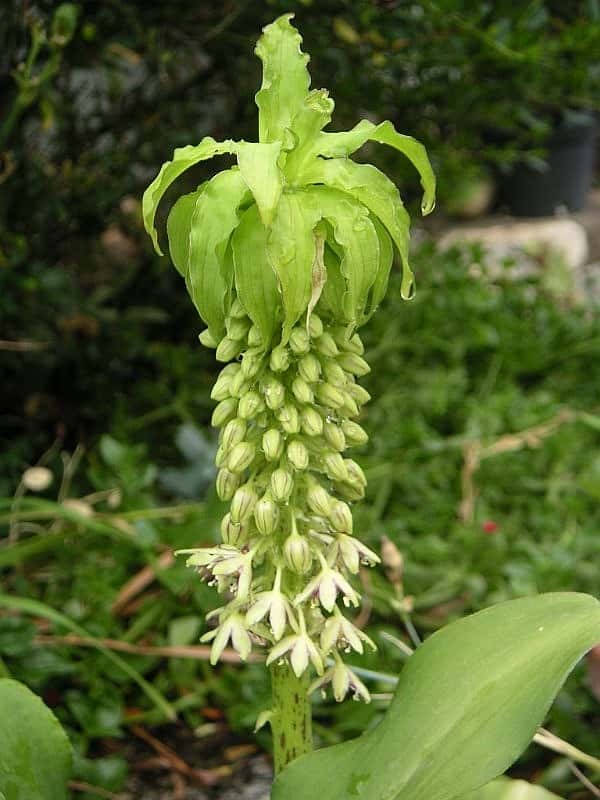
Asparagaceae
Pineapple lily: Pet-Safe Plant
Eucomis bicolor
Pineapple lilies thrive in full sun to light shade and well-drained, nutrient-rich soil. Water regularly during the growing season, but allow the soil to dry slightly between waterings – the bulb is susceptible to rot if kept too wet. Fertilize approximately every 14 days during the summer. In winter, the bulb should be stored dry and frost-free, or the plant can be grown as an indoor houseplant in a bright location.
Every 6 days
Bright indirect
5° - 30°C
40% - 60%
Categories
What is Pineapple lily?
Pineapple lily (Eucomis bicolor) is a medium-care plant from the Asparagaceae family. The Pineapple lily (Eucomis bicolor) is a bulbous plant in the asparagus family (Asparagaceae) native to South Africa. It forms a rosette of broad, strap-shaped leaves, and in summer, it sends up a dense inflorescence of star-shaped, pale green flowers edged in purple, crowned by a tuft of green bra...
Pineapple lily grows up to 60cm, spread of 45cm, watering every 6 days, 5°C – 30°C, 40–60% humidity. It is suitable for indoor environments and safe for pets.
Unlike many popular species, Pineapple lily is safe to keep around pets. Without adequate drainage, root rot can develop within 12 days.
How to Care for Pineapple lily?
TLDR: Pineapple lily needs Bright indirect, watering every 6 days, and temperatures between 5-30°C with 40-60% humidity.
How Often Should You Water Pineapple lily?
Water 1–2 times a week during the growing season, allowing the top few inches of soil to dry out between waterings. Reduce watering significantly when the leaves wither in the fall – excessive moisture during the dormant period is the most common cause of bulb rot.
How Much Light Does Pineapple lily Need?
Provide the plant with full sun to light partial shade outdoors for the most prolific blooming. Indoors, it should be placed in the brightest spot available, preferably an east- or west-facing windowsill with plenty of indirect light.
What Is the Best Soil for Pineapple lily?
Use well-drained, nutrient-rich soil – preferably a sandy or humus-rich mix with a pH of 6.0–7.0. Poor drainage is the most common cause of bulb rot, so avoid heavy clay soils and ensure the pot has drainage holes.
What Pot Should You Use for Pineapple lily?
Choose a deep pot with good drainage holes, as the bulb is planted 4–6 inches (10–15 cm) deep and needs room for its roots. Terracotta is well-suited because the material allows excess moisture to escape through the walls, reducing the risk of bulb rot.
Care Schedule
Fertilize
Every 14 days
Repot
Every 730 days
What Is Pineapple lily and Where Does It Come From?
The Pineapple lily (Eucomis bicolor) is a bulbous plant in the asparagus family (Asparagaceae) native to South Africa. It forms a rosette of broad, strap-shaped leaves, and in summer, it sends up a dense inflorescence of star-shaped, pale green flowers edged in purple, crowned by a tuft of green bracts resembling a pineapple. The species grows 12–24 inches (30–60 cm) tall and blooms from July to September. It is not winter-hardy in colder climates, and the bulbs must be overwintered in a dry, frost-free environment.
How to Propagate Pineapple lily?
Bulb offsets
Offsets often bloom after just 1–2 seasons, much faster than plants grown from seed.
- 1 Dig up the bulb when the plant is dormant, in spring or fall
- 2 Look for smaller daughter bulbs (offsets) around the main bulb
- 3 Carefully break or cut the offsets away with a clean, sharp knife, ensuring each has its own roots
- 4 Plant the offsets in individual pots or directly into well-drained soil
Materials needed:
Seed propagation
Plants grown from seed typically take 3–5 years before they bloom for the first time.
- 1 Sow fresh seeds in a tray with moist, well-drained seed-starting mix
- 2 Maintain a temperature around 68–77°F (20–25°C) and mist regularly with a spray bottle
- 3 Move the seedlings to individual pots once they are large enough to handle
Materials needed:
Leaf cuttings
This method is slower than using offsets but can produce several new plants from a single leaf.
- 1 Take a healthy, full-grown leaf in late spring or early summer
- 2 Cut the leaf into 4–6 inch (10–15 cm) sections and let the cut surfaces dry for 24 hours
- 3 Dip the cut end in rooting hormone and place the cuttings in a moist substrate
- 4 Keep the cuttings in high humidity, for example under plastic, until small bulbs form at the base
Materials needed:
How Big Does Pineapple lily Grow?
TLDR: Pineapple lily can reach up to 60cm tall with Medium growth rate.
Max height
60cm
Spread
45cm
Growth rate
Medium
Foliage
Deciduous
Plant Uses
Ornamental
Great for decoration
Is your plant showing symptoms?
Click on the symptom to discover possible causes:
What Diseases Commonly Affect Pineapple lily?
TLDR: Pineapple lily is susceptible to 6 known diseases. Monitor regularly for early detection.
Root Rot
Root rot is a serious fungal disease that affects the root system of plants, causing them to decay and die. It is primarily caused by overwatering, poor drainage, or soil-borne fungi such as Pythium, Phytophthora, Rhizoctonia, and Fusarium. The disease thrives in waterlogged conditions where roots are deprived of oxygen, making them susceptible to fungal infection.
Aphids
Aphids are small, soft-bodied, pear-shaped insects (1/16 to 1/8 inch long) that feed by sucking nutrient-rich sap from plants. They reproduce rapidly and can quickly weaken plants, causing distorted growth and transmitting plant viruses. Aphids come in various colors including green, black, red, yellow, brown, and gray. They secrete honeydew, a sticky substance that attracts ants and encourages sooty mold growth.
Slugs and Snails
Slugs and snails are mollusks that feed on plant tissue, causing irregular holes in leaves and damage to young seedlings. They are most active at night and in moist conditions, leaving characteristic silvery slime trails. These pests can quickly devastate gardens, especially during wet seasons.
Spider Mites
Spider mites are tiny arachnids (less than 1/20 inch long) related to spiders and ticks that feed on plant sap. They thrive in hot, dry conditions and can cause significant damage to ornamental and vegetable plants. During severe infestations, crop losses can reach 14% or higher as these pests disrupt vital plant processes including photosynthesis, carbon dioxide absorption, and transpiration.
Meaning & Symbolism
The pineapple lily is often associated with hospitality and welcome, much like the pineapple itself has long been a symbol of hospitality in many cultures. The genus name Eucomis comes from Greek and means roughly 'beautiful hair' – a reference to the tuft of bracts at the top of the inflorescence.
Compare with similar plants
| Attribute | Difficulty | Light | Watering | Pet Safe |
|---|---|---|---|---|
| Dark Fieldcap | Medium | Low light | 2d | ⚠️ |
| Azalea | Medium | Partial shade | 3d | ⚠️ |
| Muriel's Bamboo | Medium | Partial shade | 3d | ✓ |
| Bougainvillea | Medium | Direct sun | 7d | ⚠️ |




