Oxalidaceae
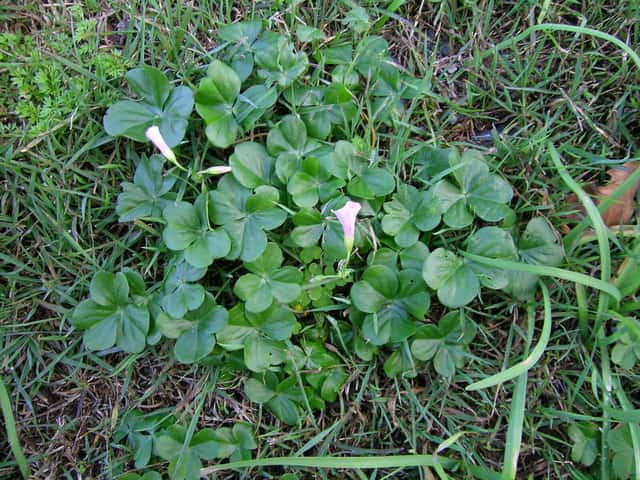
Pink Woodsorrel (Oxalis debilis)
Oxalis debilis
A plant that grows by itself with no effort, in full sun or part shade, and flowers well even in dry soil. It takes light frost (USDA zone 8 and up). The main task is keeping it in check: each plant makes many bulbils that spread whenever the soil is dug. If you want to grow it, keep it in a pot. It is toxic to dogs and cats.
Every 7 days
Bright indirect
° - °C
% - %
Categories
What is Pink woodsorrel?
Pink woodsorrel (Oxalis debilis) is a easy-care plant from the Oxalidaceae family. Pink woodsorrel (Oxalis debilis) is a small perennial in the family Oxalidaceae, native to South America. It now grows on every continent except Antarctica and has become a weed in many warm-climate gardens. It grows from a small bulb that produces dozens of bulbils around it. The leaves have three...
Pink woodsorrel grows up to 30cm, spread of 30cm, watering every 7 days. It is not suitable for indoor environments and not safe for pets.
Unlike many tropical plants, Pink woodsorrel tolerates watering mistakes. Best for beginners. Without precautions, ingestion can cause irritation in pets. Keep out of reach of cats and dogs.
How to Care for Pink woodsorrel?
TLDR: Pink woodsorrel needs Bright indirect, watering every 7 days, and temperatures between 15-30°C with 40-70% humidity.
How Often Should You Water Pink woodsorrel?
Water once a week in dry weather. It tolerates drought; soil that stays soggy can rot the bulbs.
How Much Light Does Pink woodsorrel Need?
Full sun or part shade. More sun means more flowers.
What Is the Best Soil for Pink woodsorrel?
Any soil, ideally sandy and well drained. No fertilizer needed.
What Pot Should You Use for Pink woodsorrel?
Any pot with drainage holes. It is the best way to grow it without letting it spread through the garden.
What Is Pink woodsorrel and Where Does It Come From?
Pink woodsorrel (Oxalis debilis) is a small perennial in the family Oxalidaceae, native to South America. It now grows on every continent except Antarctica and has become a weed in many warm-climate gardens. It grows from a small bulb that produces dozens of bulbils around it. The leaves have three heart-shaped leaflets on stalks about 20 cm tall, with a tangy, lemony taste. The flowers are pink to lavender, with five veined petals and a yellow center, in clusters of 2 to 12 held just above the leaves. Leaves, flowers and roots are edible in small amounts.
How to Propagate Pink woodsorrel?
Bulbils
They take very easily. Do not put leftovers in the compost or on a bed, because bulbils sprout wherever they land.
- 1 Lift the clump carefully
- 2 Separate the bulbils around the main bulb
- 3 Plant 3 to 5 bulbils per pot, 2-3 cm deep
- 4 Water and keep in a bright spot
Materials needed:
Division
Pots are better than beds so the plant does not invade the garden.
- 1 Lift the whole clump
- 2 Split it into pieces with bulbs and leaves
- 3 Replant each piece in its own pot
- 4 Water well
Materials needed:
How Big Does Pink woodsorrel Grow?
TLDR: Pink woodsorrel can reach up to 30cm tall with Fast growth rate.
Max height
30cm
Spread
30cm
Growth rate
Fast
Warning: Toxic Plant
This plant can be toxic if ingested. Keep out of reach of:
Plant Uses
Ornamental
Great for decoration
Edible
Can be consumed
Ground Cover
Soil coverage
Culinary Uses
- Raw leaves and stalks, with a sour taste, as a salad seasoning (in moderation)
- Raw flowers to decorate salads
- Raw root, sweet and crisp
Is your plant showing symptoms?
Click on the symptom to discover possible causes:
What Diseases Commonly Affect Pink woodsorrel?
TLDR: Pink woodsorrel is susceptible to 2 known diseases. Monitor regularly for early detection.
Rust
Rust is a common fungal disease caused by fungi in the order Pucciniales that affects a wide variety of plants. The disease gets its name from the characteristic orange, yellow, or reddish-brown pustules that appear on leaves, resembling metal rust. This obligate fungal parasite requires living plants to survive and can cause significant economic losses in agricultural crops.
Whiteflies
Whiteflies are small, soft-bodied, winged insects closely related to aphids and mealybugs. They are moth-like in appearance, about 1/16 inch long, triangular in shape, and gray-white in color. These sap-sucking pests feed on plant tissue, causing yellowing, stunted growth, and wilting. They also excrete honeydew, which attracts ants and promotes sooty mold growth. Whiteflies can transmit serious plant viruses.
Fun Facts
In Europe it hardly sets seed and spreads only by bulbils.
The yellow-veined form gets its color from a virus spread by whiteflies.
The leaves have a flavor compared to tamarind.
Frequently asked questions
How do I get rid of pink woodsorrel?
Is pink woodsorrel toxic to cats and dogs?
Can you eat it?
Why do the flowers close?
Compare with similar plants
| Attribute | Difficulty | Light | Watering | Pet Safe |
|---|---|---|---|---|
| Field Maple | Easy | Bright indirect | 14d | ✓ |
| Iberian Houseleek | Easy | Direct sun | 14d | ✓ |
| Silver Birch | Easy | Direct sun | 14d | ✓ |
| Common Blanketflower | Easy | Direct sun | 10d | ✓ |





