Plantaginaceae
Plantain (genus Plantago)
Plantago
Very easy and often self-sown. Grows in full sun or part shade, in almost any soil, including compacted clay. Water young plants until established; after that it needs water only in long dry spells. No fertilizer needed. Cut off seed spikes before they ripen if you do not want it spreading.
Every 7 days
Bright indirect
-20° - °C
% - %
Categories
What is Plantain (genus)?
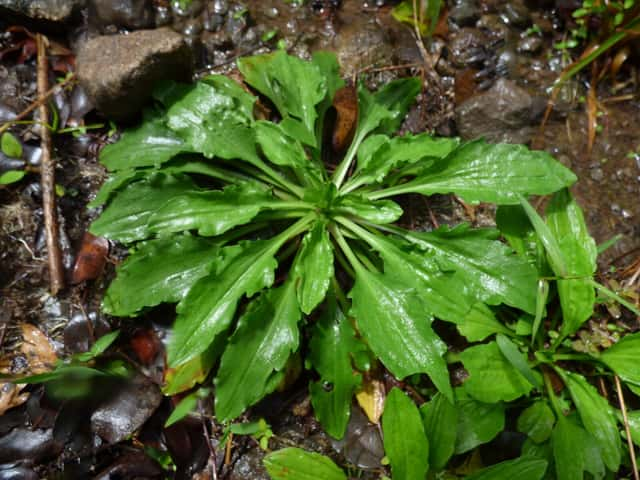
Plantain (genus) (Plantago) is a easy-care plant from the Plantaginaceae family. Plantago is a genus of about 200 species of low herbs in the family Plantaginaceae, found on every continent. Most form a flat rosette of leaves with three to five parallel veins, and send up leafless stalks topped with a dense spike of tiny wind-pollinated flowers. The two you are most likely to me...
Plantain (genus) grows up to 50cm, spread of 40cm, watering every 7 days. It is not suitable for indoor environments and safe for pets.
Unlike many tropical plants, Plantain (genus) tolerates watering mistakes. Best for beginners. Unlike many popular species, Plantain (genus) is safe to keep around pets.
How to Care for Plantain (genus)?
TLDR: Plantain (genus) needs Bright indirect, watering every 7 days, and temperatures between -20-30°C with 40-70% humidity.
How Often Should You Water Plantain (genus)?
Keep seeds and seedlings moist until they have a few leaves. Established plants get by on rain; in pots, water about once a week when the top few centimetres are dry. Overwatering and shade encourage powdery mildew.
How Much Light Does Plantain (genus) Need?
Full sun to part shade. It grows most vigorously in open, sunny spots; heavy shade gives weaker, mildew-prone plants.
What Is the Best Soil for Plantain (genus)?
Not fussy: loam, clay, sand or chalk, acid to alkaline (pH about 5.5 to 8). Prefers moist but well-drained ground and copes with trodden, compacted soil. A little compost before sowing is enough.
What Pot Should You Use for Plantain (genus)?
A pot or trough at least 20 cm deep, for the taproot, with drainage holes. Growing it in a container or raised bed keeps it from seeding through the garden.
What Is Plantain (genus) and Where Does It Come From?
Plantago is a genus of about 200 species of low herbs in the family Plantaginaceae, found on every continent. Most form a flat rosette of leaves with three to five parallel veins, and send up leafless stalks topped with a dense spike of tiny wind-pollinated flowers. The two you are most likely to meet are broadleaf plantain (P. major), with broad oval leaves, and ribwort plantain (P. lanceolata), with narrow lance-shaped leaves; both grow in lawns, paths and roadsides almost everywhere. Other species give psyllium husk (P. ovata and P. psyllium). Not related to the cooking banana also called plantain.
How to Propagate Plantain (genus)?
Seed
Plants self-sow freely; leave a few spikes to ripen if you want more, or snip them off to stop it spreading.
- 1 Optionally chill the seeds in moist sand in the fridge for about a month
- 2 Scatter the small seeds over prepared soil in spring
- 3 Cover with a thin layer of soil
- 4 Keep moist until the seedlings have a few leaves
Materials needed:
Transplanting a rosette
Young plants move best; old ones have a long taproot that is easily broken.
- 1 Dig deep around the plant to keep the taproot intact
- 2 Replant at the same depth
- 3 Water well and keep moist for the first weeks
Materials needed:
How Big Does Plantain (genus) Grow?
TLDR: Plantain (genus) can reach up to 50cm tall with Fast growth rate.
Max height
50cm
Spread
40cm
Growth rate
Fast
Foliage
Semi-evergreen
Plant Uses
Edible
Can be consumed
Medicinal
Medicinal properties
Ground Cover
Soil coverage
Medicinal Uses
- Leaf poultice traditionally used on insect bites, stings, rashes and minor wounds
- Leaf tea or syrup traditionally used for coughs and bronchitis
- Psyllium husk (P. ovata, P. psyllium) used as a bulk laxative
Culinary Uses
- Young leaves raw in salads
- Older leaves cooked like spinach
- Seeds cooked or sprouted
Is your plant showing symptoms?
Click on the symptom to discover possible causes:
What Diseases Commonly Affect Plantain (genus)?
TLDR: Plantain (genus) is susceptible to 6 known diseases. Monitor regularly for early detection.
Powdery Mildew
Powdery mildew is a common fungal disease caused by various fungi species including Erysiphe, Podosphaera, Oïdium, and Leveillula. It affects over 10,000 plant species worldwide. The disease thrives in warm, dry climates with high humidity and appears as a distinctive white powdery coating on plant surfaces.
Downy Mildew
Downy mildew is a fungal-like disease caused by oomycetes (water molds) that thrives in cool, wet conditions. It affects a wide range of plants, causing yellowing leaves with fuzzy white-gray growth underneath, leading to defoliation and reduced yields if left untreated.
Aphids
Aphids are small, soft-bodied, pear-shaped insects (1/16 to 1/8 inch long) that feed by sucking nutrient-rich sap from plants. They reproduce rapidly and can quickly weaken plants, causing distorted growth and transmitting plant viruses. Aphids come in various colors including green, black, red, yellow, brown, and gray. They secrete honeydew, a sticky substance that attracts ants and encourages sooty mold growth.
Spider Mites
Spider mites are tiny arachnids (less than 1/20 inch long) related to spiders and ticks that feed on plant sap. They thrive in hot, dry conditions and can cause significant damage to ornamental and vegetable plants. During severe infestations, crop losses can reach 14% or higher as these pests disrupt vital plant processes including photosynthesis, carbon dioxide absorption, and transpiration.
Fun Facts
The name comes from the Latin planta, sole of the foot, for its leaves pressed flat to the ground
Broadleaf plantain is one of the nine plants named in the 10th-century Anglo-Saxon Nine Herbs Charm
The seed husks swell into a gel when wet, which is how psyllium works
Frequently asked questions
Is plantain a weed?
Is plantain toxic to pets or people?
Is it related to the banana-like plantain?
Why does my plantain have white powder on the leaves?
Compare with similar plants
| Attribute | Difficulty | Light | Watering | Pet Safe |
|---|---|---|---|---|
| Field Maple | Easy | Bright indirect | 14d | ✓ |
| Iberian Houseleek | Easy | Direct sun | 14d | ✓ |
| Silver Birch | Easy | Direct sun | 14d | ✓ |
| Common Blanketflower | Easy | Direct sun | 10d | ✓ |





