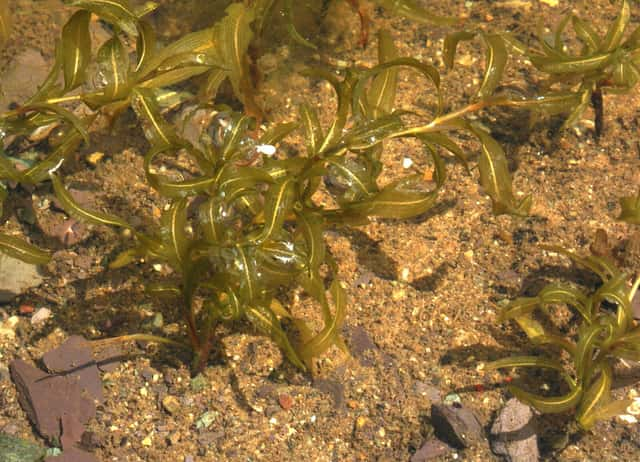
Potamogetonaceae
Pondweed (Potamogeton)
Potamogeton
Pond plants for sun or part shade, grown in a basket on the bottom. They grow fast and need regular thinning.
Every 7-10 days
Bright indirect
° - °C
% - %
Categories
What is Pondweed?
Pondweed (Potamogeton) is a easy-care plant from the Potamogetonaceae family. Potamogeton is a genus of freshwater aquatic plants with about 80 to 100 species worldwide, most diverse in the Northern Hemisphere. They grow in ponds, lakes and slow rivers. Some are fully submerged, with thin, translucent leaves; others, like Potamogeton natans, also have leathery floating leaves...
Unlike many tropical plants, Pondweed tolerates watering mistakes. Best for beginners. Unlike many popular species, Pondweed is safe to keep around pets.
How to Care for Pondweed?
TLDR: Pondweed needs Bright indirect, watering every 7 days, and temperatures between 15-30°C with 40-70% humidity.
How Often Should You Water Pondweed?
No watering needed: it lives in the water. Plant at 15 cm to 1.5 m depth depending on the species; floating-leaved kinds can start shallower and be lowered later.
How Much Light Does Pondweed Need?
Full sun to part shade.
What Is the Best Soil for Pondweed?
Aquatic basket with lean sandy loam and a layer of gravel on top so the soil does not cloud the water.
What Pot Should You Use for Pondweed?
Open-mesh aquatic basket with sandy loam and a gravel top, set on the pond bottom. Not suited to an ordinary pot.
What Is Pondweed and Where Does It Come From?
Potamogeton is a genus of freshwater aquatic plants with about 80 to 100 species worldwide, most diverse in the Northern Hemisphere. They grow in ponds, lakes and slow rivers. Some are fully submerged, with thin, translucent leaves; others, like Potamogeton natans, also have leathery floating leaves. They spread from creeping rhizomes along the bottom, and several overwinter as dormant buds. The flowers are small greenish or brownish spikes that rise above the water in summer. They give shelter and food to fish, waterfowl and other pond life. Some species have their own page.
How to Propagate Pondweed?
Stem cuttings
Leave thinned material at the pond edge for 24 hours so pond creatures can get back into the water.
- 1 From mid spring to early summer, cut stem pieces with several leaves
- 2 Anchor the bases in a basket of sandy loam
- 3 Top with gravel
- 4 Sink the basket into the pond
Materials needed:
Rhizome division
The winter buds some species form can also be used to start new plants.
- 1 Lift the basket from the pond in spring
- 2 Cut pieces of rhizome with shoots
- 3 Replant in new baskets
- 4 Return the baskets to the right depth
Materials needed:
How Big Does Pondweed Grow?
TLDR: Pondweed can reach up to ?cm tall with Fast growth rate.
Growth rate
Fast
Foliage
Deciduous
Plant Uses
Ornamental
Great for decoration
Is your plant showing symptoms?
Click on the symptom to discover possible causes:
Fun Facts
Some species grow longer than 6 m in deep water
Ducks, other waterfowl and beavers eat its leaves and fruits
The name comes from Greek for river neighbor
Frequently asked questions
Is pondweed invasive?
How do I keep it under control?
Why did it disappear in winter?
Can I grow it in an aquarium?
Compare with similar plants
| Attribute | Difficulty | Light | Watering | Pet Safe |
|---|---|---|---|---|
| Field Maple | Easy | Bright indirect | 14d | ✓ |
| Iberian Houseleek | Easy | Direct sun | 14d | ✓ |
| Silver Birch | Easy | Direct sun | 14d | ✓ |
| Common Blanketflower | Easy | Direct sun | 10d | ✓ |





