Solanaceae
How to Grow Potato (Solanum tuberosum): Complete Guide
Solanum tuberosum
Potatoes need full sun, loose well-draining soil with pH 5.5-6.5. Water weekly maintaining consistent moisture. Fertilize every 30 days during growth. ALL GREEN PARTS and sprouts are TOXIC — consume only healthy tubers.
Every 7 days
Direct sun
10° - 25°C
30% - 50%
Categories
What is Potato?
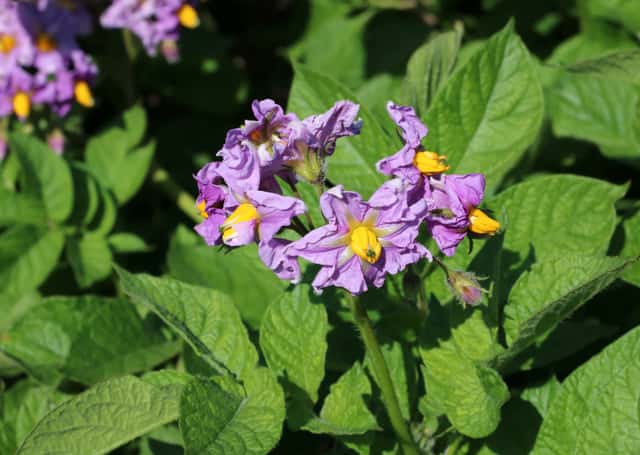
Potato (Solanum tuberosum) is a medium-care plant from the Solanaceae family. The potato (Solanum tuberosum) is a starchy tuberous crop from the Andes of South America, cultivated for over 7,000 years. A member of the Solanaceae (nightshade) family, it is now one of the world's most important food crops. The plant produces attractive white, pink, or purple flowers and nutriti...
Potato grows up to 90cm, spread of 45cm, watering every 7 days, 10°C – 25°C, 30–50% humidity. It is not suitable for indoor environments and not safe for pets.
Without precautions, ingestion can cause irritation in pets. Keep out of reach of cats and dogs.
How to Care for Potato?
TLDR: Potato needs Direct sun, watering every 7 days, and temperatures between 10-25°C with 30-50% humidity.
How Often Should You Water Potato?
Water every 7 days keeping soil consistently moist, especially after flowering begins. Reduce watering when foliage starts yellowing — this signals tuber maturation. Avoid waterlogging to prevent tuber rot.
How Much Light Does Potato Need?
Full sun plant: requires at least 6-8 hours of direct sunlight daily. Insufficient light leads to lush foliage but poor tuber production. Choose the sunniest spot in your garden.
What Is the Best Soil for Potato?
Use loose, deep, well-draining loamy soil. Ideal pH 5.5-6.5. Incorporate compost or organic matter before planting. Avoid compacted soils that cause misshapen tubers.
What Pot Should You Use for Potato?
Outdoor garden bed or large grow bag/wooden planter with excellent drainage. Avoid small pots — tubers need room to expand. 50-100L grow bags are ideal for terrace or balcony growing.
Care Schedule
Fertilize
Every 30 days
What Is Potato and Where Does It Come From?
The potato (Solanum tuberosum) is a starchy tuberous crop from the Andes of South America, cultivated for over 7,000 years. A member of the Solanaceae (nightshade) family, it is now one of the world's most important food crops. The plant produces attractive white, pink, or purple flowers and nutritious underground tubers. CAUTION: All green parts of the plant contain solanine, a toxic alkaloid — only the healthy tubers are edible.
How to Propagate Potato?
Seed Potato Division
Use certified seed potatoes to avoid disease transmission. Curing cut pieces is essential to prevent soil rot.
- 1 Select healthy seed potatoes with 2-3 visible sprouts (eyes)
- 2 Cut potato into golf ball-size pieces, each with at least 1-2 eyes
- 3 Allow cut pieces to cure in a cool, dry location for 1-2 days to form a callus
- 4 Plant 4-6 inches deep with eyes facing upward
- 5 Keep soil moist until first leaves emerge
Materials needed:
How Big Does Potato Grow?
TLDR: Potato can reach up to 90cm tall with Fast growth rate.
Max height
90cm
Spread
45cm
Growth rate
Fast
Foliage
Deciduous
Warning: Toxic Plant
This plant can be toxic if ingested. Keep out of reach of:
Plant Uses
Edible
Can be consumed
Culinary Uses
- Boiled, baked, fried or steamed as a vegetable side dish
- Base for soups, purees, stews, and salads
- Chips, french fries, and processed snacks
- Potato flour for gluten-free baking
- Vodka and other spirits (starch fermentation)
Is your plant showing symptoms?
Click on the symptom to discover possible causes:
What Diseases Commonly Affect Potato?
TLDR: Potato is susceptible to 8 known diseases. Monitor regularly for early detection.
Phytophthora Blight
Devastating fungal disease caused by Phytophthora species (primarily P. capsici and P. infestans), famously responsible for the Irish Potato Famine in the 1840s. Affects all plant parts including roots, stems, leaves, and fruits in warm, wet conditions. The pathogen is technically an oomycete (water mold) that thrives in saturated soils and can survive in soil for 5+ years.
Alternaria Leaf Spot
Alternaria leaf spot is a common fungal disease caused by Alternaria solani and Alternaria alternata that affects a wide range of plants including tomatoes, potatoes, brassicas, and ornamentals. The disease thrives in warm, humid conditions and can cause significant crop damage if left untreated. Spores overwinter on plant debris and can attach to seeds, making complete elimination difficult.
Aphids
Aphids are small, soft-bodied, pear-shaped insects (1/16 to 1/8 inch long) that feed by sucking nutrient-rich sap from plants. They reproduce rapidly and can quickly weaken plants, causing distorted growth and transmitting plant viruses. Aphids come in various colors including green, black, red, yellow, brown, and gray. They secrete honeydew, a sticky substance that attracts ants and encourages sooty mold growth.
Whiteflies
Whiteflies are small, soft-bodied, winged insects closely related to aphids and mealybugs. They are moth-like in appearance, about 1/16 inch long, triangular in shape, and gray-white in color. These sap-sucking pests feed on plant tissue, causing yellowing, stunted growth, and wilting. They also excrete honeydew, which attracts ants and promotes sooty mold growth. Whiteflies can transmit serious plant viruses.
Meaning & Symbolism
The potato symbolizes sustenance and resilience — it saved millions from famine in 18th-19th century Europe. It represents humanity's ability to transform the earth into nourishment and persevere through adversity.
Fun Facts
The potato originated in the Peruvian and Bolivian Andes, where it has been cultivated for over 7,000 years
There are more than 4,000 potato varieties worldwide, in colors ranging from white to deep purple
The potato is the world's fourth most produced food crop, after sugarcane, corn, and rice
The Great Irish Famine (1845-1852) was caused by the fungus Phytophthora infestans which devastated potato crops
Frequently asked questions
How often should I water potatoes?
Are potatoes toxic?
How much sun do potatoes need?
When should I harvest potatoes?
Can I grow potatoes in containers?
Compare with similar plants
| Attribute | Difficulty | Light | Watering | Pet Safe |
|---|---|---|---|---|
| Dark Fieldcap | Medium | Low light | 2d | ⚠️ |
| Azalea | Medium | Partial shade | 3d | ⚠️ |
| Muriel's Bamboo | Medium | Partial shade | 3d | ✓ |
| Bougainvillea | Medium | Direct sun | 7d | ⚠️ |




