Caprifoliaceae
Privet Honeysuckle (Lonicera pileata)
Lonicera pileata
An easy, tough shrub. Plant in sun or part shade in well-drained soil, water until established and prune after flowering. The berries are not edible.
Every 7 days
Bright indirect
-20° - °C
% - %
Categories
What is Privet Honeysuckle?
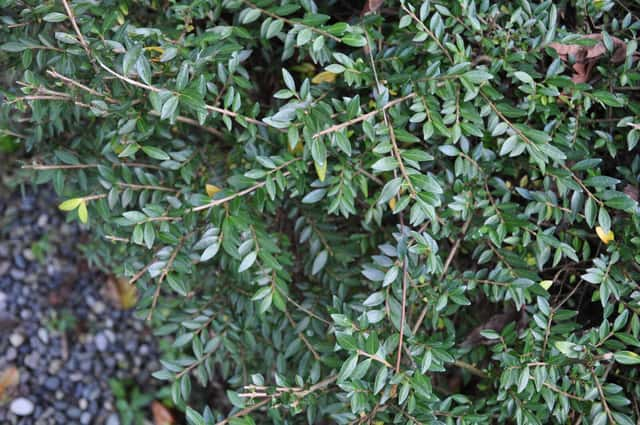
Privet Honeysuckle (Lonicera pileata) is a easy-care plant from the Caprifoliaceae family. Privet honeysuckle (Lonicera pileata) is a low, spreading evergreen shrub in the honeysuckle family (Caprifoliaceae), native to central and south-west China. Its branches grow almost horizontally, building a mound 0.5-1 m tall and up to 2.5 m wide, covered in small, glossy, dark green leaves. In spr...
Privet Honeysuckle grows up to 1.0m, spread of 250cm, watering every 7 days. It is not suitable for indoor environments and safe for pets.
Unlike many tropical plants, Privet Honeysuckle tolerates watering mistakes. Best for beginners. Unlike many popular species, Privet Honeysuckle is safe to keep around pets.
How to Care for Privet Honeysuckle?
TLDR: Privet Honeysuckle needs Bright indirect, watering every 7 days, and temperatures between -20-30°C with 40-70% humidity.
How Often Should You Water Privet Honeysuckle?
Water weekly during the first year. Once established it tolerates drought, but in full sun it does better with regular summer watering.
How Much Light Does Privet Honeysuckle Need?
Full sun to part shade; it stays more compact with some sun.
What Is the Best Soil for Privet Honeysuckle?
Grows in clay, loam, sand or chalk, acid or alkaline, as long as it drains well.
What Pot Should You Use for Privet Honeysuckle?
Best in the ground; in a container use a wide, shallow pot with good drainage.
What Is Privet Honeysuckle and Where Does It Come From?
Privet honeysuckle (Lonicera pileata) is a low, spreading evergreen shrub in the honeysuckle family (Caprifoliaceae), native to central and south-west China. Its branches grow almost horizontally, building a mound 0.5-1 m tall and up to 2.5 m wide, covered in small, glossy, dark green leaves. In spring it bears small, fragrant, cream tubular flowers half hidden under the leaves, followed by translucent purple berries. It is widely used as ground cover on banks, for low edging and hedges, and as a substitute for box. It tolerates hard frost, salt spray and poor soils. Botanists now treat it as Lonicera ligustrina var. pileata.
How to Propagate Privet Honeysuckle?
Semi-ripe cuttings
It roots very readily, so it is easy to raise many plants for hedging.
- 1 From late spring to late summer, take 10 cm cuttings of this year's shoots
- 2 Remove the lower leaves
- 3 Insert into a moist, sandy mix
- 4 Keep in light shade until rooted
Materials needed:
Layering
Branches that touch the ground often root on their own.
- 1 Bend a low branch down to the soil
- 2 Cover a section with soil and pin it down
- 3 Sever from the parent once rooted
Materials needed:
How Big Does Privet Honeysuckle Grow?
TLDR: Privet Honeysuckle can reach up to 1.0m tall with Medium growth rate.
Max height
1.0m
Spread
2.5m
Growth rate
Medium
Foliage
Evergreen
Warning: Toxic Plant
This plant can be toxic if ingested. Keep out of reach of:
Plant Uses
Ornamental
Great for decoration
Ground Cover
Soil coverage
Is your plant showing symptoms?
Click on the symptom to discover possible causes:
What Diseases Commonly Affect Privet Honeysuckle?
TLDR: Privet Honeysuckle is susceptible to 5 known diseases. Monitor regularly for early detection.
Aphids
Aphids are small, soft-bodied, pear-shaped insects (1/16 to 1/8 inch long) that feed by sucking nutrient-rich sap from plants. They reproduce rapidly and can quickly weaken plants, causing distorted growth and transmitting plant viruses. Aphids come in various colors including green, black, red, yellow, brown, and gray. They secrete honeydew, a sticky substance that attracts ants and encourages sooty mold growth.
Powdery Mildew
Powdery mildew is a common fungal disease caused by various fungi species including Erysiphe, Podosphaera, Oïdium, and Leveillula. It affects over 10,000 plant species worldwide. The disease thrives in warm, dry climates with high humidity and appears as a distinctive white powdery coating on plant surfaces.
Leaf Spot
Leaf spot is a common fungal disease caused by various pathogens including Alternaria, Ascochyta, Colletotrichum, Septoria, and Venturia. It primarily affects leaves, causing discolored spots that can lead to premature leaf drop if left untreated.
Thrips
Thrips are tiny cigar-shaped insects (1/25-inch long) that damage plants by sucking plant juices and scraping at fruits, flowers, and leaves. With over 6,000 species and rapid reproduction (lifecycle as short as 14 days), they can quickly infest plants and transmit viruses like tomato spotted wilt virus.
Fun Facts
Its branches grow almost horizontally, in layers.
The fragrant flowers hide under the leaves.
It tolerates salt spray, so it is planted near the coast.
Frequently asked questions
Are privet honeysuckle berries poisonous?
When should I prune it?
Can it replace box hedging?
Does it grow in shade?
Compare with similar plants
| Attribute | Difficulty | Light | Watering | Pet Safe |
|---|---|---|---|---|
| Field Maple | Easy | Bright indirect | 14d | ✓ |
| Iberian Houseleek | Easy | Direct sun | 14d | ✓ |
| Silver Birch | Easy | Direct sun | 14d | ✓ |
| Common Blanketflower | Easy | Direct sun | 10d | ✓ |





