Crassulaceae
Propeller Plant (Crassula perfoliata) Care Guide
Crassula perfoliata
Give it full sun to very bright light, water deeply only once the soil has dried out completely (roughly every 2-3 weeks), and plant it in a gritty, fast-draining succulent mix. It is a slow grower that rewards patience with a dramatic summer flower show.
Every 21 days
Direct sun
10° - 29°C
% - %
Categories
What is Propeller Plant?
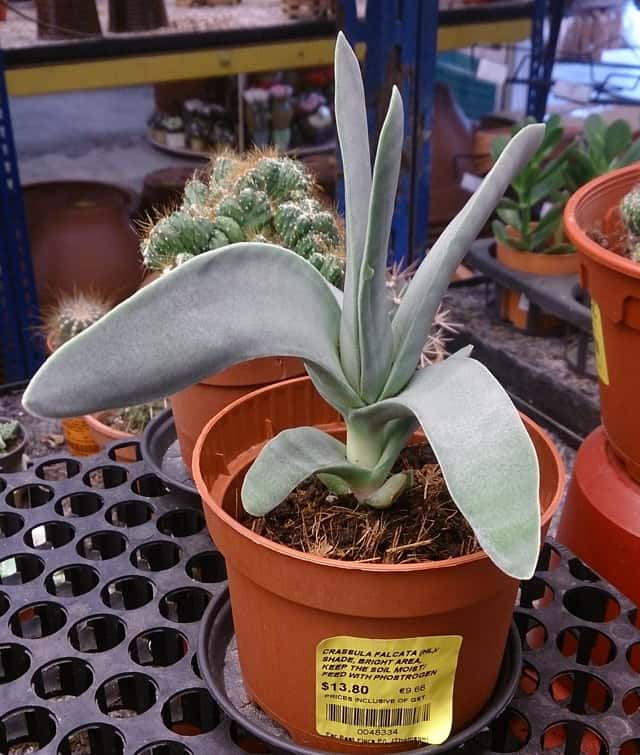
Propeller Plant (Crassula perfoliata) is a easy-care plant from the Crassulaceae family. Crassula perfoliata is a South African succulent subshrub best known through its popular cultivated variety, var. falcata (also called var. minor), the propeller plant, prized for its thick, grey-green, sickle-shaped leaves arranged in neat opposite rows. In summer it produces dense, rounded cluster...
Propeller Plant grows up to 1.0m, spread of 100cm, watering every 21 days, 10°C – 29°C. It is suitable for indoor environments and not safe for pets.
Unlike many tropical plants, Propeller Plant tolerates watering mistakes. Best for beginners. Without precautions, ingestion can cause irritation in pets. Keep out of reach of cats and dogs. Without adequate drainage, root rot can develop within 42 days.
How to Care for Propeller Plant?
TLDR: Propeller Plant needs Direct sun, watering every 21 days, and temperatures between 10-29°C with 40-70% humidity.
How Often Should You Water Propeller Plant?
Soak the soil thoroughly and let excess water drain away, then wait until it is bone dry before watering again — usually every 2-3 weeks in the growing season and much less in winter.
How Much Light Does Propeller Plant Need?
Place in full sun or very bright light; a sunny south- or west-facing window is ideal. More light means stronger leaf color and better flowering, but acclimate gradually to avoid scorch.
What Is the Best Soil for Propeller Plant?
Use a mineral-rich cactus/succulent mix (50-70% coarse sand, pumice, or perlite) in a pot with generous drainage holes.
What Pot Should You Use for Propeller Plant?
An unglazed terracotta pot with drainage holes suits it best, wicking away excess moisture and helping prevent root rot.
Care Schedule
Fertilize
Every 60 days
Rotate
Every 14 days
Repot
Every 730 days
What Is Propeller Plant and Where Does It Come From?
Crassula perfoliata is a South African succulent subshrub best known through its popular cultivated variety, var. falcata (also called var. minor), the propeller plant, prized for its thick, grey-green, sickle-shaped leaves arranged in neat opposite rows. In summer it produces dense, rounded clusters of small scarlet-red flowers held high above the foliage on stiff stems, a striking contrast to the muted leaf color. Native to rocky, sun-baked slopes of South Africa's Eastern and Western Cape, it is a tough, drought-tolerant plant that thrives on neglect.
How to Propagate Propeller Plant?
Leaf cutting
Use only firm, undamaged leaves and avoid overwatering while roots are forming, since the leaf can rot before it roots.
- 1 Gently twist off a healthy, plump leaf close to the stem so the base stays intact.
- 2 Let the leaf callus over in a dry, shaded spot for 1-2 days.
- 3 Lay the calloused end on top of moist, well-draining succulent soil.
- 4 Mist lightly every few days and wait for roots and a tiny new rosette to form.
Materials needed:
Offset division
Wait until offsets have their own small root system for the highest survival rate.
- 1 Remove the plant from its pot and locate small offsets (pups) growing at the base.
- 2 Gently separate each offset, keeping some roots attached if possible.
- 3 Let cut surfaces callus for a day before planting.
- 4 Pot the offset in fresh, gritty succulent mix and water sparingly until established.
Materials needed:
How Big Does Propeller Plant Grow?
TLDR: Propeller Plant can reach up to 1.0m tall with Slow growth rate.
Max height
1.0m
Spread
1.0m
Growth rate
Slow
Foliage
Evergreen
Warning: Toxic Plant
This plant can be toxic if ingested. Keep out of reach of:
Plant Uses
Ornamental
Great for decoration
Is your plant showing symptoms?
Click on the symptom to discover possible causes:
What Diseases Commonly Affect Propeller Plant?
TLDR: Propeller Plant is susceptible to 4 known diseases. Monitor regularly for early detection.
Root Rot
Root rot is a serious fungal disease that affects the root system of plants, causing them to decay and die. It is primarily caused by overwatering, poor drainage, or soil-borne fungi such as Pythium, Phytophthora, Rhizoctonia, and Fusarium. The disease thrives in waterlogged conditions where roots are deprived of oxygen, making them susceptible to fungal infection.
Scale Insects
Scale insects are small sap-sucking pests that appear as brown, shell-like bumps on plant stems and leaves. There are over 25 species, divided into armored (hard) and unarmored (soft) scales. They feed by piercing plant tissue and extracting sap, which weakens the plant and can lead to yellowing, stunted growth, and even death if left untreated. They also excrete honeydew, which attracts ants and promotes sooty mold growth.
Mealybugs
Mealybugs are small, soft-bodied insects covered with a white, waxy, cottony material. They are common pests of houseplants and outdoor plants in mild climates. These sap-sucking insects feed on plant tissue, causing damage, stunted growth, and can lead to plant death if left untreated. They produce sticky honeydew which attracts sooty mold.
Spider Mites
Spider mites are tiny arachnids (less than 1/20 inch long) related to spiders and ticks that feed on plant sap. They thrive in hot, dry conditions and can cause significant damage to ornamental and vegetable plants. During severe infestations, crop losses can reach 14% or higher as these pests disrupt vital plant processes including photosynthesis, carbon dioxide absorption, and transpiration.
Meaning & Symbolism
Like other jade-family succulents, it is often associated with resilience, prosperity, and good fortune.
Fun Facts
Its opposite, sickle-shaped leaves stack so neatly that the plant looks like a spinning propeller or airplane, giving rise to its common names.
Unlike most Crassula species, which flower in winter or spring, Crassula perfoliata blooms in summer with dense clusters of scarlet flowers.
The scientific epithet 'perfoliata' refers to how the paired leaf bases appear to be pierced through by the stem.
Frequently asked questions
How often should I water my propeller plant?
Is the propeller plant toxic to pets?
Why isn't my Crassula perfoliata flowering?
Can I grow the propeller plant indoors?
Compare with similar plants
| Attribute | Difficulty | Light | Watering | Pet Safe |
|---|---|---|---|---|
| Field Maple | Easy | Bright indirect | 14d | ✓ |
| Silver Birch | Easy | Direct sun | 14d | ✓ |
| Common Blanketflower | Easy | Direct sun | 10d | ✓ |
| Cushion Bush | Easy | Direct sun | 14d | ✓ |
Choose & Compare
Sources & References
- Crassula perfoliata - Wikipedia
- Crassula perfoliata var. falcata - Wikipedia
- Crassula perfoliata var. minor (Propeller Plant) - World of Succulents
- Crassula perfoliata - Tonkadale
- Crassula falcata (Propeller Plant): All You Need To Know - Gardenia.net
- How to Grow and Care for Propeller Plant - PictureThis AI
- Are Crassula Plants Toxic to Cats and Dogs? - The Plant Aide





