Lamiaceae
Purple Dead-nettle: Growing, Identification and Uses
Lamium purpureum
A self-seeding wild plant that grows by itself in moist, fertile soil in sun or light shade. It needs no feeding or pruning; harvest young tops before it sets seed.
Every 7 days
Bright indirect
° - °C
% - %
Categories
What is Purple Dead-nettle?
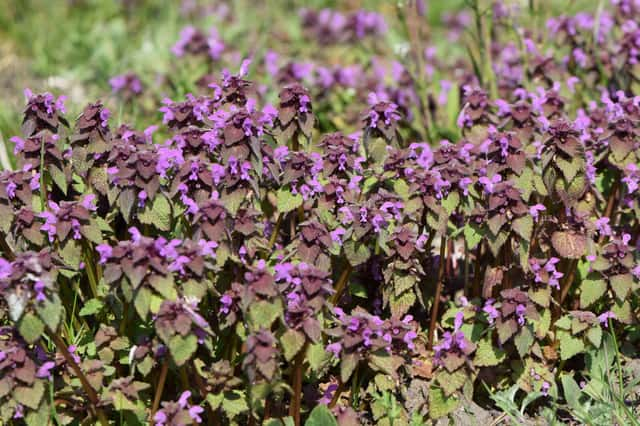
Purple Dead-nettle (Lamium purpureum) is a easy-care plant from the Lamiaceae family. Purple dead-nettle (Lamium purpureum) is a small annual herb of the mint family, native to Europe and Asia and naturalised across North America. It has square stems 5-20 cm tall, soft hairy heart-shaped leaves that turn purplish towards the top, and hooded red-purple flowers that can appear almost a...
Purple Dead-nettle grows up to 20cm, watering every 7 days. It is not suitable for indoor environments and safe for pets.
Unlike many tropical plants, Purple Dead-nettle tolerates watering mistakes. Best for beginners. Unlike many popular species, Purple Dead-nettle is safe to keep around pets.
How to Care for Purple Dead-nettle?
TLDR: Purple Dead-nettle needs Bright indirect, watering every 7 days, and temperatures between 15-30°C with 40-70% humidity.
How Often Should You Water Purple Dead-nettle?
Prefers evenly moist soil. In a garden it usually needs no watering beyond rain; water in dry spells if you want to keep harvesting.
How Much Light Does Purple Dead-nettle Need?
Full sun to light shade. It grows well in lawns, beds and woodland edges.
What Is the Best Soil for Purple Dead-nettle?
Moist, fertile, loamy soil. It thrives in disturbed, cultivated ground.
What Pot Should You Use for Purple Dead-nettle?
Usually grown in the ground; any pot with drainage works if you want a small patch for harvesting
What Is Purple Dead-nettle and Where Does It Come From?
Purple dead-nettle (Lamium purpureum) is a small annual herb of the mint family, native to Europe and Asia and naturalised across North America. It has square stems 5-20 cm tall, soft hairy heart-shaped leaves that turn purplish towards the top, and hooded red-purple flowers that can appear almost all year, even in mild winters. Despite the name it is not a nettle and does not sting.
How to Propagate Purple Dead-nettle?
Seed
It self-seeds very freely and can spread quickly in beds and lawns; remove plants before they set seed if you want to control it.
- 1 Collect ripe seeds from the small nutlets after flowering
- 2 Sow directly on moist soil in early autumn or early spring
- 3 Press lightly into the surface without burying deeply
- 4 Keep the soil moist until seedlings appear
Materials needed:
How Big Does Purple Dead-nettle Grow?
TLDR: Purple Dead-nettle can reach up to 20cm tall with Fast growth rate.
Max height
20cm
Growth rate
Fast
Plant Uses
Edible
Can be consumed
Medicinal
Medicinal properties
Medicinal Uses
- Traditionally used as a poultice for minor cuts and skin irritations
- Folk use as a tea for seasonal allergies
Culinary Uses
- Young tops and leaves raw in salads
- Cooked as a spring green or in stir-fries
- Finely chopped into sauces and pesto
- Flowers candied with sugar
Is your plant showing symptoms?
Click on the symptom to discover possible causes:
What Diseases Commonly Affect Purple Dead-nettle?
TLDR: Purple Dead-nettle is susceptible to 3 known diseases. Monitor regularly for early detection.
Tomato Spotted Wilt Virus (TSWV)
Tomato Spotted Wilt Virus (TSWV) is one of the most devastating viral diseases affecting over 1,000 plant species across 85 families. It is transmitted by thrips and cannot be cured once a plant is infected. The virus causes severe stunting, bronzing of leaves, necrotic spots, and significant yield losses. Early detection and removal of infected plants is critical to prevent spread.
Root-Knot Nematodes
Root-knot nematodes (Meloidogyne species) are microscopic roundworms that parasitize plant roots, causing characteristic galls or knots. These soil-borne pests are among the most economically damaging plant pathogens worldwide, affecting a wide range of ornamental and edible plants. The nematodes inject enzymes into root cells, causing abnormal swelling and disrupting water and nutrient uptake.
Thrips
Thrips are tiny cigar-shaped insects (1/25-inch long) that damage plants by sucking plant juices and scraping at fruits, flowers, and leaves. With over 6,000 species and rapid reproduction (lifecycle as short as 14 days), they can quickly infest plants and transmit viruses like tomato spotted wilt virus.
Fun Facts
It is the type species of the genus Lamium, described by Linnaeus in 1753.
Its crimson-red pollen is easy to spot on the heads of visiting bees.
It flowers in mild winter weather, providing nectar when few other sources exist.
Frequently asked questions
Is purple dead-nettle edible?
Does purple dead-nettle sting?
How do I tell it apart from henbit?
Is purple dead-nettle toxic to pets?
Compare with similar plants
| Attribute | Difficulty | Light | Watering | Pet Safe |
|---|---|---|---|---|
| Field Maple | Easy | Bright indirect | 14d | ✓ |
| Iberian Houseleek | Easy | Direct sun | 14d | ✓ |
| Silver Birch | Easy | Direct sun | 14d | ✓ |
| Common Blanketflower | Easy | Direct sun | 10d | ✓ |





