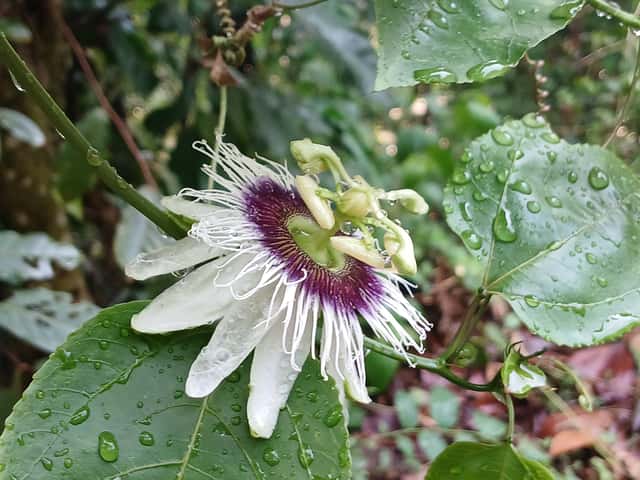
Passifloraceae
Purple Passion Fruit (Passiflora edulis): Complete Growing Guide
Passiflora edulis
Fast-growing vine requiring full sun, regular watering, and a sturdy support structure. Best suited for outdoor gardens in warm climates. Fertilize every 30 days and prune regularly to encourage fruit production.
Every 7 days
Direct sun
15° - 30°C
60% - 80%
Categories
What is Purple Passion Fruit?
Purple Passion Fruit (Passiflora edulis) is a medium-care plant from the Passifloraceae family. Passiflora edulis, commonly known as Purple Passion Fruit, is a vigorous climbing vine native to subtropical regions of Brazil, Paraguay, and Argentina. It produces aromatic fruits with a purple or yellow rind, widely used in culinary and medicinal applications. Its striking white and purple ornamen...
Purple Passion Fruit grows up to 9.0m, spread of 300cm, watering every 7 days, 15°C – 30°C, 60–80% humidity. It is not suitable for indoor environments and safe for pets.
Unlike many popular species, Purple Passion Fruit is safe to keep around pets.
How to Care for Purple Passion Fruit?
TLDR: Purple Passion Fruit needs Direct sun, watering every 7 days, and temperatures between 15-30°C with 60-80% humidity.
How Often Should You Water Purple Passion Fruit?
Water deeply once a week, keeping soil consistently moist but never waterlogged. Increase frequency during summer and fruiting periods. Apply mulch to retain soil moisture.
How Much Light Does Purple Passion Fruit Need?
Requires full sun with at least 6 hours of direct sunlight daily. In very hot inland areas, partial afternoon shade can prevent leaf scorch.
What Is the Best Soil for Purple Passion Fruit?
Use well-draining sandy loam soil rich in organic matter. Ideal pH is 6.5–7.5. Avoid compacted or waterlogged soils; raised beds improve drainage.
What Pot Should You Use for Purple Passion Fruit?
For container growing, use large pots of at least 50 liters with drainage holes. Terracotta or sturdy plastic pots work well. Provide a trellis or support structure for the vines.
Care Schedule
Fertilize
Every 30 days
What Is Purple Passion Fruit and Where Does It Come From?
Passiflora edulis, commonly known as Purple Passion Fruit, is a vigorous climbing vine native to subtropical regions of Brazil, Paraguay, and Argentina. It produces aromatic fruits with a purple or yellow rind, widely used in culinary and medicinal applications. Its striking white and purple ornamental flowers bloom for a single day.
How to Propagate Purple Passion Fruit?
Seed Propagation
Use fresh seeds for best germination rates. Keep the substrate moist but not soggy. Germination may take up to 30 days.
- 1 Extract seeds from a ripe fruit and rinse thoroughly
- 2 Soak seeds in water for 24 hours
- 3 Sow 1 cm deep in moist, well-draining seed mix
- 4 Keep in a warm location at 22–28°C
- 5 Transplant seedlings when they reach 15 cm tall
Materials needed:
Stem Cutting
Maintain high humidity around the cutting by covering with a plastic bag. Avoid direct sunlight until rooting is established.
- 1 Cut a semi-hardwood stem 20–30 cm long with 2–3 nodes
- 2 Remove lower leaves, keeping 2–3 at the top
- 3 Apply rooting hormone to the base
- 4 Plant in moist, well-draining substrate
- 5 Keep in indirect light until roots form
Materials needed:
How Big Does Purple Passion Fruit Grow?
TLDR: Purple Passion Fruit can reach up to 9.0m tall with Fast growth rate.
Max height
9.0m
Spread
3.0m
Growth rate
Fast
Foliage
Semi-evergreen
Warning: Toxic Plant
This plant can be toxic if ingested. Keep out of reach of:
Plant Uses
Edible
Can be consumed
Medicinal
Medicinal properties
Ornamental
Great for decoration
Medicinal Uses
- Natural anxiolytic — leaf tea is used to treat anxiety and insomnia
- Anti-inflammatory and muscle relaxant properties
- Used in folk medicine for mild hypertension
Culinary Uses
- Pulp used in juices, ice creams, mousses, and desserts
- Rind used in functional flour and confectionery
- Seeds are edible and rich in oil and fiber
Is your plant showing symptoms?
Click on the symptom to discover possible causes:
What Diseases Commonly Affect Purple Passion Fruit?
TLDR: Purple Passion Fruit is susceptible to 9 known diseases. Monitor regularly for early detection.
Fusarium Wilt
Fusarium wilt is a serious fungal disease caused by the soil-borne fungus Fusarium oxysporum. The fungus invades roots and blocks the water-conducting vessels (xylem) of the plant, causing progressive wilting and eventual death. Host-specific forms of the pathogen exist that attack different plant species.
Anthracnose
Anthracnose is a fungal disease caused by fungi in the genus Colletotrichum that affects many plants, including vegetables, fruits, and trees. The disease thrives in cool, wet conditions, causing dark, sunken lesions on leaves, stems, flowers, and fruits.
Bacterial Leaf Spot
Bacterial leaf spot is a plant disease caused by bacteria in the Xanthomonas and Pseudomonas genera that affects various ornamental and edible plants. The bacteria infect leaves through wounds or natural openings, causing characteristic lesions that can lead to premature leaf drop and plant weakening.
Mosaic Virus
Mosaic virus is a group of plant viruses that cause mottled, patchy patterns on leaves and can affect a wide variety of plants. The virus creates characteristic yellow, white, and green mosaic patterns, often accompanied by stunted growth and deformed plant parts. This highly contagious disease spreads rapidly through insect vectors and contaminated tools.
Meaning & Symbolism
The passion flower is a Christian symbol representing the Passion of Christ, embodying spirituality, faith, and renewal.
Fun Facts
The passion flower blooms for just one day, yet is one of the most intricate flowers in the plant kingdom
Brazil is the world's largest producer and consumer of passion fruit
A single well-cared-for vine can produce over 100 fruits per year
The name Passiflora comes from the Latin 'flos passionis' — flower of the Passion
Frequently asked questions
How often should I water passion fruit?
Can passion fruit grow in a container?
When does passion fruit start producing?
Is passion fruit plant toxic?
What are the main diseases of passion fruit?
Compare with similar plants
| Attribute | Difficulty | Light | Watering | Pet Safe |
|---|---|---|---|---|
| Dark Fieldcap | Medium | Low light | 2d | ⚠️ |
| Azalea | Medium | Partial shade | 3d | ⚠️ |
| Muriel's Bamboo | Medium | Partial shade | 3d | ✓ |
| Bougainvillea | Medium | Direct sun | 7d | ⚠️ |




